
Calorie-conscious study snackers
You want to eat cashew nuts while studying and keep track of your energy intake. The Netherlands Nutrition Centre lists 154 kcal for 25 g of unsalted cashew nuts, so portion size is an important consideration.


Cashew nuts aren’t a low-calorie snack: the Netherlands Nutrition Centre lists 154 kcal per 25 g handful of unsalted cashew nuts. If you want to snack mindfully while studying, weigh out a portion in advance and check the nutritional information on the exact pack. Unsalted, unroasted or made without added oil doesn’t automatically mean lower in energy. A smaller pack may suit occasional snacking, while you can divide a larger bag into portions in advance.
You want to eat cashew nuts while studying and keep track of your energy intake. The Netherlands Nutrition Centre lists 154 kcal for 25 g of unsalted cashew nuts, so portion size is an important consideration.
You’re looking for an unsalted variety, so you check the product name, ingredients and nutritional information. The Netherlands Nutrition Centre includes unsalted nuts in its Wheel of Five.
You’re buying snacks for several occasions and want to portion them out yourself. Supermarkets list packs of 200 g, 250 g and 500 g, among other sizes; the contents of a bag aren’t automatically one portion.
Start by checking the energy per 100 g and the portion you plan to eat. Then consider the salt content, preparation method and pack size.
| What to consider | What should you check? | Who is this most relevant to? |
|---|---|---|
| Energy per portion | Check the kcal per 100 g and weigh your portion. Calculate the energy in your portion using kcal per 100 g × portion weight in grams / 100. | If you want to keep track of your energy intake while studying, weighing out a portion can help. This matters to around 42% of consumers who put calorie control first. |
| Unsalted ingredients | Check whether the pack says unsalted, which ingredients have been added and what allergen information is provided. | If you’d rather avoid a salted variety, the exact product description can help you choose. Around 25% of consumers put unsalted ingredients first. |
| Pack size | Compare the net weight and decide how many portions you want to prepare in advance. | If you’re planning several study sessions, you can divide the contents between snack breaks yourself. This is particularly relevant to consumers who value stocking up and portioning, around 17%. |
| Preparation method | Read the preparation description, ingredients and nutrition table for the exact variety. | If you’re specifically looking for unroasted or roasted cashew nuts, you can select accordingly without assuming they contain less energy. Around 16% of consumers prioritise the preparation method. |
These terms describe the ingredients or preparation, not the amount of energy per 100 g. The European Commission sets a maximum of 40 kcal (170 kJ) per 100 g for a low-calorie claim on solid foods.
Check the kcal per 100 g on the pack, then calculate the energy in the portion you plan to eat. Don’t treat a description such as ‘no oil added’ as proof that the product is low in energy.
Albert Heijn describes the 125 g Duyvis pack as containing 4–5 portions. So the net weight of the bag doesn’t tell you how much to eat during one study session.
Weigh out a portion in advance and put the rest of the bag away.
The NVWA warning dated 20 May 2026 concerns 170 g packs of Trader Joe’s unsalted cashew nuts with barcode 2003020120930 and best-before date 23-09-2026. The warning mentions possible metal fragments and says not to eat this specific batch.
Compare the product name, pack size, barcode and best-before date with the warning. Don’t assume it applies to other packs or varieties.
Duyvis describes Cashews Original as oven-roasted and made without added oil; Albert Heijn also lists a salted 125 g variety.
The AH own-brand range lists an unsalted cashew nut variety.
Jumbo lists unsalted cashew nuts in a 200 g pack.
Lidl lists unsalted cashew nuts in a 500 g pack.
ALDI lists Trader Joe’s as the product brand for roasted, unsalted cashew nuts in a 250 g pack.
PLUS lists unsalted, unroasted cashew nuts in a 200 g pack.
These products come in different varieties and pack sizes. Check the energy per 100 g and choose a portion that suits you.
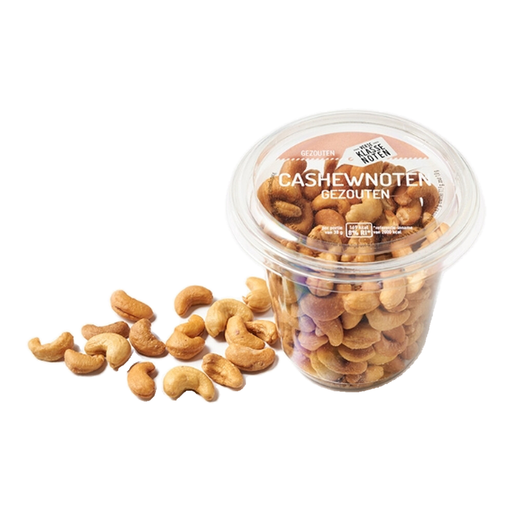 No image available
A roasted, salted variety that may suit you if you like the taste and don’t mind the salt.
The pack contains 150 g.
 No image available
The product information lists cashew kernels as the only ingredient and says the nuts are ready to eat.
The pack contains 160 g, and the product information lists 604 kcal per 100 g. Weigh your portion if you want to keep track of your energy intake.
 No image available
This variety is roasted and unsalted; the product information recommends resealing the pack securely after opening.
The pack contains 200 g, and the product information lists 596 kcal per 100 g. Decide in advance how much you want to eat.
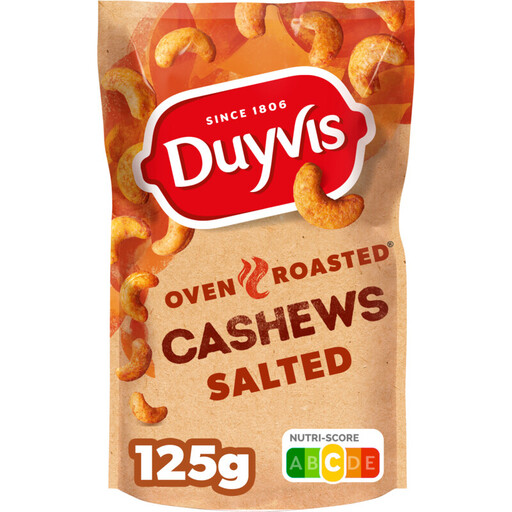 No image available
The product information describes a salted, oven-roasted variety with no added fat or oil, and lists 4–5 portions per pack.
The pack contains 125 g and lists 586 kcal per 100 g. The listed allergens are cashew nuts, gluten, wheat and peanuts.
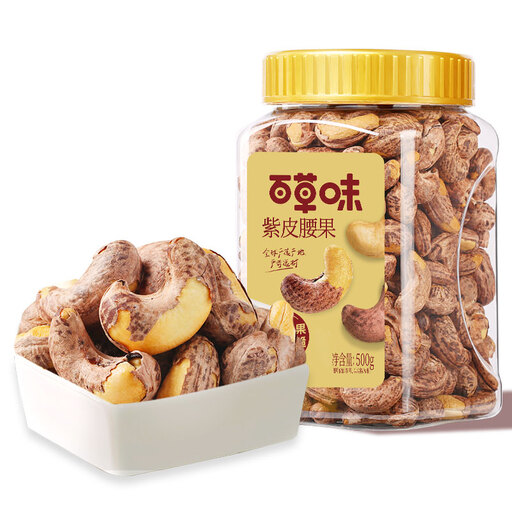 No image available
The product information lists salt and describes the pack as a salted family-size option for several snack occasions.
The pack contains 500 g and lists 679 kcal per 100 g. The listed allergen is cashew nuts.
No. The Netherlands Nutrition Centre lists 154 kcal per 25 g handful of unsalted cashew nuts. That works out at 616 kcal per 100 g; the European Commission sets a maximum of 40 kcal (170 kJ) per 100 g for a low-calorie claim on solid foods. A smaller portion reduces the amount of energy you eat, but it doesn’t make cashew nuts low in calories.
No, don’t automatically use the pack weight as your portion size. Albert Heijn describes the 125 g Duyvis pack as containing 4–5 portions. Choose an amount in advance and use the nutrition table on your pack to calculate the energy in that portion.
Cashew nuts are an allergen. So check the allergen information on the exact pack, including any other allergens that are relevant to you. If you’re allergic to cashews, don’t choose cashew nuts.
No, a small portion doesn’t make a product low in calories. According to the European Commission, a low-calorie claim for solid foods is limited to a maximum of 40 kcal (170 kJ) per 100 g; the NVWA confirms that European rules apply to nutrition claims. It’s better to describe the portion and its energy content without calling the product low in calories.
Follow the storage instructions on your own pack and seal it securely after use. The product information for the g'woon variety at Joybuy recommends resealing the pack securely after opening; don’t automatically apply any other storage advice to different brands.