Only take cashew nuts to school if your school allows them; check its policy and the ingredients on the exact packaging. For after-school sport, the Netherlands Nutrition Centre advises assessing snacks as part of your overall diet: most people who do sport don’t need specialist protein products. Compare nutritional values per 100 g and per portion, and don’t treat a protein claim on its own as proof of a recovery benefit.
Who are cashew nuts for?
Parents choosing a school snack
You’re looking for something that fits your school’s rules and your child’s diet. Cashew nuts aren’t suitable if an allergy or a relevant school policy rules out nuts. Guidance from the Netherlands Nutrition Centre and school policies provide different types of information, so check the rules at your child’s own school.
School pupils and students who do sport
You want to know what a snack adds to your usual meals. The Netherlands Nutrition Centre discusses higher protein requirements for strength and endurance sports, but this isn’t a promise that a particular cashew product will help with recovery.
Households that portion snacks themselves
You eat cashew nuts at different times and want to choose a pack that suits how you use them. Pack size and keeping the pack tightly sealed are practical considerations. The Netherlands Nutrition Centre advises storing nuts in a cool, dark and dry place.
What should you look for when choosing?
| What to consider |
What should you check? |
Who is this important for? |
| Protein per portion |
Compare protein and energy per 100 g for the same variety, then calculate the values for your own portion. |
If I want to know what my usual portion contributes to my sports diet, I look beyond the front of the packet; around 36% of consumers prioritise protein content. |
| Whether they’re allowed at school |
Ask about your school’s or class’s rules, and read the ingredients and warnings on the exact packaging. |
When I choose a snack for school, I want to be sure that nuts are allowed and are suitable given any allergies that need to be considered; around 29% of consumers prioritise suitability for school. |
| Salt and preparation method |
Check the product name, ingredients and salt content per 100 g. Roasted doesn’t automatically mean unsalted. |
If I prefer unsalted nuts or am looking for a savoury flavour, I check the salt content separately from the preparation method; around 21% of consumers choose based on salt content first. |
| Packaging and storage |
Choose a pack size that suits how you use them and seal the remaining nuts tightly. Store them in a cool, dark and dry place, as advised by the Netherlands Nutrition Centre. |
When I prepare portions at home, I want a pack size that suits how often we eat cashew nuts; around 14% of consumers focus mainly on pack size and storage. |
Common mistakes
-
Treating a protein claim as proof of recovery benefits
Nutritional information describes a product’s composition; it doesn’t prove that a particular cashew snack improves recovery. The Netherlands Nutrition Centre’s general sports advice isn’t a test of a cashew product.
Check the nutritional values for the portion you actually eat, alongside your usual meals. Treat a protein claim separately from any conclusion about its effect on sports performance.
-
Assuming ‘no added oil’ means unsalted
Duyvis describes Cashews Original as oven-roasted without added oil. On its own, this doesn’t tell you whether a variety contains salt.
Check the product name, ingredients and salt content separately from the preparation method.
-
Treating a multipack as a single snack portion
A larger bag is intended for several occasions. The Netherlands Nutrition Centre advises storing unsalted cashew nuts in a cool, dark and dry place.
Set aside the portion you want to eat and seal the remaining nuts tightly.
A multipack needs storage space where it can be kept sealed, and you’ll need to portion it out when required.
-
Ignoring a warning or applying it to an entire brand
On 20 May 2026, the Netherlands Food and Consumer Product Safety Authority (NVWA) warned about Trader Joe’s unsalted cashew nuts, 170 g, barcode 2003020120930, with a best-before date of 23-09-2026, as they may contain metal particles. The warning applies to that specific pack, not all products from the brand. A past best-before date doesn’t make a recalled pack safe.
Compare the product name, pack size, barcode and best-before date with the warning. Don’t eat a pack that matches.
Brands to compare
Duyvis
Duyvis describes Cashews Original as a savoury, oven-roasted variety with no added oil.
- The manufacturer specifies a particular preparation method.
- This isn’t an independent taste test or proof of a protein or recovery benefit.
Albert Heijn
Albert Heijn offers AH Unsalted Cashew Nuts.
- An unsalted variety is an option if that’s what you’re looking for.
- Check the nutritional information on the current packaging; product information can change.
Jumbo
Jumbo sells unsalted cashew nuts in separate 200 g and 500 g packs.
- You can choose a size to suit lighter use or more frequent portioning.
- The 500 g pack carries a warning that small children may choke on nuts.
Lidl
Lidl sells cashew nuts under its Alesto brand and describes Way To Go cashew nuts as Fairtrade.
- Lidl highlights Way To Go’s Fairtrade positioning.
- This positioning isn’t proof of a higher protein content or a sports benefit.
ALDI
Trader Joe’s roasted and unsalted cashew nuts are listed in a 250 g pack.
- The variety is described as both roasted and unsalted.
- The NVWA warning concerns a separate 170 g pack; don’t apply it to the entire range.
PLUS
PLUS lists a 200 g variety of unsalted, unroasted cashew nuts.
- The preparation method and pack size are clearly specified.
- Check the current nutritional values, allergen information and origin on the packaging.
Cashew nuts at Joybuy
Cashew nut options at Joybuy, with a range of flavours, nutritional values and pack sizes.
 No image available
Duyvis Dry Roasted Cashews - 125 g
A good choice if you’re looking for roasted cashew nuts with sea salt; not suitable if you specifically want unsalted nuts.
The product information lists 4–5 portions per pack and advises sealing the pack tightly after opening.
View at Joybuy
 No image available
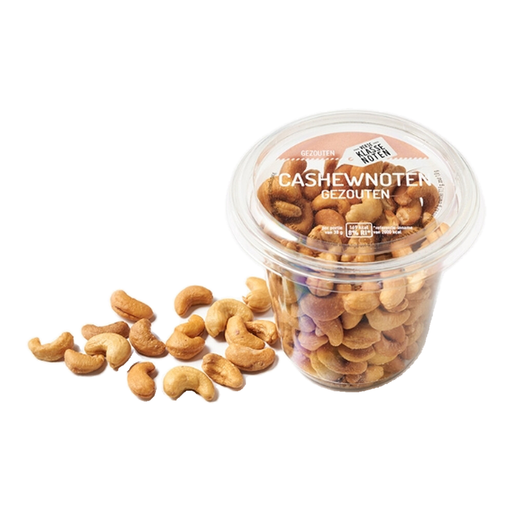
Verse Klassenoten Salted Cashew Nuts - 150 g
A good choice if you’re looking for a roasted, salted variety and want to compare nutritional values per 100 g.
Per 100 g: 21.0 g protein and 1.0 g salt. These are the stated nutritional values, not independent confirmation of a protein claim.
View at Joybuy
 No image available
Jiazhouyuanye Original Flavour Large Cashew Nuts 160 g
A good choice if you want to check the stated protein value per 100 g and eat cashew nuts on their own or add them to yoghurt or muesli.
The product description lists cashew nuts as the sole ingredient and states that they contain 19.8 g of protein per 100 g.
View at Joybuy
 No image available
g'woon Cashew Nuts Roasted & Unsalted - 200 g
A good choice if you’re looking for roasted, unsalted cashew nuts and want to compare the stated nutritional values per 100 g.
Per 100 g: 18.67 g protein, 0.067 g salt and 596 kcal. The product information advises sealing the pack tightly after opening.
View at Joybuy
 No image available
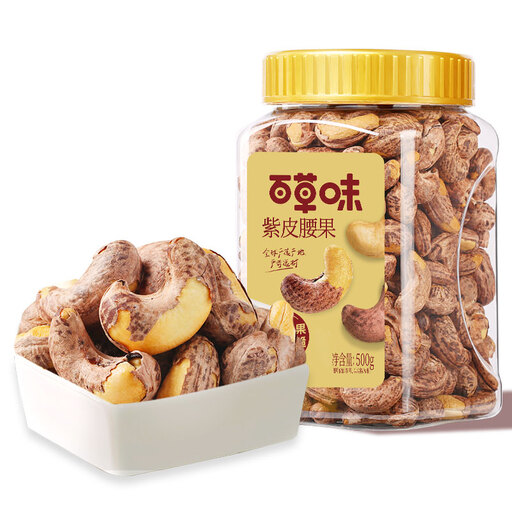
Be&Cheery Cashews with Purple Skin, 180 Grade, 500 g
A good choice if you’re looking for a salted cashew variety in a larger pack; bear in mind the salt in the ingredients.
Per 100 g: 16.4 g protein and 1.2 g salt. The pack contains 500 g.
View at Joybuy
Frequently asked questions
Do school pupils who do sport need special protein snacks?
According to the Netherlands Nutrition Centre, most people who do sport don’t need specialist protein shakes or bars if they eat a varied diet. Strength and endurance sports can increase protein requirements, but that doesn’t make a particular cashew variety a proven recovery product.
Can I take cashew nuts to any school?
Check your school’s or class’s rules before sending cashew nuts in with your child. OBS De Venen is one example of a school with rules about nuts and peanuts; its policy doesn’t automatically apply to other schools.
What should you do if a child has a nut allergy?
Don’t give them cashew nuts if they have a relevant nut allergy. Check the ingredients and warnings on the exact packaging, and follow the advice for that allergy.
How should you store an opened pack of cashew nuts?
The Netherlands Nutrition Centre advises storing them in a tightly sealed container in a cool, dark and dry place; follow the product instructions too. Its storage guide recommends keeping opened unsalted cashew nuts in a kitchen cupboard for six months. Don’t eat mouldy nuts.


