
Snackers keeping an eye on portions
You want to keep eating cashew nuts while managing the energy content of your snack. Check the nutritional information for the exact variety and the amount you actually eat; ‘unsalted’ does not mean low calorie.


Don’t look for a supposedly low-calorie cashew brand: compare the energy per 100 g, then decide how much you want to eat. According to the European Commission, the ‘low calorie’ claim can only be used for solid foods providing no more than 40 kcal (170 kJ) per 100 g. AH and Jumbo list 622 kcal per 100 g for the unsalted varieties we checked, while Duyvis lists 604 kcal per 100 g for Cashews Original, according to the manufacturer. For a school snack, you should also consider the current allergen label, the school’s rules and safe eating.
You want to keep eating cashew nuts while managing the energy content of your snack. Check the nutritional information for the exact variety and the amount you actually eat; ‘unsalted’ does not mean low calorie.
You’re looking for a snack for the school day and need to take allergens, safe eating and school rules into account. A smaller portion is not automatically suitable nutritional advice for a child.
You eat cashew nuts regularly and want to choose a pack that’s easy to portion and store. Compare the pack size and follow the storage instructions; a large pack isn’t automatically a single-portion pack.
First compare the energy per 100 g and the amount you plan to eat. Then consider the ingredients, flavour, allergens and practical suitability for school separately.
| What to consider | What to look for | Who is this most relevant to? |
|---|---|---|
| Energy per portion | Compare the kcal per 100 g for the exact variety and weigh the amount you eat. | If I want to take cashew nuts with me, I want to know how much energy is in my portion. Around 36% of consumers put energy per portion first. |
| School and safe eating | Read the allergen information and check the rules of the school in question; bear in mind the risk of choking on whole nuts. | For a school snack, I want to know whether cashew nuts are allowed and suitable for my child’s circumstances. Around 29% of consumers give school safety the highest priority. |
| Ingredients and flavour | Check whether oil, salt or a seasoning mix is listed in the ingredients; compare salt separately from energy. | When choosing between unroasted, fried or savoury roasted cashews, I want to be able to weigh up the ingredients and flavour. Around 21% of consumers put ingredients and flavour first. |
| Packaging and storage | Compare the net weight with how much you use and follow the storage instructions on the pack. | When I stock up, I want an amount I’ll use regularly and can store properly. Around 14% of consumers make packaging and how they’ll use their stock their first consideration. |
‘Unsalted’ describes the salt content, while ‘no added oil’ describes how the product is prepared; neither means on its own that a product meets the low-calorie threshold. AH and Jumbo list 622 kcal per 100 g for the unsalted varieties we checked. Duyvis lists 604 kcal per 100 g for Cashews Original.
Compare energy, salt and ingredients separately, and calculate the label value for the amount you actually eat.
The packs we checked come in different sizes; a 200 g or 500 g pack is not an individual nutritional recommendation.
Portion the contents carefully and choose a child’s snack to suit their nutritional needs and what else they eat that day.
If you don’t portion the nuts in advance, the pack may stay open for longer and you could eat more than you intended.
Allergen information can vary between varieties. A safety warning may also apply to a specific pack or batch, rather than every product from a brand.
Read the label on the exact pack. If there’s a warning, check the product name, pack size, barcode and best-before date listed.
AH’s unsalted cashew nuts are a good option if you’re looking for a roasted supermarket variety with no added salt.
The unsalted cashew nuts have been reviewed in 200 g and 500 g packs to suit different storage needs.
The 200 g pack of unroasted, unsalted cashew nuts is a good choice if you’re looking for a simple ingredients list.
Cashews Original offers a dry-roasted, savoury flavour.
Alesto offers cashew nuts in unsalted and spicy roasted varieties.
The Trader Joe’s cashew nut range includes a roasted, unsalted variety in a 250 g pack.
These Joybuy picks are cashew varieties to compare by flavour, preparation method and pack size. For a school snack, check the energy per 100 g, the current allergen label and the school’s rules; all the products contain cashews.
 Image unavailable
A good choice if you want to calculate the energy in a weighed portion; the stated energy value doesn’t make these cashew nuts low calorie.
604 kcal per 100 g; 100% cashew kernels; 0.028 g of salt per 100 g.
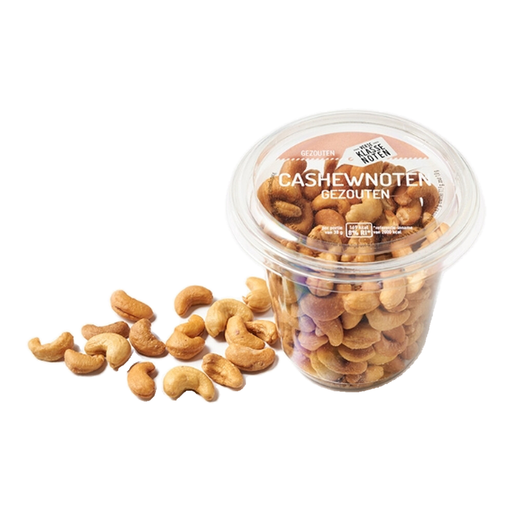 Image unavailable
An option to compare if you’re looking for salted cashews; check the energy per 100 g before deciding on your portion.
596 kcal per 100 g.
 Image unavailable
A good choice if you’re looking for roasted cashews with no added salt; the preparation method alone says nothing about the energy content.
596 kcal per 100 g.
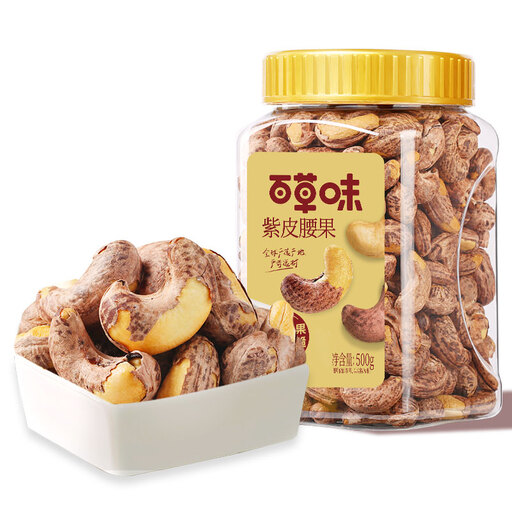 Image unavailable
A good choice if you’re looking for a larger pack so you can weigh out your own portions; bear in mind the energy value per 100 g.
679 kcal and 1.2 g of salt per 100 g.
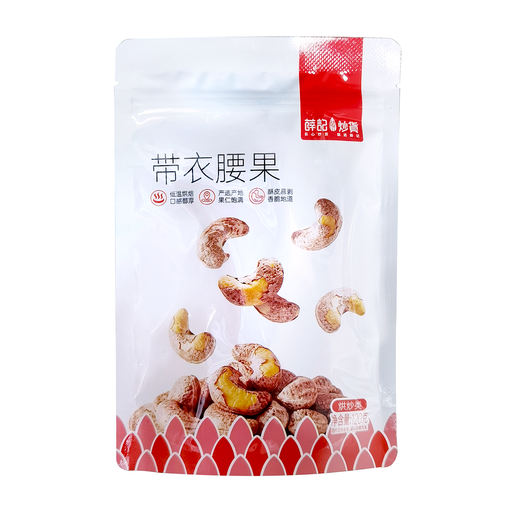 Image unavailable
A smaller pack to compare if you’re looking for salted cashews; check the energy based on the amount you eat.
2493 kJ and 0.9 g of salt per 100 g.
According to the European Commission, solid foods must contain no more than 40 kcal (170 kJ) per 100 g to use the commercial ‘low calorie’ claim. A smaller portion doesn’t change this threshold.
That depends partly on the school’s rules and any allergies. Check the current label and ask the school about its policy; if cashew nuts aren’t allowed, choose another snack.
No, 25 g isn’t automatically suitable for every child; a suggested portion isn’t individual nutritional advice. The Netherlands Nutrition Centre emphasises the importance of a varied diet for growing children. Amsterdam UMC warns of the risk of choking on whole nuts and recommends nut butter instead of whole nuts for children under 4.
Follow the storage instructions on the exact pack and seal it properly after use. AH advises storing its product in a cool, dark and dry place; Jumbo also recommends storing it in a cool, dry and dark place.
The NVWA warning issued on 20 May 2026 concerned 170 g packs of Trader Joe’s unsalted cashew nuts with barcode 2003020120930 and best-before date 23-09-2026, due to the possible presence of metal fragments. The warning doesn’t automatically apply to other packs or batches. Do not eat a pack that matches the details listed.