
Parents who need to avoid allergens
You’ll want to check first whether cashews and any risk of cross-contamination are compatible with your child’s diet. Cashew nuts are not a nut-free alternative, so check whether the school allows them too.


Cashew nuts are only suitable for a school lunch if your child can eat them as part of their diet and the school allows them; they are not a nut-free option. The NVWA and Stichting Voedselallergie class cashews as a nut allergen, so check the allergen information on the exact pack. A label such as gluten-free or lactose-free only refers to that specific characteristic and does not mean the product is free from all allergens.
You’ll want to check first whether cashews and any risk of cross-contamination are compatible with your child’s diet. Cashew nuts are not a nut-free alternative, so check whether the school allows them too.
You’re looking for a label that refers to the specific substance you need to avoid. A lactose-free label is not the same as saying that a product is suitable for someone with a cow’s milk allergy.
If your child can eat cashews, you can consider factors such as added salt, how they’re served and storage instructions. According to the Voedingscentrum, whole nuts are not suitable for children under 4.
First check that cashews are compatible with your child’s diet and the school’s rules. Then look at any specific dietary claims, the ingredients and practical features.
| What to consider | What should you check? | Who is this important for? |
|---|---|---|
| Allergens and school rules | Check whether cashews and any warnings are compatible with the diet, and ask the school about its policy. | If I first need to know whether cashews and possible cross-contamination are suitable, and whether the school allows nuts, this is my top priority. Around 33% of consumers prioritise allergens and school approval. |
| The specific dietary claim | Look for a label relating to the substance you want to avoid on the exact variant, and read the allergen information too. | If I’m avoiding gluten or lactose, I want to see that specific claim on the pack. Around 27% of consumers prioritise a specific dietary claim. |
| Everyday use | Check for added salt, the nutrition table and the full ingredients list; unsalted doesn’t automatically mean made without oil. | If my child takes this snack regularly, I want to be able to assess the ingredients and nutritional information. Around 20% of consumers prioritise everyday dietary choices. |
| How they’re served and how to store them | Consider whether the serving format is suitable for your child’s age, and follow the storage instructions on the pack. | If I’m thinking about when my child will eat the snack and how to store it in a lunchbox, I want the format to suit them. Around 13% of consumers prioritise serving format and practicality. |
| Pack size | Compare the contents of suitable variants and check their storage instructions. | When choosing a pack, I want the quantity to suit how we use and store the nuts. Around 7% of consumers prioritise a suitable pack size. |
A gluten-free or lactose-free label doesn’t mean that the product contains no cashews. Cashews are a nut allergen and may appear on the label alongside other allergens.
First note which substance you need to avoid, then check the ingredients and allergen information on the exact pack.
A product may list cashews as its only ingredient and still carry a warning that it may contain peanuts. PLUS includes this warning for its unsalted, unroasted variant.
Read any warnings about possible presence alongside the ingredients list.
The manufacturer describes Duyvis Cashews Original as oven-roasted without added oil. This doesn’t in itself mean that another Duyvis variant is unsalted; the salted Oven Roasted variant lists salt.
Check the flavour variant, ingredients and nutrition table rather than relying on the preparation description alone.
Packaging doesn’t change the fact that whole nuts can pose a choking risk. The Voedingscentrum advises against giving whole nuts or peanuts to children under 4.
Consider the serving format separately and follow the Voedingscentrum’s age-related advice.
The Original and Oven Roasted variants are worth considering if you’re looking at a savoury cashew snack; the exact features vary by variant.
The product page for AH Unsalted Cashew Nuts, 170 grams, states that they are gluten-free and lactose-free.
In the product information reviewed, Jumbo offers both unsalted cashew nuts and an unroasted variant.
Lidl’s product page describes unsalted cashew nuts in a 500-gram pack.
ALDI’s product page describes Trader Joe’s roasted, unsalted cashew nuts in a 250-gram pack.
PLUS Unsalted Unroasted Cashew Nuts, 200 grams, are an option if you want to check the ingredients list.
These products are intended for situations where cashews are compatible with your child’s diet and the school’s rules; check the ingredients and allergen information for each product.
 No image available
Only suitable if cashews are compatible with your child’s diet and the school’s rules; the product information states that it contains 100% cashew kernels.
Salt: 0.028 g per 100 g.
 No image available
Consider this savoury variant only if cashews and the listed allergens are compatible with your child’s diet.
The product information lists 98% cashews, savoury flavourings and 0.92 g of salt per 100 g. Gluten, wheat and peanuts are also listed as allergens.
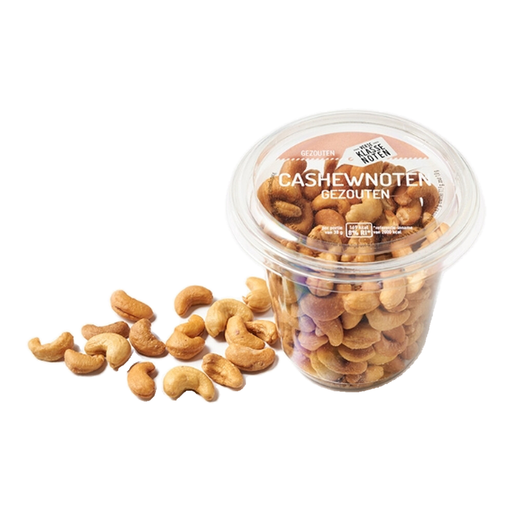 No image available
A salted option to consider if cashews and salt are suitable for your school lunch choice.
The product information lists 98% cashews, sunflower oil and 1.0% salt.
 No image available
This roasted, unsalted option may suit you if you prefer cashew nuts with no added salt, provided cashews are allowed.
Salt: 0.067 g per 100 g. The product information lists cashews; this is not a nut-free option.
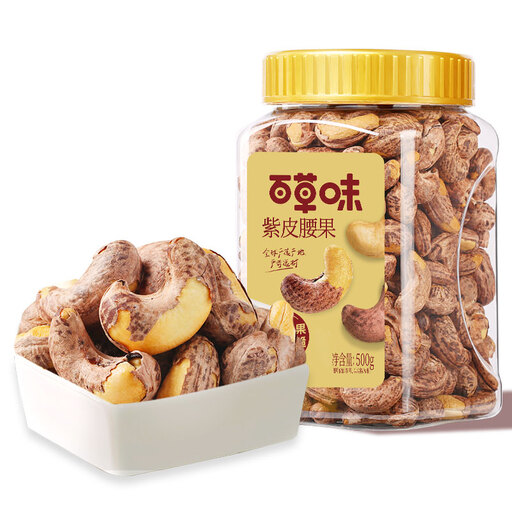 No image available
Consider this variant only if cashews and salt are compatible with your child’s diet and the school’s rules.
The product information lists cashew kernels and salt, with 1.2 g of salt per 100 g.
No, not automatically. Lactose is milk sugar; a cow’s milk allergy is an allergy to milk proteins. So if you’re dealing with a cow’s milk allergy, don’t use a lactose-free label as your only selection criterion.
‘May contain’ is a warning about possible cross-contamination and is separate from ingredients that have been deliberately added. The NVWA explains that businesses must assess the risk; since 1 January 2026, the NVWA has overseen the new rules for this allergen information.
Check with your child’s school. If it has a nut-free policy, cashew nuts aren’t suitable; the Voedingscentrum explains that schools can have their own food policies.
The Voedingscentrum advises against giving whole nuts or peanuts to children under 4 because of the risk of choking. A different serving format doesn’t change the allergen information or school rules.
No. A gluten-free label refers to gluten; it doesn’t mean that a product is free from all allergens. Also check whether the product lists cashews, peanuts or any other allergens relevant to your situation.