
Lunch-packers keeping an eye on portions
You want to know how much energy you’re actually packing, without mistaking a small portion for a low-calorie product. Compare like for like and weigh out the amount you choose.


Only pack cashew nuts if they comply with any allergy arrangements and the school’s policy. Then compare the kcal per 100 g and weigh out the amount you’re packing. The varieties reviewed with published nutritional information are not low-calorie products: according to the European Commission, solid foods must contain no more than 40 kcal (170 kJ) per 100 g to make this claim. Weighing a portion makes its energy content clear, but this isn’t nutritional advice for every teenager.
You want to know how much energy you’re actually packing, without mistaking a small portion for a low-calorie product. Compare like for like and weigh out the amount you choose.
You’re looking for unsalted cashew nuts for a school lunch or snack, and want to choose between unroasted and prepared varieties. The ingredients list can help you spot added oils and flavourings.
You take the pupil’s allergy information and any school arrangements into account. Cashew nuts contain cashew, so check the allergen information on the exact pack too.
First, check that cashew nuts are allowed under the allergy arrangements and school rules. Then compare nutritional values per 100 g and decide how much you want to pack.
| What to consider | What should you check? | Who is this important for? |
|---|---|---|
| Allergens and school arrangements | Check for cashew as an ingredient, any warnings about other allergens and your school’s own arrangements. | If I need to take an allergy or school arrangement into account, I check this before considering flavour or packaging. Around 29% of consumers put allergens and permission at school first. |
| Energy per portion | Compare kcal per 100 g, then weigh out the amount; a portion is not individual nutritional advice. | If you want to know how much energy you’re actually packing, both the nutritional value and the weight matter. Around 36% of consumers give the energy in the portion they pack the highest priority. |
| Salt and ingredients | Read the ingredients list and check the salt content of the exact variety; assess it separately from the kcal. | If I’m looking for unsalted cashew nuts with a simple ingredients list, I check both. Around 21% of consumers put salt and ingredients first. |
| Packaging and storage | Check the net weight and storage instructions, and divide a larger pack into suitable portions yourself. | If you want to pack cashew nuts for several school days, a pack that’s easy to divide and store is useful. Around 14% of consumers give practical packaging the highest priority. |
The low-energy claim for solid foods is assessed per 100 g. A smaller portion doesn’t change the product’s nutritional value per 100 g.
Describe the energy content for the amount you’ve weighed out, and don’t call a product low-calorie unless it meets the conditions for the claim.
These are different product characteristics. The unsalted prepared varieties reviewed from Albert Heijn and Jumbo contain sunflower oil; Duyvis describes an oven-roasted variety made without added oil which, according to Flink, does contain salt.
Check the preparation method, ingredients, kcal and salt separately on the information for the exact variety.
A pack may contain several portions. Albert Heijn lists four 25 g portions in its 100 g pack; other packs reviewed contain up to 500 g.
Decide how much to pack and follow the storage instructions on the packaging. A listed portion is not personalised nutritional advice.
On 20 May 2026, the NVWA issued a warning about 170 g packs of Trader Joe’s unsalted cashew nuts with barcode 2003020120930 and best-before date 23-09-2026, due to possible metal fragments.
Compare the product, barcode and best-before date with the warning. If you have the affected pack, don’t eat the cashew nuts. The warning doesn’t automatically apply to other packs or batches.
Worth considering if you’re looking at savoury, oven-roasted cashew nuts. Duyvis describes Cashews Original as made without added oil.
AH Ongezouten cashewnoten is a prepared variety with a stated portion size of 25 g.
The listed ranges include Ongebrande Cashewnoten 200 g and Cashewnoten Ongezouten Voordeelverpakking 500 g.
Lidl Netherlands lists unsalted cashew nuts in a 500 g pack.
ALDI Netherlands lists TRADER JOE'S Cashewnoten geroosterd en ongezouten in a 250 g pack. ALDI is the supermarket; TRADER JOE'S is the product brand.
PLUS Cashewnoten ongezouten ongebrand 200 g is an option if you’re looking for an unroasted variety.
Below is a selection of cashew nuts for a school lunch, including salted and unsalted varieties. Compare the nutritional values per 100 g and consider your preferred flavour and quantity.
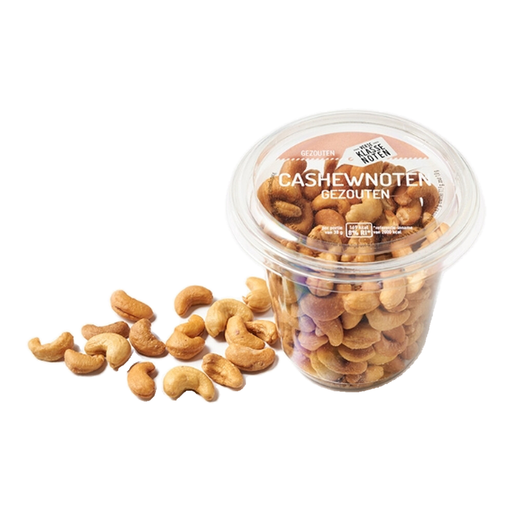 Image unavailable
The description presents these salted cashew nuts as a ready-to-eat snack.
Bear in mind that cashew is an allergen and check the school’s arrangements.
 Image unavailable
This variety may suit you if you want to compare the listed ingredients and energy per 100 g.
The description lists 100% cashew kernels and 604 kcal per 100 g.
 Image unavailable
This unsalted variety may suit you if you want to weigh out the amount yourself.
The description lists cashew as the only ingredient and 596 kcal per 100 g.
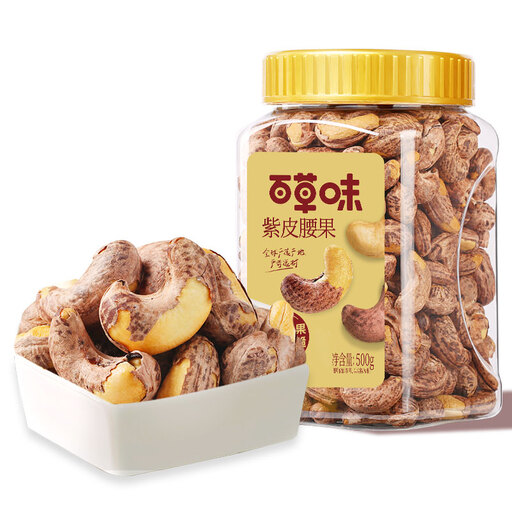 Image unavailable
This salted variety may suit you if you want to split the pack across several occasions.
The description lists 679 kcal and 1,2 g of salt per 100 g.
Contains cashew; check that this variety complies with allergy arrangements and school rules.
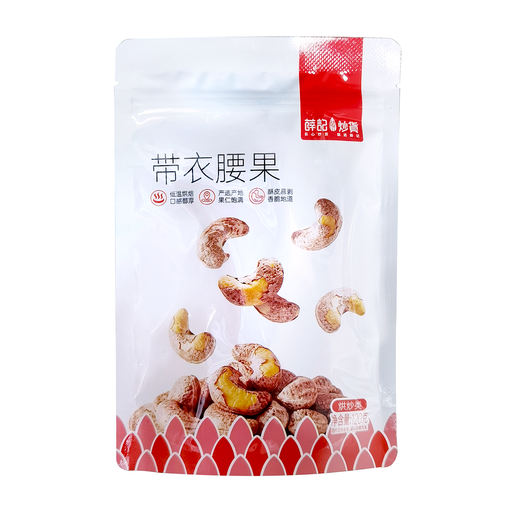 Image unavailable
The compact pack may suit you if you want to take a smaller amount with you.
The description lists 596 kcal and 0,9 g of salt per 100 g.
Contains cashew; bear in mind any allergy arrangements and the school’s rules.
Not based on the nutritional values reviewed. According to the European Commission, solid foods must contain no more than 40 kcal (170 kJ) per 100 g to make a low-energy claim; the products reviewed with verified values are above that threshold. Similar commercial wording is also subject to the conditions for the claim.
Multiply the kcal per 100 g by the number of grams you’ve weighed out, then divide by 100. For AH Ongezouten cashewnoten, which contains 622 kcal per 100 g, a 25 g portion for calculation purposes comes to 155,5 kcal. This is a calculation, not a recommended portion for every pupil.
Use this buying guide for one part of a lunch or a snack, not to plan a complete lunch. The Voedingscentrum advises teenagers to eat a varied diet from all sections of the Schijf van Vijf, including options such as wholemeal bread, fruit, vegetable snacks and unsalted nuts.
Follow the storage instructions on the packaging for the exact variety. Albert Heijn advises storing its product in a cool, dark, dry place and sealing the pack well after use. Jumbo advises storing its product in a cool, dry, dark place.
Don’t eat the affected 170 g pack if its barcode matches 2003020120930. The NVWA warning of 20 May 2026 mentions possible metal fragments and gives the best-before date as 23-09-2026. Check the product, barcode and best-before date; the warning doesn’t automatically apply to other packs or batches.