What should you look for when buying?
First, compare the nutritional information with the portion you actually eat. Then check the salt, ingredients and quantity you can store properly.
Unsalted and unroasted
A good choice if: you’re looking for a simple ingredients list and want to enjoy the nuts as a snack or use them in dishes. The PLUS variety examined lists only cashew nuts as an ingredient.
Keep in mind: unroasted doesn’t automatically mean more protein. PLUS lists 18.5 g per 100 g and states that this variety may contain peanuts.
Unsalted and roasted
A good choice if: you’re looking for roasted cashew nuts with no added salt. Albert Heijn and Jumbo list sunflower oil in the varieties examined.
Keep in mind: the AH and Jumbo products examined both list 622 kcal per 100 g, while their stated protein values differ: 19 g and 21.5 g respectively. These figures are taken from the product labels.
Savoury and oven-roasted
A good choice if: a savoury flavour is your main reason for choosing them. Duyvis describes Cashews Original as oven-roasted and made without added oil.
Keep in mind: Duyvis’s product description doesn’t prove that this variety contains more protein or is low in salt. Check the label on the exact pack for this information.
| What to consider |
What to look for |
Who is this most relevant to? |
| Protein per serving |
The Dutch Nutrition Centre lists 5.3 g of protein per 25 g of unsalted cashew nuts. Compare this with the nutrition table for the variety you’re buying. |
If I take cashew nuts with me for sport, I want to know what my own portion contributes and include it in my overall diet. Consumers who prioritise protein contribution account for around 36%. |
| Salt, energy and quantity |
Check the salt and energy per 100 g, as well as the portion you actually eat. ‘Unsalted’ doesn’t automatically mean low in calories. |
When I snack regularly, I want to be able to weigh out how much I eat and keep an eye on salt and energy. Around 29% of consumers prioritise this everyday snacking profile. |
| Ingredients and preparation |
Read the ingredients list for the exact variety; unsalted, unroasted and made without added oil are different qualities. |
If I also use the nuts in dishes, I want to know what’s in them and how they’ve been prepared. Consumers who make a simple ingredient list their first choice criterion account for around 21%. |
| Pack size and storage |
Compare the net weight and choose an amount that suits how you use them. Store nuts in a tightly sealed container in a dry place, as advised by the Dutch Nutrition Centre. |
When shopping, I want to choose a pack I can use in time and store properly. Around 14% of consumers prioritise pack size and value. |
Cashew nuts at Joybuy
These Joybuy product picks are cashew nuts for snacking or cooking. The varieties differ in how they’re prepared, their salt content and their nutritional values, so check the product information for the specific pack.
 No image available
Jiazhouyuanye Original Flavour Large Cashew Nuts, 160 g
The description suggests enjoying them as a snack or adding them to yoghurt, muesli or baked goods.
The ingredients list states only cashew kernels. The label lists 19.8 g of protein and 0.028 g of salt per 100 g; the pack contains 160 g.
Contains cashew.
View at Joybuy
 No image available
g'woon roasted and unsalted cashew nuts, 200 g
The product title describes roasted, unsalted cashew nuts for snacking or cooking.
The ingredients list states only cashew nuts. The label lists 18.67 g of protein and 0.067 g of salt per 100 g.
Contains cashew nuts.
View at Joybuy
 No image available
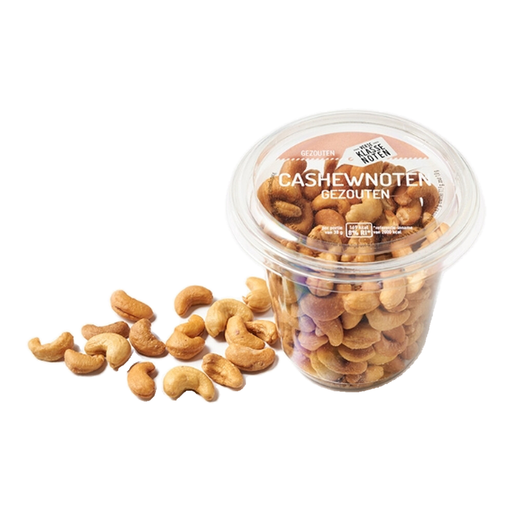
Verse Klassenoten salted cashew nuts, 150 g
The product description suggests eating them straight from the pack.
The ingredients list states 98% cashew, sunflower oil and salt. The label lists 21.0 g of protein and 1.0 g of salt per 100 g.
This is a salted variety.
View at Joybuy
 No image available
Three Squirrels Purple-Shell Cashews, 500 g
The description suggests enjoying them as a snack or as a topping for salads and desserts.
The ingredients list states 99% cashew nuts and salt. The label lists 17.4 g of protein and 0.9 g of salt per 100 g.
Contains salt.
View at Joybuy
 No image available
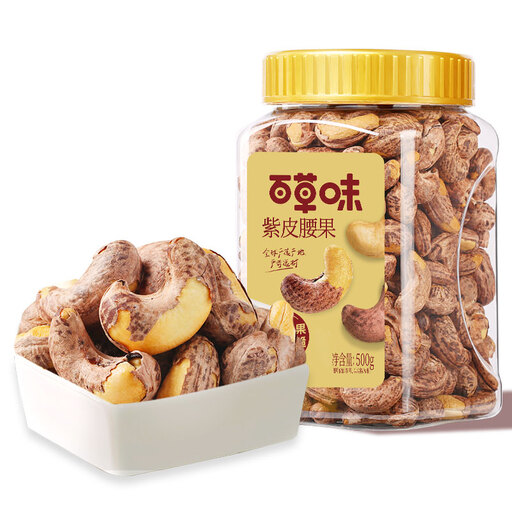
Be&Cheery cashews with purple skin, 180 grade, 500 g
The description suggests enjoying them as a snack or using them in baking.
The pack contains 500 g. The ingredients list states cashew kernels and salt; the label lists 16.4 g of protein and 1.2 g of salt per 100 g.
Contains salt.
View at Joybuy
Frequently asked questions
How much protein does a handful of cashew nuts provide?
The Dutch Nutrition Centre lists 5.3 g of protein per 25 g of unsalted cashew nuts. This is a general nutritional value; check the label on the exact variety before you buy.
Do you need a protein shake as well as cashew nuts after exercise?
Not necessarily: according to the Dutch Nutrition Centre, recreational athletes generally don’t need special protein products. Consider cashew nuts as part of your overall diet and follow the guidance that’s right for your situation.
How should you store an opened pack of cashew nuts?
Store cashew nuts in a tightly sealed container in a dry place, as advised by the Dutch Nutrition Centre. Also follow the label for your chosen variety; for the pack examined, Albert Heijn recommends storing it in a cool, dark, dry place and sealing it carefully after use.
What should you check if you have a food allergy?
Check the ingredients and allergen information on the exact pack. The products examined contain cashew; Albert Heijn, Jumbo and PLUS also state that other allergens may be present. Don’t assume a variety is suitable without checking the packaging.
Does the ALDI warning apply to all cashew nuts?
No. The NVWA warning of 20 May 2026 concerns 170 g packs of Trader Joe’s unsalted cashew nuts with barcode 2003020120930 and best-before date 23-09-2026. The warning advises against eating them because they may contain metal fragments. It doesn’t automatically apply to the 250 g roasted pack examined or to all cashew nuts.


