
Households keeping an eye on quantity and consumption
You buy cashew nuts regularly and want to know whether a large pack suits how much your household actually eats. Consider the quantity and how many portions you can get from it.


A larger pack makes sense if your household eats cashew nuts regularly and you can store them properly. The pack size itself doesn’t tell you how much you need for each snack. Choose your preferred preparation and salt level separately, and match the quantity to how quickly you’ll use them.
You buy cashew nuts regularly and want to know whether a large pack suits how much your household actually eats. Consider the quantity and how many portions you can get from it.
You’re looking for cashew nuts as a mid-morning snack and pay attention to the salt level. A bulk bag isn’t automatically the right portion size; you can set aside a portion in advance.
You don’t eat cashew nuts every day, share them with just a few people or like to mix things up. Choosing a pack that suits how quickly you’ll use it makes it easier to seal and store the contents properly.
Start by considering how many cashew nuts your household gets through, then choose your preferred portion size, preparation and storage method.
| What to consider | What should you check? | Who is this most relevant to? |
|---|---|---|
| Pack size and consumption | Compare the net weight with how many people will eat them and how often you serve cashew nuts. | I want to know in advance whether the pack size suits how much my household gets through. Around 29% of consumers put matching the quantity to their consumption first. |
| Portion size and salt | Check whether the variety is unsalted and look at the ingredients; set your chosen portion aside from the rest. | For my daily snack, I want to choose how much I have and keep an eye on salt. Around 29% of consumers prioritise this combination. |
| Storage | Check the best-before date and storage instructions, and make sure you can seal the pack properly. | If I don’t eat cashew nuts often, I want to store and use up the pack properly. Around 21% of consumers focus mainly on managing their stocks appropriately. |
| Preparation and flavour | Check whether the cashew nuts are unroasted, roasted or seasoned, and read the ingredients for the exact variety. | I want to choose a preparation and flavour I enjoy, rather than buying a large quantity of something unfamiliar. Around 14% of consumers put flavour first. |
| Origin or certification | Check that the claim appears on the exact pack; don’t assume it applies to an entire product range. | If origin is a deciding factor for me, I want to see it stated on the variety I choose. Around 7% of consumers prioritise origin. |
A large pack may stay in your cupboard longer than suits your household’s consumption.
Think about how many portions you want from the pack and match the size to how often you eat cashew nuts.
The pack size doesn’t tell you how much to have at each snack time.
Spoon your chosen portion into a separate bowl and reseal the rest of the pack.
Duyvis lists salt in the ingredients for Cashews Original, although the manufacturer says this variety is oven-roasted without added oil.
Check the ingredients and salt level separately from the preparation claim.
According to the Netherlands Nutrition Centre, nuts can lose quality if stored improperly. Look out for signs such as a rancid smell, a chewy texture or mould.
Store cashew nuts in a well-sealed container, somewhere dry and preferably cool. Also follow the storage instructions on the pack.
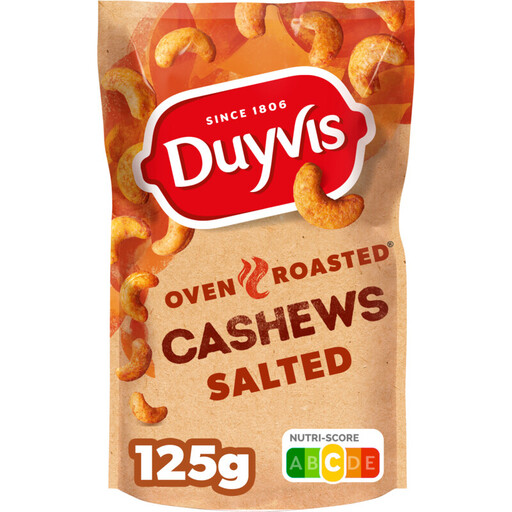
Cashews Original is a savoury variety sold in a 125 g pack.
The AH category page lists AH Terra Unroasted Cashew Nuts in a 500 g pack.
Jumbo lists unsalted cashew nuts in 500 g and 200 g packs.
Lidl mentions Fairtrade for its specific Way To Go cashew nuts.
ALDI lists roasted, unsalted Trader Joe’s cashew nuts in a 250 g pack; the product page for 500 g shows salted and unsalted varieties.
PLUS lists unsalted, unroasted cashew nuts in a 200 g pack.
These Joybuy products offer cashew nuts in a range of pack sizes and varieties. Check the salt information, preparation and ingredients for each product.
 No image available
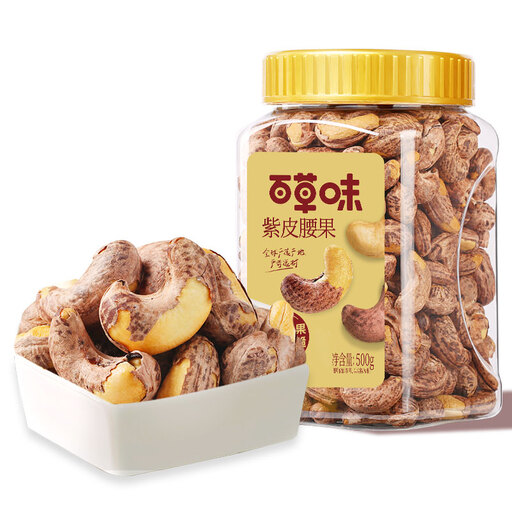
The 500 g pack may suit you if you snack regularly or share; the product information lists salt.
Pack size: 500 g. Not suitable if you’re specifically looking for unsalted cashew nuts.
 No image available
The 500 g pack may suit you if you snack regularly or share; the product information lists salt.
Pack size: 500 g. Not suitable if you’re specifically looking for unsalted cashew nuts.
 No image available
The 160 g pack may suit you if you eat cashew nuts infrequently or in varying amounts.
Pack size: 160 g. Check the product information and packaging for the exact ingredients and variety.
 No image available
The product title says roasted and unsalted; the 200 g pack is a smaller option.
Pack size: 200 g. Check the packaging if you want to confirm the ingredients for the exact variety.
 No image available
This smaller pack may suit you if you’re looking for a savoury variety or want to open a smaller amount.
Pack size: 125 g. The product information lists salt, and gluten, wheat and peanuts as allergens; check the packaging.
Divide the net weight by the portion size you choose. The Netherlands Nutrition Centre uses 25 g as an example of a handful of unsalted cashew nuts. That gives you eight portions from 200 g, ten from 250 g and twenty from 500 g. This is a calculation example, not personalised dietary advice.
Store them in a well-sealed container, somewhere dry and preferably cool. The Netherlands Nutrition Centre’s storage guide specifically for cashew nuts recommends keeping an opened product for six months in a kitchen cupboard or one year in the freezer, after which its quality may decline. This is general storage advice, not a guarantee for every pack; follow the label too, and look out for a rancid smell, a chewy texture or mould.
Don’t assume that roasting removes the allergen. The Food Allergy Foundation states that the allergen remains stable when heated. If you have a relevant allergy, follow your personal medical advice; unroasted or unsalted doesn’t mean allergen-free.
The NVWA warning dated 20 May 2026 concerns 170 g packs of Trader Joe’s unsalted cashew nuts, barcode 2003020120930, with a best-before date of 23-09-2026, due to possible metal fragments. Do not eat that specific pack. The date has now passed; the warning is still relevant if you have that old stock, and doesn’t automatically apply to other ALDI cashew nuts.
Choking is a significant risk for young children. The Jumbo product page explicitly warns about this; adapt the shape of the snack to the child’s age and ability to eat safely.