
Snackers looking to eat less fat
If you want to eat less fat at snack time, you may want to see whether a different product or a smaller portion would suit you.


Compare fat and energy per 100 g, and consider how many cashew nuts you actually eat: a smaller portion doesn’t change the product’s nutritional composition. Unsalted, unroasted or prepared without added oil doesn’t automatically mean low in fat. Check the ingredients too, and whether the exact pack can be delivered when you order online.
If you want to eat less fat at snack time, you may want to see whether a different product or a smaller portion would suit you.
If you’re looking for unroasted or oven-roasted cashew nuts without added oil, you can assess the flavour, salt and nutritional values separately.
If you need to add cashew nuts to an online grocery order, bear in mind that a product range page alone doesn’t confirm whether the exact variety can be delivered.
Start by checking the nutritional values per 100 g and what the claim on the pack means. Then decide on your portion size and check whether you can order that exact pack online.
| What to consider | What to look for when buying | Who should pay particular attention? |
|---|---|---|
| Fat per equal quantity | Compare fat and energy per 100 g, and read the basis for comparison when you see a claim such as ‘reduced fat’. According to the European Commission, ‘low fat’ claims for solid foods are limited to a maximum of 3 g of fat per 100 g. | If I want to know how much fat cashew nuts contain per equal quantity, I compare the nutritional values and the exact claim; around 36% of consumers prioritise this nutritional composition. |
| Portion size per snack | Check the portion weight and work out the nutritional values for the amount you actually eat. The AH cup lists a 25 g portion. | If my main aim is to work out how much I eat at snack time, I weigh my portion rather than treating the whole pack as one portion; around 28% of consumers prioritise portion size. |
| Preparation, salt and oil | Check the ingredients list for oil and look at the salt content separately. Jumbo lists sunflower oil; the PLUS variety examined lists only cashew nuts as an ingredient. | If I want to avoid oil or salt, I check both the ingredients and nutritional information, because ‘unsalted’ says nothing about oil; around 22% of consumers focus mainly on preparation and added ingredients. |
| Ordering online | Check the order and delivery status of the exact variety. PLUS offers the pack examined online; Lidl Netherlands says it doesn’t offer grocery delivery. | If I want my nuts delivered with my groceries, I check whether this exact pack is available to order online; around 14% of consumers prioritise convenience when ordering. |
Unsalted refers to the salt content, not the fat content. According to Albert Heijn’s product information, the AH cup examined contains sunflower oil and lists 50 g of fat per 100 g.
Read the ingredients and nutritional values alongside the product name.
Duyvis describes Cashews Original as oven-roasted without added oil. A separate salted Duyvis variety at Flink lists 49 g of fat per 100 g, so the preparation method and nutritional values are not the same thing.
Assess the preparation method and total fat content separately.
The organic 150 g AH variety examined is listed as ‘In store only’. Lidl Netherlands says it doesn’t sell groceries through its website or app and doesn’t offer grocery delivery.
Check the order status for the exact pack and the retailer’s delivery options.
Worth considering if you’re looking for oven-roasted cashew nuts.
The varieties examined include unsalted roasted cashew nuts and organic unroasted cashew nuts.
The 200 g unsalted pack examined is an option if you want to order cashew nuts online.
The 200 g unsalted, unroasted cashew nuts examined are aimed at shoppers looking for a simple ingredients list and online ordering.
Lidl’s range in the Netherlands includes cashew nuts, which you can look for when visiting a store.
The product page examined shows Trader Joe’s 250 g roasted, unsalted cashew nuts as a store product.
This selection includes salted, roasted and unsalted cashew nuts. A flavour or preparation description alone doesn’t prove that the product has reduced fat.
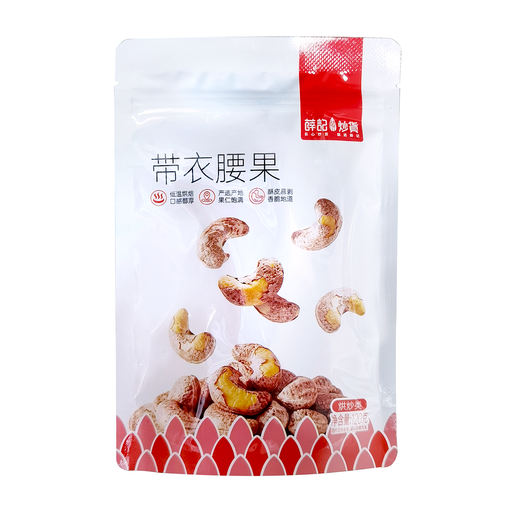 No image available
For anyone looking for salted cashews with skin; the product title lists a 120 g pack. Check the nutritional values separately.
 No image available
A good fit if you’re looking for cashew nuts with an original flavour to snack on or use in recipes; the product title lists 160 g. Contains cashew nuts.
 No image available
For anyone looking for dry-roasted cashew nuts; the title lists a 125 g pack. The allergen information mentions cashews, gluten, wheat and peanuts.
 No image available
For anyone looking for roasted, unsalted cashew nuts; the title lists 200 g. Unsalted doesn’t, on its own, say anything about the fat content. Contains cashew nuts.
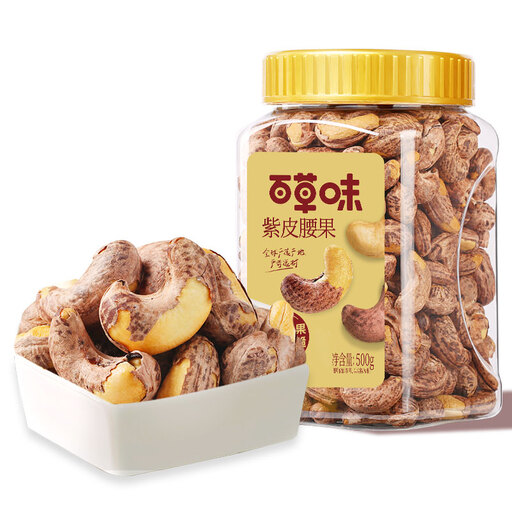 No image available
For anyone looking for cashews with purple skin; the title lists 180 grade and 500 g. Contains cashew nuts.
No. ‘Low fat’ is an absolute claim: according to the European Commission, solid foods must contain no more than 3 g of fat per 100 g. ‘Reduced fat’ refers to a comparison with a standard product, so check what comparison is used on the pack.
No. According to Jumbo, the unsalted Jumbo cashew nuts examined contain sunflower oil, while the PLUS variety examined lists only cashew nuts as an ingredient. Check the ingredients list on the exact pack.
Multiply the fat per 100 g by the weight of your portion, then divide by 100. According to Albert Heijn’s product information, the unsalted AH cup contains 50 g of fat and 622 kcal per 100 g; a 25 g portion works out to 12.5 g of fat and 155.5 kcal.
Not through a grocery delivery service from Lidl Netherlands: Lidl says it doesn’t sell groceries through its website or app and doesn’t offer grocery delivery. For home delivery, check another retailer and the order status of the exact variety.
Check the allergen information for the exact pack, including warnings about the possible presence of other allergens. For example, the PLUS variety examined states that the product may contain peanuts. Business.gov.nl says that information on Dutch food labels must be in Dutch and also available online.