Who is this choice relevant to?
You’re looking for genuinely lower fat
You want to know whether a type of cashew nuts really contains less fat, rather than simply being roasted differently. For the claim ‘low fat’ on solid foods, the European Commission sets a maximum of 3 g of fat per 100 g. That’s different from simply describing how a product is prepared.
You want to manage your portions
You’d like to serve cashew nuts with drinks, but decide in advance how much to put out. The Netherlands Nutrition Centre gives 154 kcal and 12.2 g of fat per 25 g serving for generic unsalted cashew nuts; these figures don’t apply to every individual product.
You’re hosting drinks for guests
You’re choosing between salted and unsalted varieties, while taking allergens and any young children into account. The Netherlands Food and Consumer Product Safety Authority highlights the allergen information on prepacked products. If someone has a known allergy, the information on the exact pack is still important.
What should you look for when choosing?
For the claim ‘low fat’ on solid foods, the European Commission sets a maximum of 3 g of fat per 100 g. Compare nutritional values on the same basis, and consider fat, salt, preparation and portion size as separate factors when choosing.
| Concern |
What should you check? |
Who is this important to? |
| Proven lower fat |
Check the fat content per 100 g and the exact claim on the pack. |
If I’m specifically looking for less fat, I want to be able to compare nutritional values, rather than just see a description of how the product is prepared. Around 31% of consumers give proven fat reduction top priority. |
| Portion size |
Compare the nutritional values per 100 g with the amount you want to serve. |
If I want to decide in advance how many cashew nuts to put out, weighing them is more helpful than choosing a different product name. Around 25% of consumers prioritise keeping snack portions in check. |
| Salt and preparation |
Check whether the nuts are salted, unsalted, roasted or made without added oil. |
If I mainly prefer unsalted nuts or a particular preparation method, I want to be able to choose those features separately. Around 19% of consumers give their choice of salt and preparation top priority. |
| Suitable for guests |
Check the allergen information and bear young children in mind when serving whole nuts. |
If there’s a known allergy or young children at my get-together, I want to know in advance what I’m putting on the table. Around 13% of consumers prioritise guest safety. |
| Packaging and leftovers |
Match the net weight to the number of bowls you’re filling and how you plan to store any leftover nuts. |
If I’m filling several bowls, I want to choose an amount that suits my get-together and store any leftovers according to the pack instructions. Around 12% of consumers give planning their packaging top priority. |
Common mistakes
-
Assuming ‘no added oil’ means low fat
‘No added oil’ describes how a product is prepared and, on its own, doesn’t prove that it has a lower fat content. Flink lists 49 g of fat per 100 g for Duyvis Oven Roasted Gezouten Cashew Noten 125 g; this is a different product listing from Duyvis Cashews Original.
Check the total fat content of the exact variety, and treat preparation claims separately from nutrition claims.
-
Assuming unsalted means lower fat
Unsalted describes the salt content, not the fat content. The Netherlands Nutrition Centre lists 12.2 g of fat per 25 g serving for generic unsalted cashew nuts.
Compare salt and fat separately, and use the nutritional information on the pack you’re planning to buy.
-
Calling a smaller portion a reduced-fat product
A smaller portion changes how much you eat, not the fat content per 100 g of the cashew nuts.
If you like, weigh out the amount in advance and describe it as portioning, not as a different product composition.
-
Confusing a warning with an expired best-before date
The Netherlands Food and Consumer Product Safety Authority warning dated 20 May 2026 applies only to Trader Joe’s unsalted cashew nuts, 170 g, with barcode 2003020120930. The warning mentions possible metal fragments and says not to eat the product; the stated best-before date is 23 September 2026.
Check the brand, pack size, barcode and best-before date together. Don’t eat a pack that matches this warning exactly.
Brands to consider
These brands offer examples of different preparation methods, salt options and pack sizes. None of these features, on its own, proves that a product contains less fat.
Duyvis
Duyvis describes Cashews Original as cashew nuts roasted without added oil, in a 125 g pack.
- The manufacturer clearly specifies the preparation method and pack size.
- Flink lists 49 g of fat per 100 g for Duyvis Oven Roasted Gezouten Cashew Noten 125 g. This is a separate product listing and doesn’t support positioning Cashews Original as low fat.
Albert Heijn
Albert Heijn describes its 100 g pack of AH Ongezouten cashewnoten as unsalted and roasted.
- The product description makes the salt choice and preparation method clear.
- Being unsalted and roasted doesn’t prove a reduced fat content.
Jumbo
Jumbo lists unsalted packs of 200 g and 500 g, as well as a 125 g salted dry-roasted variety.
- The pack sizes listed offer different quantities for a get-together.
- Dry roasted, unroasted and unsalted describe different features; none of them, on its own, proves a reduction in fat.
Lidl
Lidl includes its Way To Go cashew nuts in a fair trade programme.
- Lidl says the cashew nuts are processed directly in Tanzania and then brought to the Netherlands.
- This is Lidl’s own supply-chain claim and says nothing about the fat content or flavour of the nuts.
ALDI
ALDI lists Trader Joe’s cashew nuts, roasted and unsalted, in a 250 g pack.
- The product description makes the brand, salt choice, preparation method and pack size clear.
- A separate warning from the Netherlands Food and Consumer Product Safety Authority applies to a 170 g pack with a specific barcode; it doesn’t automatically apply to the 250 g pack.
PLUS
PLUS lists a 200 g bag of unsalted, unroasted cashew nuts.
- This description makes the salt choice and preparation method clear.
- Being unsalted and unroasted doesn’t prove a reduced fat content; check the information on the current pack.
Cashew nuts on Joybuy
These Joybuy products are cashew options for a get-together, including natural, dry-roasted, salted and unsalted varieties. A preparation method or salt choice doesn’t, on its own, prove a reduction in fat; check the nutritional information for the exact variety.
 No image available
Jiazhouyuanye Original Flavour Large Cashew Nuts, 160 g
A plain option for serving cashew nuts straight from the pack at your get-together.
Ingredients: 100% cashew kernels. Pack size: 160 g.
Joybuy
 No image available
Duyvis Dry Roasted Cashews, 125 g
Suitable if you’re specifically looking for oven-roasted cashews with no added oil; this preparation method doesn’t, on its own, prove a reduced fat content.
The product information lists 43 g of fat per 100 g and four to five servings per pack.
Joybuy
 No image available
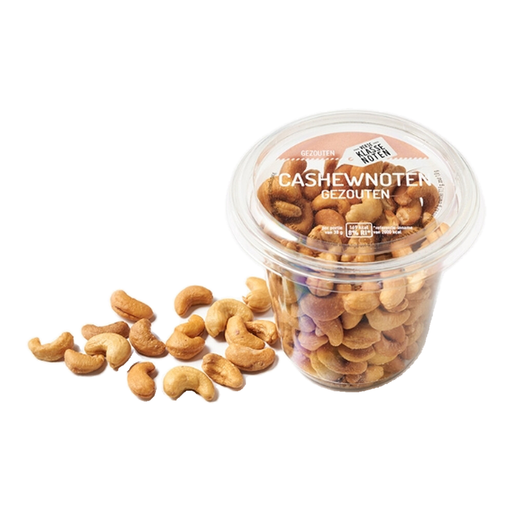
Verse Klassenoten Salted Cashew Nuts, 150 g
A salted variety for serving cashew nuts with salt at your get-together.
The ingredients list includes cashew nuts, sunflower oil and salt. Pack size: 150 g.
Joybuy
 No image available
g'woon Cashew Nuts Roasted & Unsalted, 200 g
Suitable if you’re looking for roasted cashew nuts with no added salt.
The product information describes roasted, unsalted cashew nuts. Pack size: 200 g.
Joybuy
 No image available
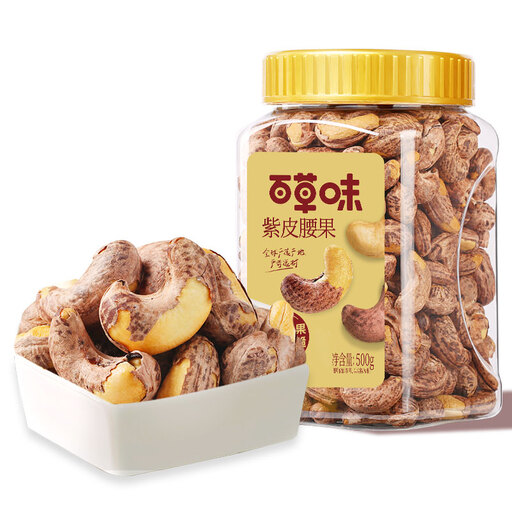
Be&Cheery Cashews with Purple Skin, 180 grade, 500 g
The larger pack is intended for sharing cashew nuts with others.
The product information lists cashew nuts and salt. Pack size: 500 g.
Joybuy
Frequently asked questions
Do cashew nuts with no added oil contain less fat?
No, the preparation description doesn’t, on its own, prove a lower fat content. Duyvis describes Cashews Original as roasted without added oil; for the separate Duyvis Oven Roasted Gezouten Cashew Noten 125 g, Flink lists 49 g of fat per 100 g.
What does ‘low fat’ mean for cashew nuts?
For solid foods, the European Commission sets a maximum of 3 g of fat per 100 g for the claim ‘low fat’. The Netherlands Food and Consumer Product Safety Authority confirms that European rules on nutrition claims apply in the Netherlands.
Are unsalted cashew nuts automatically low in fat?
No, unsalted describes the salt content, not the fat content. The Netherlands Nutrition Centre gives 12.2 g of fat per 25 g serving for generic unsalted cashew nuts; check the product’s own nutritional information for a specific variety.
How can I decide how many cashew nuts to serve at a get-together?
Weigh out the amount you want to serve in advance and check the nutritional values for that portion. The 25 g reference serving given by the Netherlands Nutrition Centre isn’t a universal limit for a get-together or personal dietary advice.
Does roasting make cashew nuts suitable for someone with a nut allergy?
No, roasting isn’t a reason to consider cashew nuts safe for someone with an allergy. The Food Allergy Foundation states that the allergen remains stable when heated; check the allergen information on the exact pack and follow the avoidance advice for the guest in question.


