What should you look for when choosing?
First, check whether cashews themselves are suitable for your guests. Then consider gluten information, serving arrangements, flavour, preparation and packaging.
| What to consider |
What should you check? |
Who is this important for? |
| Specific allergen |
Check the ingredients, allergen information and warnings for the allergen the guest needs to avoid. Cashews themselves are a tree-nut allergen. |
I first want to know whether the guest needs to avoid cashews themselves; a claim that the product is free from something else doesn’t change that. Around 34% of consumers prioritise avoiding a specific allergen. |
| Gluten information |
Check the packaging for the exact product variant and look for warnings about cereals containing gluten. |
If cashews are suitable but a guest needs to avoid gluten, I want to check the gluten information for that specific product. Around 20% of consumers prioritise gluten-free suitability. |
| Serving separately |
Keep suitable snacks clearly separate and make the ingredient information available. |
At a shared snack table, I want to prevent suitable snacks from ending up among other dishes. Around 20% of consumers prioritise clear, separate serving. |
| Salt and preparation |
Check whether the product is unsalted, unroasted or roasted; these characteristics don’t tell you anything about allergens on their own. |
Once I’ve checked whether the product is suitable for the guest’s dietary needs, I can base my choice on the salt content and preparation. Around 13% of consumers prioritise these characteristics. |
| Quantity |
Compare the net weight with what you need for the party and allow for any leftovers. |
I want to choose an amount that suits my group without losing sight of dietary suitability. Around 13% of consumers prioritise quantity and cost. |
It’s important to understand the difference when avoiding milk: a milk allergy is a reaction to milk proteins, while lactose intolerance affects the digestion of milk sugar. So a lactose-free label doesn’t, on its own, tell you whether a product is suitable for someone with a milk allergy. If a guest needs to avoid peanuts or milk, check the information for the exact product variant too; a claim about salt or preparation is no substitute for this check.
The European Commission explains that Commission Implementing Regulation (EU) No 828/2014 sets the conditions for the claims ‘gluten-free’ and ‘very low gluten’ and has applied since 20 July 2016. The Dutch Coeliac Association describes ‘may contain cereals containing gluten’ as a warning of a real risk; take this warning into account when making your assessment.
Cashew nuts at Joybuy
These Joybuy products show a range of flavours, preparation methods and pack descriptions. Always check the latest product information against your guests’ needs; none of these characteristics replaces an allergen assessment.
 Image unavailable
Jiazhouyuanye Original Flavour large cashew nuts, 160 g
First check whether cashews are suitable for your guests; cashews are the only ingredient in this variant.
The product information lists 100% cashew kernels and a net weight of 160 g.
View at Joybuy
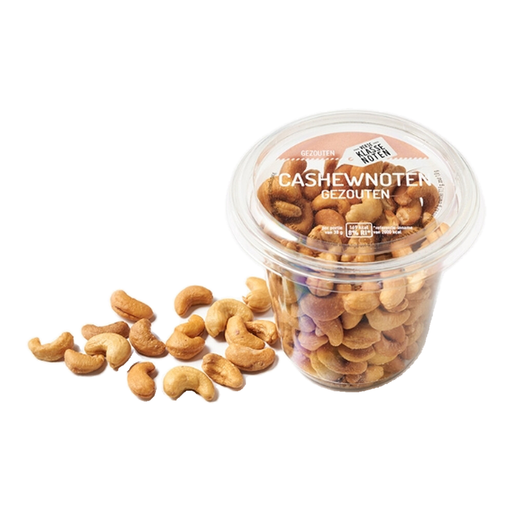 Image unavailable
Verse Klassenoten salted cashew nuts, 150 g
This variant is only an option if cashews are suitable for the guest and the latest product information meets their other dietary needs.
The product name describes these as salted cashew nuts.
View at Joybuy
 Image unavailable
g'woon roasted, unsalted cashew nuts, 200 g
Consider this variant only after confirming that cashews are suitable and that the information meets your guest’s specific needs.
The product title describes these as roasted, unsalted cashew nuts; the product information lists a net weight of 200 g.
View at Joybuy
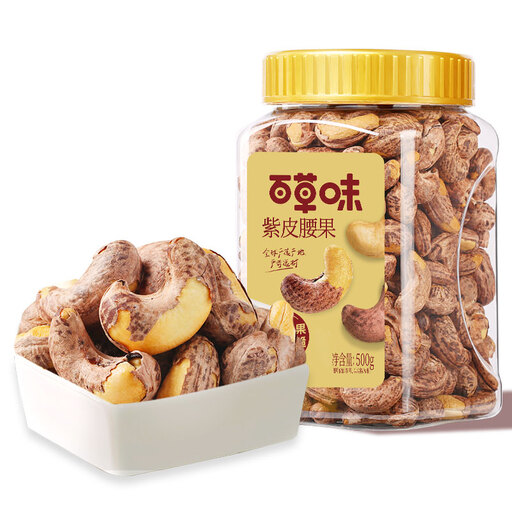 Image unavailable
Be&Cheery cashew nuts with purple skin, 180 grade, 500 g
You can consider this larger pack only after checking that cashews and the rest of the product information are suitable for your guests.
The product information lists salt and a net weight of 500 g.
View at Joybuy
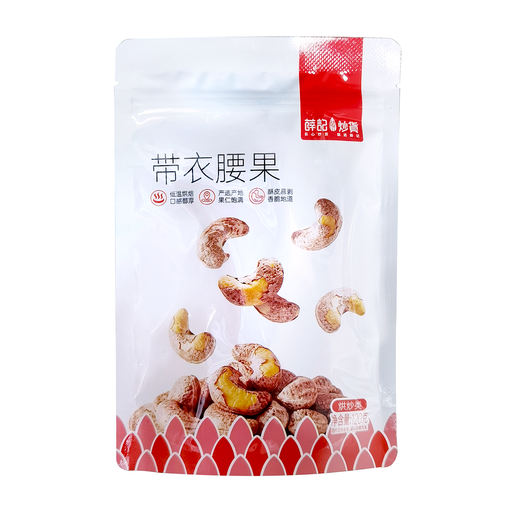 Image unavailable
Xue Ji Chaohuo salted cashew nuts with skins, 120 g
Only consider this variant if cashews are suitable for the guest and the latest allergen information meets their other needs.
The product name describes these as salted cashew nuts with skins and lists a weight of 120 g.
View at Joybuy
Frequently asked questions
Are cashew nuts with a free-from claim suitable for someone with a cashew allergy?
No. Don’t serve cashews to anyone who needs to avoid them. Cashews themselves are a tree-nut allergen; a claim about gluten or preparation, for example, doesn’t change that.
Does lactose-free mean suitable for someone with a milk allergy?
No. A milk allergy is a reaction to milk proteins, while lactose intolerance affects the digestion of milk sugar. Check the product information based on the substance the guest actually needs to avoid.
What does a gluten-free claim mean for cashew nuts?
A gluten-free claim relates to gluten; it doesn’t mean the product is free from cashews. Commission Implementing Regulation (EU) No 828/2014 sets the conditions for the claims ‘gluten-free’ and ‘very low gluten’; according to the European Commission, it has applied since 20 July 2016.
What are the rules in the Netherlands for cross-contamination warnings?
Since 1 January 2026, the NVWA has checked the rules for allergen warnings on prepacked products, and the measures businesses take to prevent cross-contamination, during inspections. These are obligations for food businesses, not a general guarantee that every product is suitable for every guest.
How should you serve snacks for guests with different dietary needs?
Keep suitable snacks separate and leave the ingredient information alongside them. Stichting Voedselallergie describes serving food separately with ingredient cards as good buffet practice; this doesn’t replace checking the product and can’t guarantee that contact between dishes will always be prevented.
Does the NVWA warning apply to all Trader Joe’s cashew nuts?
No. The NVWA warning specifically names Trader Joe’s unsalted cashew nuts, 170 g, with barcode 2003020120930 and best-before date 23-09-2026. Don’t eat this specific pack because it may contain metal fragments; the warning doesn’t automatically apply to other packs or the entire ALDI range.


