What should you look for in cashew nuts for a film night?
The percentages below relate to consumers considering cashew nuts as a film snack; if you need to avoid cashews, choose something outside this product category.
| What to consider |
What to look for |
Who is this important to? |
| Avoiding allergens |
Check whether cashews are listed in the ingredients and read any warnings about the possible presence of other nuts or peanuts. |
If I’m buying for someone with an allergy, I first want to know whether cashews themselves and any cross-contamination warnings are suitable. Around 25% of consumers prioritise avoiding allergens. |
| Gluten-free information |
Look for a gluten-free label on the exact pack; also check for warnings about wheat or cereals containing gluten. |
If avoiding gluten is my main priority, I want an explicit label for the variety I’m buying. Around 25% of consumers prioritise gluten-free information. |
| Vegan, lactose-free or milk-related information |
Check the dietary label, ingredients and allergen information separately. |
If I want a plant-based snack or need to avoid lactose, I check which information is relevant to my needs. Around 25% of consumers prioritise a plant-based or lactose-conscious choice. |
| Quantity and storage |
Compare the net weight with the stated portion size and check the storage instructions for after opening. |
For a film night, I want to know how much I need and how to store the rest. Around 25% of consumers prioritise portion size and convenience. |
Cashew nuts at Joybuy
These Joybuy products are cashew nuts for consumers who can eat cashews. Before buying, check the ingredients and allergen information on the exact pack; the product names and recipes listed below don’t guarantee that a product is gluten-free or allergen-free.
 No image available
Jiazhouyuanye Original Flavour Large Cashew Nuts 160 g
A good choice for a film night if you can eat cashews and are looking for a simple recipe.
Ingredients: cashew kernels as the only ingredient, according to the product description.
View at Joybuy
 No image available
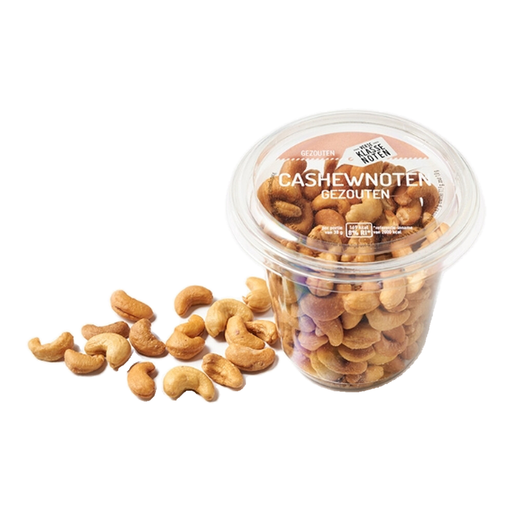
Verse Klassenoten Salted Cashew Nuts 150 g
A salted variety for anyone who can eat cashews and wants a savoury film snack.
Ingredients: 98% cashews, sunflower oil and 1% salt, according to the product description.
View at Joybuy
 No image available
g'woon Cashew Nuts Roasted & Unsalted 200 g
The product name specifies roasted, unsalted cashew nuts for anyone looking for this variety.
Ingredients: cashew nuts, according to the product information.
View at Joybuy
 No image available
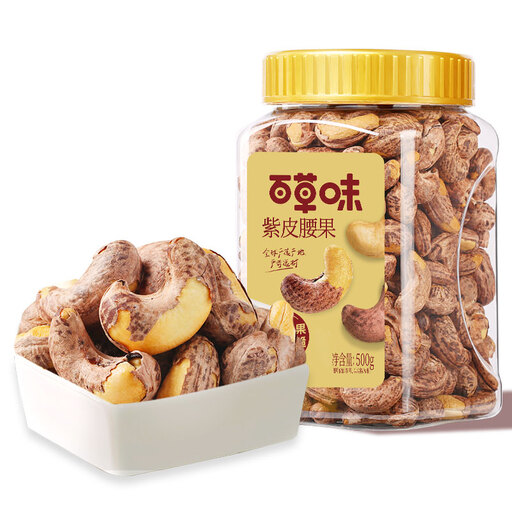
Be&Cheery Cashews with Purple Skin 180 Grade 500 g
The product description says these cashews can be eaten straight from the pack.
Pack size: 500 g, according to the product name.
View at Joybuy
 No image available
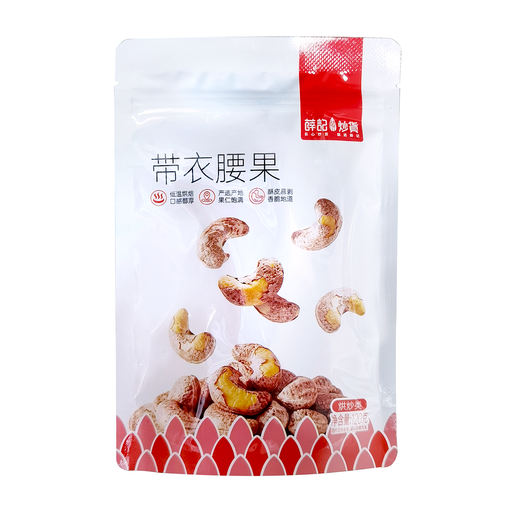
Xue Ji Chaohuo Salted Cashews with Skin 120 g
The product description recommends these salted cashews as a film-night snack.
Ingredients: cashew nuts and salt, according to the product information. Pack size: 120 g.
View at Joybuy
Frequently asked questions
Can cashew nuts be allergen-free?
Not if by allergen-free you mean that they don’t contain cashews: cashews are an allergen themselves. A product may carry a label relating to another ingredient, such as gluten or lactose, so always check exactly which ingredient the label refers to.
Is lactose-free the same as suitable for someone with a milk allergy?
No. Lactose is milk sugar, whereas a milk allergy relates to milk proteins. If you have a milk allergy, check the ingredients and allergen warnings separately; a lactose-free label doesn’t replace these checks.
What does ‘may contain’ mean on a label?
The warning indicates that the product may have been unintentionally contaminated through cross-contamination; it doesn’t necessarily mean the ingredient was added to the product. Since 1 January 2026, the NVWA has been enforcing the new Dutch rules: warnings must be based on a risk assessment and must not be used if there is no risk of exceeding the reference values. This is an obligation for food businesses, not a guarantee that a product is suitable for every individual allergy.
Is the ‘gluten-free’ label regulated by law?
Yes. Implementing Regulation (EU) 828/2014 sets out the conditions for the labels ‘gluten-free’ and ‘very low gluten’. The European Commission states that the regulation has applied since 20 July 2016; Regulation (EC) 41/2009 was repealed on that date.
Can you take cashew nuts you’ve bought yourself to the cinema?
Don’t assume this is generally allowed; check the cinema’s policy in advance. Pathé states on its official page for school visits that food and drink brought from outside may not be consumed there. This is a house rule for that specific context, not an established nationwide legal requirement.


