
Label-conscious snackers looking for less fat
You want a lighter morning break and look at verifiable nutritional information, rather than relying on terms such as unsalted or oven-roasted. Assess fat, energy and salt separately.


If you want to verify that the cashew nuts themselves contain less fat, compare the nutritional information on the same weight basis and assess any nutrition claim separately. Unsalted or made without added oil does not automatically mean lower in fat. If your main aim is to eat less during your break, weigh out your portion.
You want a lighter morning break and look at verifiable nutritional information, rather than relying on terms such as unsalted or oven-roasted. Assess fat, energy and salt separately.
You’re looking for a simple nut snack and prefer an unsalted option. The Netherlands Nutrition Centre recommends eating a handful of unsalted nuts every day and varying the types you choose.
You pay attention to how your food is prepared and don’t want added oil. Duyvis describes Cashews Original as oven-roasted without added oil; also check the nutritional information and other ingredients.
First decide whether you’re looking for a product with less fat or simply want to eat fewer cashew nuts. Then check the salt, preparation method and packaging separately.
| What to consider | What should you look for? | Who is this important for? |
|---|---|---|
| Fat content and claim | Compare the fat content on the same weight basis and check the exact product variant and the evidence behind any nutrition claim. | If I’m looking for less fat in the nuts themselves, I want to compare the label with the precise claim. Around 36% of consumers say a demonstrably lower fat content is their top requirement. |
| Portion size | Weigh your portion and calculate the nutritional values using the same basis as the label. | If my main aim is to eat less during my morning break, weighing out a portion in advance helps me decide how much to have. Around 29% of consumers prioritise portion control. |
| Salt | Check whether the exact variant is unsalted and look at the salt content separately from the fat content. | If I want an unsalted nut snack, I check both the variant and the nutrition table. Around 21% of consumers say an unsalted recipe is their main criterion. |
| Preparation and storage | Check the preparation description, net weight and storage instructions for the pack you choose. | If I want to keep cashew nuts for several breaks, I consider how they’re prepared and whether the pack size suits the way I’ll use them. Around 14% of consumers say ease of preparation and storage matters most. |
These descriptions refer to salt or preparation. On their own, they don’t show that the fat content is lower.
Compare fat and energy separately on the same weight basis, and check the exact product variant.
A smaller portion of the same product doesn’t change its composition per 100 g; it only changes how much you eat.
Distinguish between less fat per 100 g and less fat in the portion you’ve weighed out. Use the nutritional information on the label to work this out.
The NVWA warned that Trader Joe’s 170 g pack of unsalted cashew nuts, barcode 2003020120930 and best-before date 23-09-2026, may contain metal fragments. The warning applies to this specific pack.
If you still have this pack, check the product name, weight, barcode and best-before date, and don’t eat the cashew nuts in question. Don’t assume the warning applies to other variants.
Cashews Original is an option if you’re specifically looking for oven-roasted cashews made without added oil.
AH Unsalted Cashew Nuts is a specific unsalted option to include in your comparison.
The range includes several cashew nut options, including unsalted, salted, unroasted and dry-roasted varieties.
The product page for unsalted cashew nuts offers an unsalted option.
Trader Joe’s Roasted Unsalted Cashew Nuts are available in a 250 g pack.
PLUS Unsalted Unroasted Cashew Nuts 200 g combines an unsalted variant with an unroasted preparation method.
This selection at Joybuy includes cashew nut snacks described as salted, unsalted and made without added oil. If you’re looking for less fat, compare the nutritional information on the exact pack.
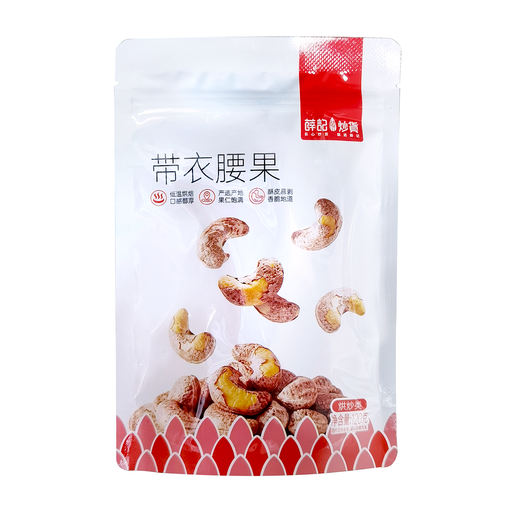 No image available
An option if you’re looking for salted cashew nuts with the skin on; bear in mind that salt has been added.
The nutrition table lists 42,9 g of fat per 100 g.
 No image available
An option if you’re looking for cashew nuts without an additional flavour variant listed.
The nutrition table lists 47,7 g of fat per 100 g. The ingredients list names cashew kernels only.
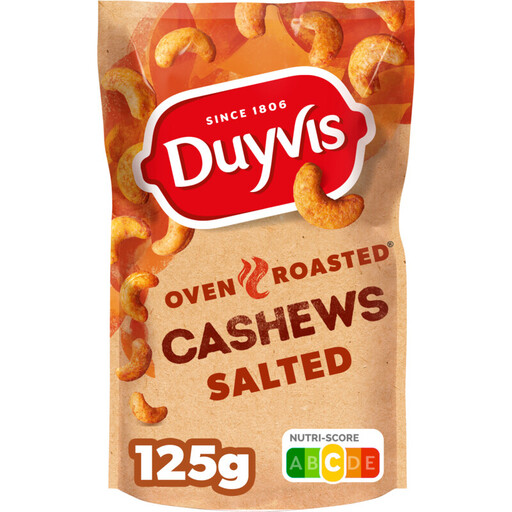 No image available
An option if you’re looking for cashew nuts made without added oil; this is a preparation detail, not proof of lower fat content.
The nutrition table lists 43 g of fat per 100 g. The pack is described as containing 4–5 portions. The ingredient information lists cashew nuts, gluten, wheat and peanuts as allergens.
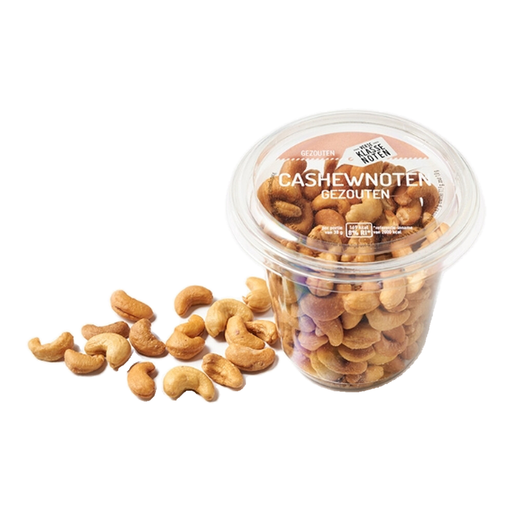 No image available
An option if you’re looking for roasted and salted cashew nuts to snack on.
The nutrition table lists 48 g of fat per 100 g.
 No image available
An option if you’re looking for a roasted, unsalted variety; check the fat and salt content separately.
The nutrition table lists 46,67 g of fat per 100 g. The product information identifies cashew nuts as tree nuts.
No. Unsalted describes the salt variant, not a lower fat content. Jumbo says its 200 g pack of unsalted cashew nuts contains naturally occurring sodium; check the nutritional information separately to compare fat content.
No. Duyvis describes Cashews Original as made without added oil, which refers to how they’re prepared. Assess the fat content separately using the nutritional information.
If the label gives values per 100 g, multiply each value by the weight of your portion in grams and divide by 100. This calculates the amount in your portion, but doesn’t change the composition per 100 g.
Check the allergen information on the packaging of the exact product. The NVWA says this information must appear on the label of prepacked products.
According to the NVWA, nutrition claims must comply with European rules. The European Commission states that only nutrition claims listed in the Annex to Regulation (EC) No 1924/2006 are permitted. So don’t assess a claim based on the product name alone.