
Fat-conscious cashew eaters
You want to keep eating cashew nuts, so you compare the total fat per 100 g and the amount in your weighed portion rather than relying on how they’re prepared.


If you’re looking for a genuinely low-fat snack, cashew nuts aren’t a suitable choice: for solid foods, the EU limit for the ‘low fat’ claim is 3 g per 100 g, while checked labels for Duyvis, PLUS, Jumbo and Albert Heijn show 43–50 g per 100 g. If you still want to eat them as part of a flexible, fat-conscious diet, compare the label for the exact product and weigh your portion. ‘No added oil’, unsalted, gluten-free or lactose-free doesn’t mean low in fat or free from all allergens. If you have a cashew allergy, cashew nuts, including roasted ones, aren’t suitable.
You want to keep eating cashew nuts, so you compare the total fat per 100 g and the amount in your weighed portion rather than relying on how they’re prepared.
You can eat cashews but want to avoid, for example, gluten, lactose or peanuts. You need information about that specific substance; a free-from claim isn’t a general guarantee that a product is allergen-free.
You’re looking for a simple ingredients list or a product made without added oil, while bearing in mind that cashew nuts contain fat naturally.
Start with the fat per 100 g and the substance you want to avoid. Ingredients, preparation and packaging are useful additional checks, but they don’t replace those two.
| What to consider | What should you check? | Who is this important for? |
|---|---|---|
| Total fat and portion | Compare the total fat per 100 g and calculate the amount for the weight of your own portion. | If I want to keep track of my fat intake, I need both the nutritional information per 100 g and the weight of my portion. Around 34% of consumers prioritise total fat and portion size. |
| Specific allergens | Check the claim for the substance you avoid, as well as the ‘contains’ and ‘may contain’ statements on the exact packaging. | If I need to avoid a particular substance, I check this information on the product I’m planning to buy; cashew itself remains a separate consideration. Around 33% of consumers prioritise avoiding a specific substance. |
| Added ingredients | Check the ingredients list for added oil, salt and other ingredients, then look at the nutritional information separately. | If I’m looking for a simple composition, I want to know what else is in the ingredients list besides cashews. Around 20% of consumers focus mainly on added ingredients. |
| Packaging and storage | Check the net weight and storage instructions, especially for after opening. | If I use a pack over several portions, I want to be able to reseal it properly after opening and store it according to the label. Around 13% of consumers prioritise practical portioning and storage. |
A claim relating to a specific substance doesn’t mean cashews have been removed from the product. According to Stichting Voedselallergie, the relevant allergen in cashews remains present even after heating.
Identify the substance you need to avoid and check both the claim and the presence information on the exact packaging. Roasted cashew nuts aren’t an alternative if you have a cashew allergy.
Cashew nuts naturally contain fat. The checked Duyvis product lists 43 g of fat per 100 g; the way it’s prepared doesn’t make it a low-fat product.
Compare the total fat per 100 g with the limit for the ‘low fat’ claim, then calculate the amount in your own weighed portion.
The checked unsalted AH and Jumbo products contain sunflower oil. So ‘unsalted’ doesn’t tell you whether oil or other ingredients have been added.
Read the ingredients list if you want to avoid certain additions, and check the fat content separately.
The NVWA warning issued on 20 May 2026 applies only to Trader Joe’s unsalted cashew nuts, 170 g, with barcode 2003020120930 and best-before date 23-09-2026. The warning concerns possible metal fragments, not just the best-before date.
Don’t eat this specific batch if you still have it at home. The warning doesn’t automatically apply to other batches or to the 250 g pack.
Worth comparing if you’re looking for roasted cashew nuts with no added oil alongside a salted option.
The checked AH Cashewnoten ongezouten 170 g is an option to compare if you’re looking for specific gluten-free and lactose-free claims.
The checked Jumbo Cashewnoten Ongezouten 200 g is an example of an unsalted cashew product made with oil.
The checked PLUS Cashewnoten ongezouten ongebrand 200 g is worth considering if you’re looking for a short ingredients list.
ALDI Netherlands lists a Trader Joe’s range of roasted, unsalted cashew nuts in a 250 g pack.
Lidl Netherlands has a product listing for unsalted cashew nuts.
This Joybuy selection helps you compare the ingredients, preparation methods and declared nutritional values of different cashew products. Check the allergen information on the exact packaging too.
 No image available
Suitable if you’re looking for a simple ingredients list and want to compare the fat content of a weighed portion.
The product information lists 100% cashew kernels and 47.7 g of fat per 100 g.
This isn’t a low-fat snack under the EU limit of no more than 3 g of fat per 100 g for solid foods. Contains cashew and isn’t suitable if you have a cashew allergy.
 No image available
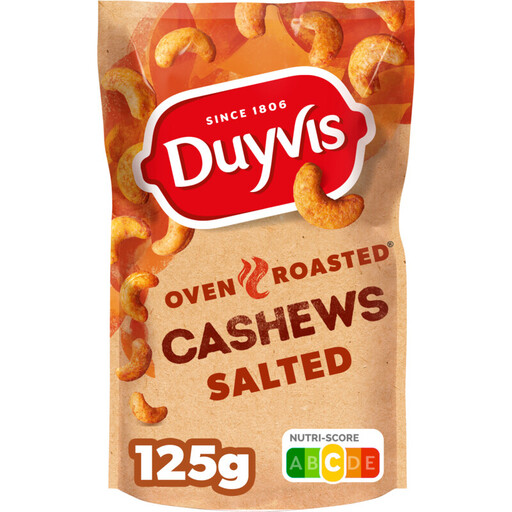
Suitable if you want to avoid added oil and weigh out your own portion to check its fat content.
The product description says the cashews are oven-roasted without added oil and contain 43 g of fat per 100 g.
This isn’t a low-fat snack under the EU limit of no more than 3 g of fat per 100 g for solid foods. The product information also mentions gluten, wheat and peanuts; check the allergen information on the exact packaging.
 No image available
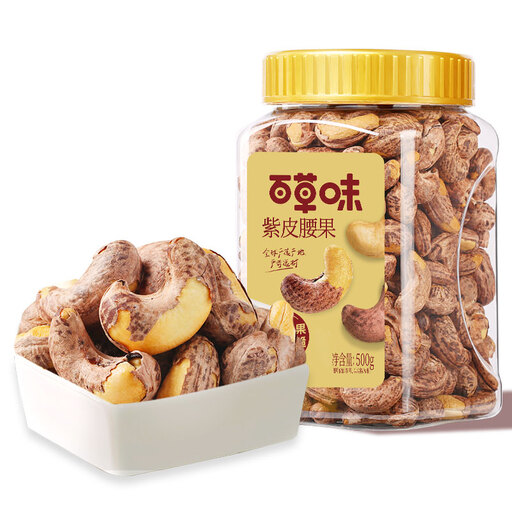
Suitable if you’re looking for an unsalted option and want to check the ingredients and fat content separately.
The product information lists cashew nuts as an ingredient and 46.67 g of fat per 100 g.
This isn’t a low-fat snack under the EU limit of no more than 3 g of fat per 100 g for solid foods. Contains cashew and isn’t suitable if you have a cashew allergy.
 No image available
Suitable if you want to compare the fat content per 100 g before weighing out a portion.
The product information lists cashew kernels, salt, 60.1 g of fat and 1.2 g of salt per 100 g.
This isn’t a low-fat snack under the EU limit of no more than 3 g of fat per 100 g for solid foods. Contains cashew and isn’t suitable if you have a cashew allergy.
For solid foods, the ‘low fat’ claim is permitted when a product contains no more than 3 g of fat per 100 g, according to the European Commission. The checked cashew products from Albert Heijn, PLUS, Jumbo and Duyvis all state values above this limit.
No. Roasting doesn’t make cashew nuts suitable for someone with a cashew allergy. Stichting Voedselallergie states that the allergen remains stable when heated.
Multiply the fat per 100 g shown on the label by the weight of your portion, then divide the result by 100. If you have a personal fat limit agreed with a professional, compare the result with that limit; the portion shown on a pack won’t necessarily be right for you.
New rules on warnings about the unintended presence of allergens due to cross-contamination have applied in the Netherlands since 1 January 2026. According to the NVWA, a risk assessment determines whether reference values could be exceeded; if they won’t be exceeded, such a warning must not be used. This isn’t a general guarantee that a product is suitable for everyone with an allergy.
The NVWA warning issued on 20 May 2026 applies only to Trader Joe’s unsalted cashew nuts, 170 g, with barcode 2003020120930 and best-before date 23-09-2026. Don’t eat that specific batch if you still have it at home; the warning doesn’t automatically apply to other batches or to the 250 g pack.