Start with the substance you need to avoid, rather than relying on a general ‘free from’ claim. If you have a cashew allergy, cashew nuts are not suitable. For other dietary needs, check the ingredients and relevant allergen and cross-contact information for the specific product. Unsalted, unroasted or roasted says nothing in itself about whether a product is allergen-free.
Who is this guide for?
Shoppers with a specific food allergy
You’re looking for a snack without a particular allergen and don’t want to assume that ‘free from’ is a general guarantee of safety. Cashew is itself a tree nut allergen, so if you have a cashew allergy, you should avoid cashew nuts. Stichting Voedselallergie and the NVWA provide information about nuts and allergens on food labels.
Shoppers looking for gluten-free snacks
You need to avoid gluten and want to check the ingredients, any gluten-free claim and relevant cross-contact information for the product you choose. The European Commission explains the EU requirements for gluten claims, while Voedingscentrum explains who may need to follow a gluten-free diet.
Hosts planning a get-together with guests who have dietary requirements
You’re buying for several people and want to avoid confusing lactose intolerance with a milk protein allergy. Stichting Voedselallergie explains that they are different conditions. Keep the product information so each guest can check whether it meets their own dietary needs.
What should you look for when buying?
Start with the substance someone needs to avoid. Consider how the nuts are prepared and how much salt they contain only afterwards, as matters of taste or product preference.
| What to consider |
What should you check? |
Who is this important for? |
| Avoiding a specific allergen |
First identify the allergen, then check the ingredients and any relevant cross-contact warnings on the exact product packaging. |
If I need to avoid a specific allergen, I want to be able to check this for the product I choose. For around 36% of consumers, avoiding a specific allergen is the top purchasing priority. |
| Avoiding gluten |
Check the specific gluten-free claim, ingredients and relevant cross-contact information. Don’t infer suitability from the product name. |
If avoiding gluten is my main concern, I check the information for that exact product. Checking for gluten is the top purchasing priority for around 29% of consumers. |
| Lactose or milk protein |
Establish whether lactose or milk protein needs to be avoided, then check the ingredients and allergen information accordingly. |
I want to know whether the concern is lactose or milk protein, as these involve different checks. For around 21% of consumers, the main concern is milk or lactose. |
| Preparation and salt |
Read the exact product name and distinguish between ‘unsalted’, ‘unroasted’ and ‘no added oil’. |
If I can eat cashews and am mainly looking for an unsalted or unroasted product, I check for those features once I’ve considered the dietary requirements. For around 14% of consumers, this type of product preference is the top purchasing priority. |
Common misconceptions
-
Assuming ‘free from’ means free from all allergens
Cashew is itself a tree nut allergen. So even if a product doesn’t contain a particular substance, that doesn’t automatically make it suitable for someone with a cashew allergy.
Identify the substance that needs to be avoided, and don’t choose cashew nuts if you have a cashew allergy.
-
Confusing unsalted, unroasted or no added oil with allergen-free
These terms describe a product’s features or how it has been prepared, not whether it contains allergens or may have been subject to cross-contact.
Check preparation method and dietary suitability separately. For allergen information, refer to the exact product packaging.
-
Treating lactose intolerance and milk protein allergy as the same thing
Lactose and milk protein are different selection criteria. A lactose-free claim doesn’t automatically answer whether a product contains milk protein.
Establish which substance needs to be avoided and check the product information accordingly.
-
Ignoring or generalising a warning about one product
The NVWA issued a warning about Trader Joe’s unsalted cashews, 170 g, with a best-before date of 23-09-2026, due to possible metal particles. The warning applies to the product and date specified; it doesn’t automatically apply to all cashews sold by ALDI.
Compare the product name, pack size and best-before date with the warning. Don’t eat the affected product specified in the warning.
Brands and product ranges to compare
Duyvis
Duyvis describes Cashews Original as a savoury, oven-roasted 125 g product with no added oil.
- The manufacturer clearly describes the preparation method and, for its separate nut mix, the types of nuts it contains.
- According to Duyvis, Cashews, Peanuts & Almonds Original contains cashew, peanut and almond. Neither of these product descriptions is, in itself, a free-from guarantee.
Albert Heijn
AH Cashewnoten ongezouten is a product range for anyone looking for an unsalted option.
- The product name identifies it as an unsalted option.
- Albert Heijn says that ingredients and dietary or allergy information may change. The product name doesn’t confirm that it is allergen-free.
Jumbo
Jumbo lists Cashewnoten Ongezouten 200 g and a separate unroasted option in a 140 g pack.
- The product ranges distinguish between unsalted and unroasted options.
- For Jumbo Ongebrande Cashewnoten 140 g, the product page advises storing the product in a cool, dry, dark place and warns that young children may choke on it.
Lidl
Lidl lists a product called Ongezouten cashewnoten.
- The product name identifies it as an unsalted option.
- ‘Unsalted’ doesn’t confirm that a product is gluten-free, dairy-free, peanut-free or free from all allergens.
ALDI
ALDI describes Trader Joe’s Cashewnoten geroosterd en ongezouten as roasted and unsalted, in a 250 g pack.
- The product description specifies how the nuts are prepared, their salt content and the pack size.
- These product features don’t tell you whether the product is suitable for someone with a specific allergy.
PLUS
PLUS Cashewnoten ongezouten ongebrand is a product range for anyone looking for an unroasted, unsalted option; the listed pack contains 200 g.
- The product name specifies both the preparation method and the salt content.
- PLUS advises customers to read the packaging and says that product and allergy information may change. The product name doesn’t prove that it is free from any specific substance.
Cashew products on Joybuy
These products offer a range of cashew options for people who can eat cashews. The product names and descriptions distinguish between features such as roasted, unsalted and salted; they don’t, in themselves, confirm that a product is suitable for someone with a specific allergy. Check the information on the exact product packaging.
 Image unavailable
Jiazhouyuanye Original Flavour Large Cashew Nuts, 160 g
An option to consider if you can eat cashews and are looking for cashew kernels.
The product description says it contains 100% cashew kernels, and the pack contains 160 g. Contains cashew and is not suitable for anyone with a cashew allergy.
Joybuy
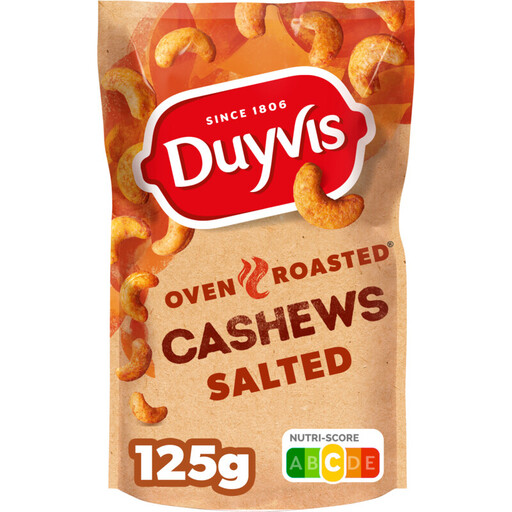 Image unavailable
Duyvis Dry Roasted Cashews, 125 g
A good match if you prefer a savoury, roasted cashew option and can eat cashews.
The product description says the cashews are oven-roasted and come in a 125 g pack. Contains cashew and is not suitable for anyone with a cashew allergy.
Joybuy
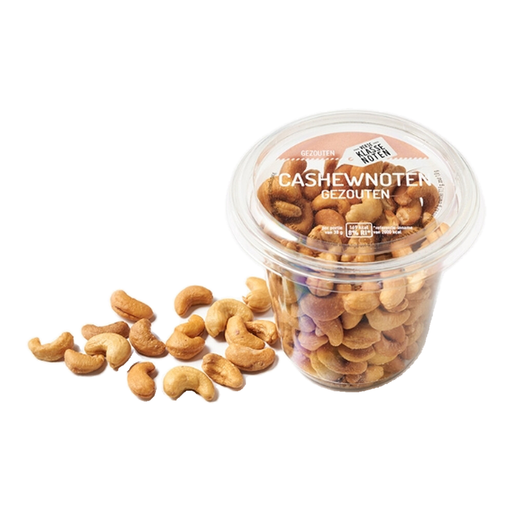 Image unavailable
Verse Klassenoten Salted Cashew Nuts, 150 g
An option if you can eat cashews and are looking for a salted variety.
The product description lists 98% cashews, sunflower oil and 1% salt; the product name gives the pack size as 150 g. Contains cashew and is not suitable for anyone with a cashew allergy.
Joybuy
 Image unavailable
g’woon Cashew Nuts Roasted & Unsalted, 200 g
A good match if you prefer roasted, unsalted cashews and can eat cashews.
The product name says roasted and unsalted, and the description lists cashews as an ingredient. Contains cashew and is not suitable for anyone with a cashew allergy.
Joybuy
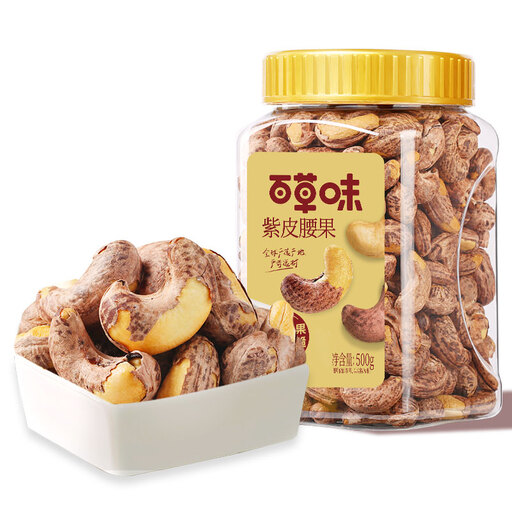 Image unavailable
Be&Cheery Cashews with Purple Skin, 180 grade, 500 g
An option to consider if you can eat cashews and are looking for cashews with purple skins.
The product name specifies 180 grade and 500 g; the description lists cashew kernels and salt. Contains cashew and is not suitable for anyone with a cashew allergy.
Joybuy
Frequently asked questions
Are cashew nuts an allergen-free snack?
No, not in general: cashew is a tree nut allergen. If you need to avoid cashews, a gluten-free or lactose-free cashew product isn’t a suitable alternative.
Does lactose-free mean suitable for someone with a milk protein allergy?
No. Lactose intolerance and a milk protein allergy are different conditions. Choose based on the substance that actually needs to be avoided and check the information for the exact product.
What does a gluten-free claim on cashew nuts mean?
The claim must meet the requirements of EU Implementing Regulation 828/2014, as explained by the European Commission. It doesn’t automatically mean every cashew product is gluten-free, so check the claim and product information on the pack you plan to buy.
Can you give whole cashew nuts to young children without any concerns?
Not without considering the risk of choking. The product page for Jumbo Ongebrande Cashewnoten 140 g warns that young children may choke on nuts, so don’t assume whole cashew nuts are a suitable snack for everyone at your gathering.
What if you still have the ALDI 170 g pack mentioned in the warning?
Don’t eat the 170 g pack of Trader Joe’s unsalted cashews with a best-before date of 23-09-2026 if it matches the NVWA warning. The warning mentions possible metal particles and applies to the specific product and date listed.


