What should you look for when buying?
First decide whether you want to limit the fat content of the product itself or simply measure the portion you eat. Then compare the salt, ingredients and pack size of the exact variety.
| What to consider |
What should you check? |
Who is this important for? |
| Fat content of the nuts |
Check the total fat per 100 g and the exact variety. The European Commission sets a maximum of 3 g of fat per 100 g for a ‘low fat’ claim on solid foods. |
If I want to limit the fat content of the cashew nuts themselves, I check the total fat rather than relying on words such as ‘unsalted’. Around 36% of consumers prioritise a demonstrable reduction in fat. |
| Amount per snack |
Weigh the portion you plan to eat and use the nutritional information on the pack. The Netherlands Nutrition Centre gives 154 kcal per 25 g as a general guide; AH lists a 25 g portion for the unsalted variety it reviewed. |
If I want to keep eating regular cashew nuts but limit the energy in my snack, I focus on the amount I actually eat. Around 29% of consumers prioritise portion control. |
| Salt and ingredients |
Check the salt content and ingredients of the exact product. The Netherlands Nutrition Centre includes unsalted nuts in its Wheel of Five healthy eating guidelines; unsalted doesn’t mean low-fat. |
When I regularly take nuts with me, I want to choose an unsalted variety and check the ingredients. Around 21% of consumers prioritise this everyday choice. |
| Packaging and storage |
Choose a pack size that suits how often you eat the nuts, and follow the storage advice on the pack. Seal an opened pack as recommended by the manufacturer. |
If I take cashew nuts with me for several lunches, I choose a pack size that suits my needs and want to store any leftovers properly. Around 14% of consumers prioritise easy transportation and practical packaging. |
Cashew nuts at Joybuy
These Joybuy products are regular cashew nuts for portion planning, not low-fat alternatives. Their listed fat content is above 3 g per 100 g.
 Image unavailable
Jiazhouyuanye Original Flavour Large Cashew Nuts 160 g
A regular cashew nut for a measured desk snack; the product information suggests it as a snack.
Ingredients: 100% cashew kernels.
Fat: 47.7 g per 100 g; this isn’t a low-fat variety.
View at Joybuy
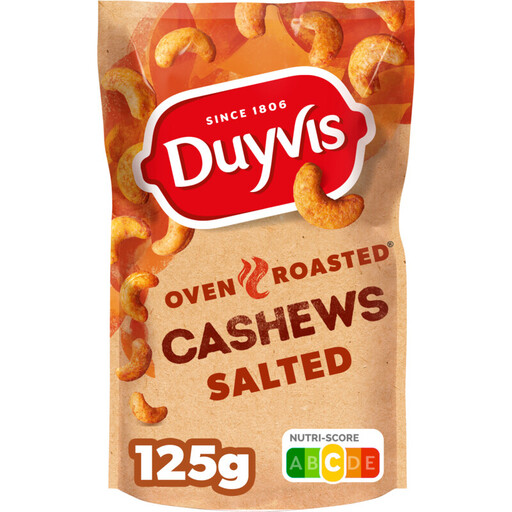 Image unavailable
Duyvis Dry Roasted Cashews 125 g
An oven-roasted variety if that’s the preparation method you’re looking for; the product description says no fat or oil has been added.
Fat: 43 g per 100 g; dry roasting doesn’t make this variety low-fat.
The product information lists sea salt, so this isn’t an unsalted variety.
View at Joybuy
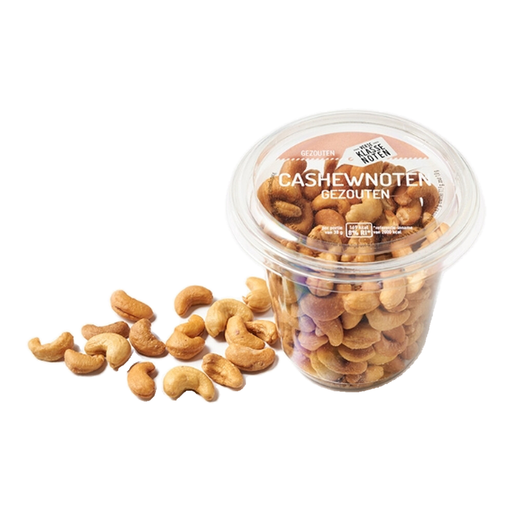 Image unavailable
Verse Klassenoten Salted Cashew Nuts 150 g
A salted cashew snack; check the salt content when comparing salted and unsalted varieties.
Ingredients: cashew nuts, sunflower oil and salt.
Fat: 48 g per 100 g; this isn’t a low-fat variety.
View at Joybuy
 Image unavailable
g’woon Cashew Nuts Roasted & Unsalted 200 g
A roasted, unsalted variety if salt content matters to you; unsalted doesn’t mean low-fat.
Ingredient: cashew nuts.
Fat: 46.67 g per 100 g.
View at Joybuy
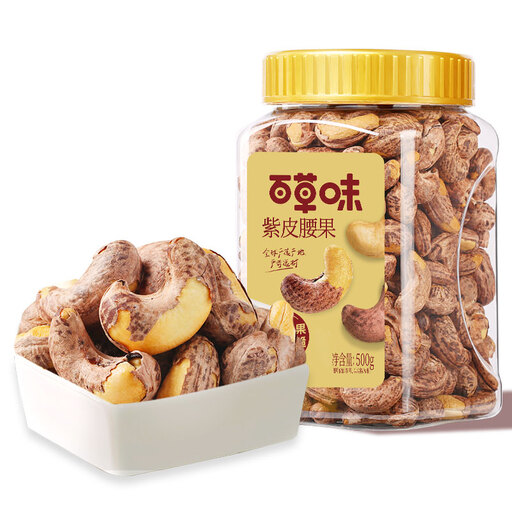 Image unavailable
Be&Cheery Cashews with Purple Skin 180 grade 500 g
A larger pack of regular cashew nuts; tailor the amount you eat to your own portion size.
Fat: 60.1 g per 100 g; this isn’t a low-fat variety.
The product information lists salt, so this isn’t an unsalted variety.
View at Joybuy
Frequently asked questions
Does low-fat mean the same as unsalted or made without added oil?
No. For solid foods, the European Commission sets a maximum of 3 g of fat per 100 g for a ‘low fat’ claim. The PLUS variety reviewed is unsalted and unroasted, but lists 46.5 g of fat per 100 g.
How can I compare the energy content of my lunch snack?
Use the nutritional information on the exact pack and calculate the amount for the portion you eat. The Netherlands Nutrition Centre gives 154 kcal per 25 g as a general guide for unsalted cashew nuts; this isn’t a product-specific value.
What should I look out for if I have a nut or peanut allergy?
Check the ingredients and allergen warnings on the exact pack. Cashew nuts are an allergen; the AH, Jumbo and PLUS packs reviewed also mention that they may contain peanuts. These products aren’t suitable alternatives if you have a cashew allergy.
Which warning applies to a pack I already have at home?
On 20 May 2026, the NVWA issued a warning about 170 g packs of Trader Joe’s unsalted cashew nuts with barcode 2003020120930 and best-before date 23-09-2026 because they may contain metal particles. Don’t eat a pack that matches these details. The warning doesn’t automatically apply to other packs, including the 250 g ALDI variety.
How should I store an opened pack at the office?
Follow the storage advice on the pack and seal the bag securely after use. The advice for the AH variety reviewed is to store it in a cool, dark and dry place.


