
Budget-conscious cyclists
You buy cashew nuts for yourself or your household and want to choose a pack size that matches how much you use. Compare the ingredients in different packs too, as they can vary from product to product.


For cyclists, cashew nuts are better suited to everyday eating or snacking than as an obvious main source of carbohydrates on a long ride: the Netherlands Nutrition Centre’s general nutrition table lists 5.2 g of carbohydrates per 25 g handful of unsalted cashew nuts. Choose a pack size to suit your needs and storage options; a larger bag is most practical if you use the contents in good time and seal it properly.
You buy cashew nuts for yourself or your household and want to choose a pack size that matches how much you use. Compare the ingredients in different packs too, as they can vary from product to product.
You want to know how cashew nuts fit alongside other foods during longer periods of exercise. A daily nut snack and food for the road do not automatically serve the same purpose; the Netherlands Nutrition Centre offers advice on eating and drinking around exercise.
You’re looking for unsalted cashew nuts with ingredients that suit your preferences, and want to store an opened pack carefully. Unsalted, unroasted and made without added oil are different qualities.
First decide whether you want cashew nuts for everyday use, to eat around a ride or to keep as a larger household supply. Then check the ingredients, how they’re prepared and how you’ll store the pack.
| What to consider | What should you look for? | Who is this important to? |
|---|---|---|
| Role during a ride | Check the nutritional information on the exact pack and consider when you’ll eat it in relation to exercise. | If I take cashew nuts on a long ride, I want to know how they fit alongside my other food. Around 26% of consumers prioritise their role during a ride. |
| Pack size | Choose a weight that suits how much your household uses and how much opened food you can store. | I want to choose an amount that suits our household’s needs, without opening more than we need. For around 26% of consumers, choosing the right pack size is their top buying priority. |
| Ingredients and preparation | Read the ingredients list and check separately whether the nuts are unsalted, unroasted or prepared with oil. | If I’m watching my salt intake or avoiding certain additions, I want to check the ingredients of the exact product. Around 21% of consumers prioritise ingredients and preparation. |
| Storage after opening | Choose an amount you can use and follow the storage instructions on the pack. | I want to be able to seal and store opened nuts properly, so a larger supply suits my needs. Around 16% of consumers prioritise storage and keeping leftovers to a minimum. |
| Certification | Check whether the specific product carries the certification; don’t assume it applies to the entire range. | If a certification determines my choice, I want to see it on the exact pack. For around 11% of consumers, this product-specific information is the deciding priority. |
According to the Netherlands Nutrition Centre’s general nutrition table, 25 g of unsalted cashew nuts contains 154 kcal and 5.2 g of carbohydrates. A handful of nuts is therefore not automatically enough to meet your nutritional needs during a long ride.
Consider the portion as part of your overall diet and check the nutritional information on the specific pack.
‘Unsalted’ doesn’t automatically mean that no oil or other ingredients have been added. The 500 g Jumbo pack reviewed lists sunflower oil; the 200 g unroasted PLUS pack reviewed lists cashew nuts as its ingredient.
Read the ingredients for the exact product and distinguish between salt content, preparation method and added ingredients.
A larger pack is only practical if the amount suits how often you eat cashew nuts and you can store the opened pack properly.
Choose a weight that suits your usage and the storage space available.
According to the Netherlands Nutrition Centre’s general storage advice, nuts can lose their quality or go mouldy if they aren’t stored appropriately. This general advice doesn’t replace the storage instructions for a specific pack.
Store nuts in a cool, dark and dry place, seal the pack properly and follow the instructions on the label.
Worth considering if you’re looking for a larger unsalted pack or smaller options.
The Trader Joe’s product reviewed is a 250 g pack of roasted, unsalted cashew nuts.
The range reviewed includes unroasted cashew nuts and a separate unsalted Fairtrade option, both in 200 g packs.
There are several product lines, including an unsalted snack pack and AH Terra Unroasted Cashew Nuts.
Cashews Original is a savoury 125 g option, rather than an unsalted choice.
Lidl lists Alesto and describes its Way To Go cashew nuts as Fairtrade.
This selection on Joybuy includes cashew nuts in different pack sizes and preparations. Compare the ingredients and weight with your needs and storage options.
 Image unavailable
The 160 g pack is a good fit if you prefer to open a smaller amount at a time.
The product description lists 100% cashew kernels as the ingredient.
 Image unavailable
This option is a good fit if you’re looking for roasted, unsalted cashew nuts in a 200 g pack.
The ingredients list includes cashew nuts.
 Image unavailable
This smaller pack is a good fit if you’re looking for a savoury, roasted option.
The product description lists salt and flavourings, so this is not an unsalted option.
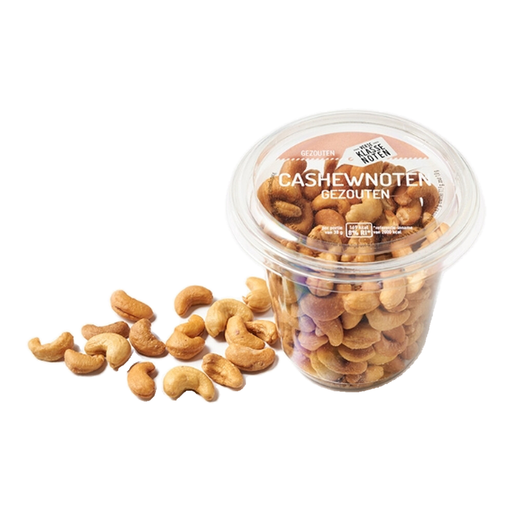 Image unavailable
The 150 g pack is a smaller option if you’re looking for salted cashew nuts.
The ingredients list includes cashew nuts, sunflower oil and 1% salt.
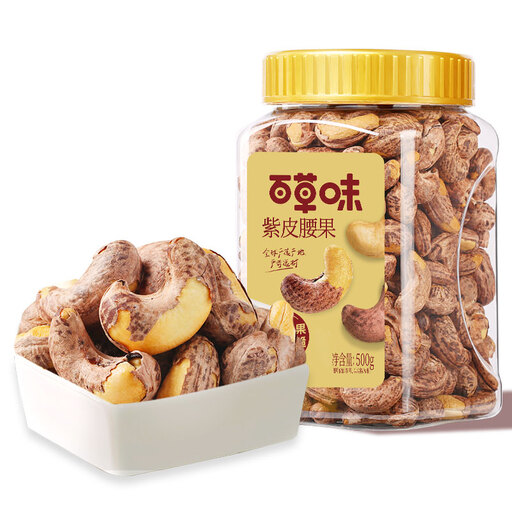 Image unavailable
The 500 g pack is a good fit if you’re looking for a larger amount for snacking or cooking.
The product description lists salt; the product name specifies 180 grade.
Start by comparing the weight and ingredients of the exact products. Check for differences in preparation, salt content and storage instructions too, so the pack suits how you’ll use it.
Don’t automatically rely on cashew nuts as your main source of carbohydrates on a long ride. The Netherlands Nutrition Centre’s general nutrition table lists 5.2 g of carbohydrates per 25 g handful of unsalted cashew nuts; check the nutritional information for the specific product as well.
The Netherlands Nutrition Centre advises avoiding a large portion of foods high in fat, protein or fibre just before exercise. Bear this advice in mind when choosing your portion and when to eat it.
Store nuts in a cool, dark and dry place and seal them properly. The Netherlands Nutrition Centre gives this as general advice for storing nuts; also follow the instructions on the specific pack.
Check the allergen information on the exact pack. According to the Netherlands Food and Consumer Product Safety Authority, allergen information for prepacked foods must appear on the label in accordance with European Regulation 1169/2011; also look out for product-specific statements, such as a possible presence of peanuts.
No. The Netherlands Food and Consumer Product Safety Authority’s warning of 20 May 2026 concerns Trader Joe’s 170 g unsalted cashew nuts with barcode 2003020120930 and best-before date 23-09-2026. Do not eat this specific batch because it may contain metal fragments; the warning does not automatically apply to other packs or batches.