What should you look for when buying?
Start with the allergen your guests need to avoid. Then check the specific dietary claim and consider how you will manage the packaging, information and serving process.
| What to consider |
What to check |
Who this matters to |
| The allergen to avoid |
Check which allergens the exact product contains and what warnings appear on the packaging. |
If I’m arranging a snack for someone who needs to avoid cashew or another allergen, I first want to know whether this variety is suitable at all. Around 36% of consumers prioritise avoiding the relevant allergen. |
| A specific dietary claim |
Look for the required claim on the exact variety; don’t infer it from a short ingredients list alone. |
If I need a gluten-free, lactose-free or vegan option for guests who can eat cashew, I look for the relevant product claim. Around 29% of consumers prioritise a specific dietary requirement. |
| Information at the point of serving |
Keep the labels, match serving bowls to the right packaging and prevent contact with other allergens. |
If I’m portioning the snacks myself, I want to be able to find the product information and prevent cross-contamination when serving. Around 21% of consumers prioritise controlled serving. |
| Packaging and planning |
Compare the net weight, resealability and storage advice with your portioning plan. |
If I’m planning several snack breaks, I want to know how much to divide up and how to store leftovers. Around 14% of consumers prioritise packaging and purchasing plans. |
Cashew nuts on Joybuy
These Joybuy products are cashew varieties for guests who can eat cashew nuts. Check the current packaging for allergen information, and keep the product identity and information together when portioning.
 No image available
Jiazhouyuanye Original Flavour Large Cashew Nuts 160 g
An option for guests who can eat cashew nuts; not suitable for guests who need to avoid cashew.
Net weight: 160 g.
Keep the product information with the packaging and prevent cross-contamination during portioning and serving.
Joybuy
 No image available
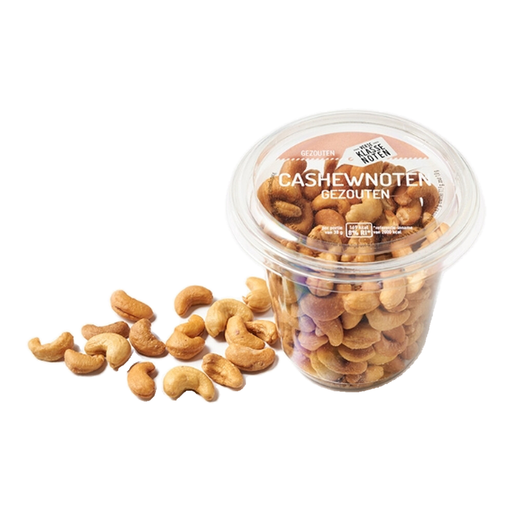
Verse Klassenoten Salted Cashew Nuts 150 g
A salted cashew variety for guests who can eat cashew nuts; not suitable for guests who need to avoid cashew.
Net weight: 150 g.
Check the latest allergen information and follow the storage and serving instructions on the packaging.
Joybuy
 No image available
Three Squirrels Purple-Shell Cashews 500 g
A cashew variety you can portion yourself for guests who can eat cashew nuts; not suitable for guests who need to avoid cashew.
Net weight: 500 g.
Keep the packaging information available when serving and prevent cross-contamination.
Joybuy
 No image available
g'woon Cashew Nuts Roasted & Unsalted 200 g
A roasted, unsalted cashew variety for guests who can eat cashew nuts; not suitable for guests who need to avoid cashew.
Net weight: 200 g.
Follow the storage and allergen information on the current packaging.
Joybuy
 No image available
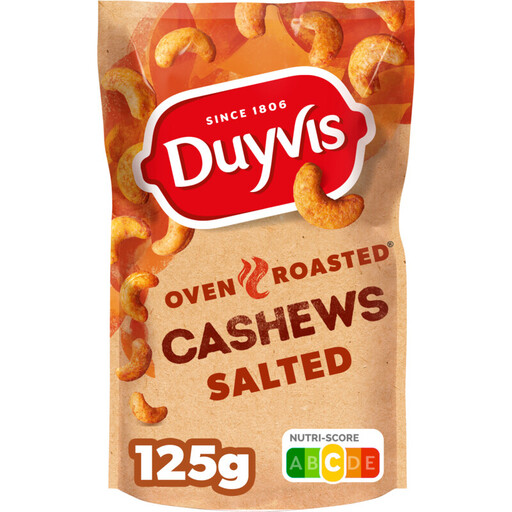
Duyvis Dry Roasted Cashews 125 g
A savoury, dry-roasted cashew variety for guests who can tolerate the allergens listed on the packaging.
Net weight: 125 g.
The product information lists gluten, wheat, peanuts and cashew as allergens. Do not serve this variety to guests who need to avoid any of these allergens.
Joybuy
Frequently asked questions
Are cashew nuts an allergen-free snack for a conference?
No. Cashew nuts are an allergen themselves, and the specific type of nut must be clear in the information given to guests. For anyone who needs to avoid cashew, choose a separately assessed snack that does not contain cashew nuts.
Does lactose-free mean suitable for someone with a milk allergy?
No. Lactose intolerance concerns milk sugar; a milk allergy concerns milk proteins. For a milk allergy, check the ingredients and relevant allergen information rather than relying on a lactose-free claim alone. Stichting Voedselallergie explains the difference.
Can allergen information for catering be given verbally only?
According to the NVWA, this is possible under certain conditions: the information must be available directly before purchase, also be available in writing or electronically to staff and inspectors, and there must be a visible notice at the point of sale telling guests they can ask for it. For nuts, the specific type of nut must be named.
What does ‘may contain peanuts’ mean when buying?
It is a warning about possible unintended presence, not the same as stating that peanuts have been deliberately added as an ingredient. The NVWA explains that allergen warnings are applied on the basis of a risk assessment and reference values. Consider the warning in relation to the relevant allergy diet, and don’t present the product as guaranteed peanut-free.
Does the absence of a cross-contamination warning mean a product is guaranteed to be allergen-free?
No. The NVWA states that a label must not carry a warning when no exceedance of the applicable reference values has been established. That is not the same as a guarantee that no amount of an allergen is present.


