
Snackers who watch their portions
You want to keep eating cashew nuts while checking how much energy the portion you weigh out provides. Compare the nutrition information per 100 g and weigh the amount you actually eat.


If you’re keeping an eye on your calorie intake, choose cashew nuts based on the portion you weigh out and the product label, rather than assuming that unsalted or roasted means low in calories. The labels reviewed from PLUS, Jumbo, Albert Heijn and Duyvis list 586–622 kcal per 100 g. The European Commission sets a maximum of 40 kcal per 100 g for solid foods to make the ‘low calorie’ nutrition claim. For everyday snacking, the Netherlands Nutrition Centre recommends unsalted nuts. If you’re mainly looking for a roasted flavour, you can also compare salt and ingredients.
You want to keep eating cashew nuts while checking how much energy the portion you weigh out provides. Compare the nutrition information per 100 g and weigh the amount you actually eat.
You’re looking for unsalted cashew nuts to enjoy as part of your daily diet. Check the ingredients list too: unsalted varieties can differ in how they’re prepared and whether oil has been added.
You prefer a roasted or savoury flavour and want to weigh up that choice against your portion size. Check the energy, salt and ingredients separately.
First compare the nutrition information per 100 g, then calculate the amount for the weight you actually eat. The labels reviewed from PLUS, Jumbo, Albert Heijn and Duyvis list 586–622 kcal per 100 g.
| What to consider | What should you look for? | Who is this relevant to? |
|---|---|---|
| Energy per portion | Compare kcal per 100 g and weigh the portion you eat. | If I’m tracking my calorie intake, I want to know how much energy my own portion provides; around 36% of consumers say calorie control is their main buying priority. |
| Unsalted ingredients | Check both the ingredients and the salt content per 100 g. | Anyone looking for unsalted cashew nuts to eat every day may also want to know whether oil has been added; around 29% of consumers say this is their main priority. |
| Flavour and preparation | Check whether the exact variety is roasted, salted or prepared without added oil. | If a roasted or savoury flavour is the deciding factor for me, I also want to know the salt and energy content; around 21% of consumers prioritise flavour and preparation. |
| Pack size and storage | Compare the net weight with how you’ll use the product and follow the storage instructions on the packaging. | Anyone looking for a pack size that suits how they use and store the product at home will focus on the packaging; around 14% of consumers say this is their main buying priority. |
A smaller portion provides less energy because you eat less, but it doesn’t change the energy value per 100 g. For solid foods, the European Commission sets a maximum of 40 kcal per 100 g for the ‘low calorie’ claim; the cashew nut labels reviewed exceed this limit.
Weigh your portion and base your comparison on the nutrition information per 100 g. A smaller amount doesn’t make the product low in calories.
The unsalted varieties reviewed from Albert Heijn and Jumbo list sunflower oil. Duyvis describes an oven-roasting method with no added oil, while the label for the salted variety reviewed lists 586 kcal and 0,92 g of salt per 100 g.
Check the preparation method, ingredients, energy and salt separately for the exact variety.
The AH variety reviewed lists a 25 g portion, while the Duyvis variety lists 30 g. Based on the labels, these portions provide 155,5 and 175,8 kcal respectively; the difference in portion size affects the result.
Compare the products per 100 g first, then calculate the values for the same weighed amount.
The NVWA warning dated 20 May 2026 concerns 170 g packs of Trader Joe’s unsalted cashew nuts, barcode 2003020120930, with a best-before date of 23-09-2026, due to possible metal fragments. The stated best-before date has passed, but that doesn’t cancel the warning for a pack you still have in storage.
Check the product name, barcode and best-before date against the warning, and don’t eat the product in question.
A relevant option if you’re looking for oven-roasted cashew nuts with a savoury flavour.
The unsalted variety reviewed is a roasted product in a 170 g cup.
The 200 g unsalted variety reviewed is an option for comparing ingredients and nutrition information.
The product reviewed is Way To Go! Unsalted Cashew Nuts.
The product reviewed is TRADER JOE'S Roasted Unsalted Cashew Nuts, 250 g.
The 200 g unsalted, unroasted variety reviewed is a good match if you want to compare products with a short ingredients list.
This selection at Joybuy includes salted and unsalted cashew nuts. Compare the nutrition information per 100 g and weigh the portion you actually eat.
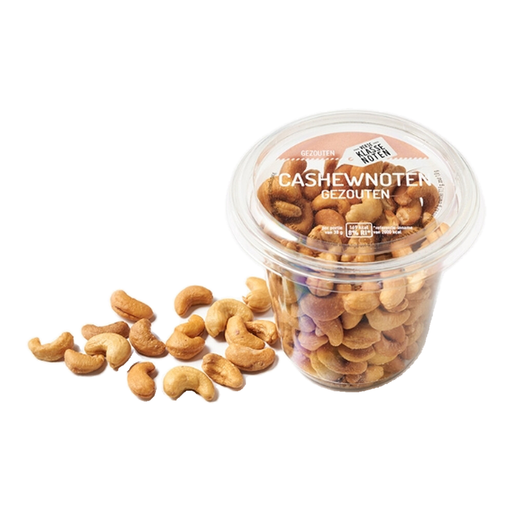 No image available
An option if you’re looking for salted cashew nuts and want to weigh out your own portion.
The product description lists 98% cashew nuts, sunflower oil and 1,0% salt.
The allergen information lists cashew.
 No image available
A good fit if you’re looking for cashew nuts with a simple ingredients list and want to weigh out your portion.
The product description lists 100% cashew kernels, 604 kcal per 100 g and a net weight of 160 g.
Contains cashew.
 No image available
An option if you’re looking for roasted cashew nuts with a savoury flavour.
The product description lists 586 kcal and 0,92 g of salt per 100 g, and says they’re roasted without added fat or oil.
The allergen information lists cashew, nuts, gluten, wheat and peanuts.
 No image available
A good fit if you’re looking for roasted, unsalted cashew nuts with a short ingredients list.
The product description lists cashew nuts as the only ingredient and 596 kcal per 100 g.
Contains cashew and tree nuts.
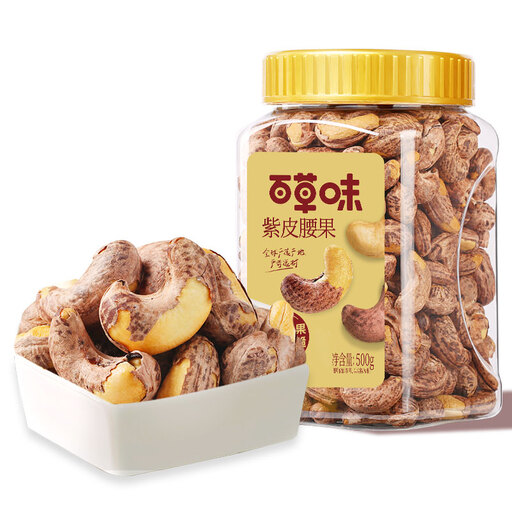 No image available
An option if you’re looking for salted cashew nuts and want to compare the nutrition information for the same amount.
The product description lists 679 kcal and 1,2 g of salt per 100 g.
The allergen information lists cashew and tree nuts.
No, not just because the bag or portion is smaller. According to the European Commission, the ‘low calorie’ nutrition claim for solid foods requires a maximum of 40 kcal (170 kJ) per 100 g; the cashew nut labels reviewed list higher values.
Multiply the kcal per 100 g by the number of grams you’ve weighed out, then divide by 100. For example, a 15 g portion based on the PLUS label, which lists 598 kcal per 100 g, provides 89,7 kcal. This calculation is based on the label values.
No. The unsalted varieties reviewed from Albert Heijn and Jumbo list sunflower oil in the ingredients. So check both the ingredients and the preparation method for the exact variety.
If you’re allergic to cashews, cashew nuts aren’t a suitable choice. For other allergies, check the ingredients and any cross-contamination information on the exact pack. The NVWA explains that relevant allergens must be clearly listed on the label.
The NVWA warning dated 20 May 2026 concerns 170 g packs of Trader Joe’s unsalted cashew nuts, barcode 2003020120930, with a best-before date of 23-09-2026, due to possible metal fragments. Don’t eat that specific product, even if the best-before date has passed. The warning doesn’t automatically apply to all ALDI cashew nuts or to the 250 g pack reviewed.