For a quick breakfast, less fat per 100 g and a smaller portion are two different goals. According to the European Commission, Food Safety, the claim ‘low fat’ can only be used for solid foods containing no more than 3 g of fat per 100 g; being unsalted or having no added oil doesn’t prove that a product meets this limit. If you mainly want to limit the amount in your breakfast, weigh out the cashew nuts beforehand and follow the storage instructions for other ingredients, such as yoghurt.
Who are these choices relevant to?
Label-checkers keeping an eye on fat
You want to know whether the fat content of the specific product suits what you’re looking for. Compare the nutritional information per 100 g; the European Commission, Food Safety sets a maximum of 3 g of fat per 100 g for the ‘low fat’ claim on solid foods.
Breakfast eaters who want to weigh their portions
You want to keep adding cashew nuts to your breakfast, but decide for yourself how much to have. Voedingscentrum gives 25 g of unsalted cashew nuts as a general portion guide; for a specific brand, check the nutritional information for that product.
Those preparing breakfast to take on the go
You want to prepare breakfast in advance so it’s ready to take with you. Dry nuts and yoghurt have different storage requirements; Voedingscentrum advises putting yoghurt back in the fridge at 4 °C soon after use.
What should you look for when choosing?
First decide whether you mainly want to manage the product’s composition, the amount in your portion or how easy it is to prepare in advance. Then compare the nutritional information and ingredients of the exact product.
| What to consider |
What should you look for? |
Who is this most important to? |
| Lower fat content |
Compare fat per 100 g. For solid foods, ‘low fat’ means no more than 3 g per 100 g; for a comparative claim, also check what it is being compared with. |
I want the nutritional information to show that it’s about the product’s composition, not just a label such as unsalted or made without oil. Around 31% of consumers put fat content first. |
| Amount per portion |
Weigh the amount you’re taking with you and use the label value per 100 g for that product. |
If my main aim is to limit the amount in my breakfast, I weigh my portion beforehand. Around 25% of consumers prioritise the energy content of their own portion. |
| Taking it with you and storage |
Check the pack size and storage instructions. If your breakfast includes yoghurt, remember to keep it refrigerated at 4 °C, as advised by Voedingscentrum. |
I want to be able to prepare and take my breakfast with me without forgetting the storage requirements for yoghurt. Around 19% of consumers prioritise convenience. |
| Unsalted and ingredients |
Check both the ingredients list and the salt content per 100 g; unsalted doesn’t automatically mean no added oil. |
If I’m looking for unsalted nuts, I also want to know what other ingredients they contain. Around 13% of consumers prioritise an unsalted product. |
| Allergen information |
Check the allergen information on the packaging of the exact product. |
If I have an allergy, I want to check the information on the exact pack before taking the nuts with me. Around 12% of consumers prioritise this check. |
Pitfalls when choosing cashew nuts
-
Assuming no added oil means low fat
Oven-roasting without added oil tells you about how the cashews are prepared, not their total fat content. Duyvis Cashews Original lists 49 g of fat per 100 g.
Choose this type if you prefer that preparation method, and check the nutritional information separately if you’re keeping an eye on fat.
-
Confusing unsalted with having no extra ingredients
Jumbo Cashewnoten Ongezouten lists cashew nuts and sunflower oil as ingredients. The term ‘unsalted’ doesn’t, by itself, tell you whether oil has been added.
If you want to avoid added oil, check the ingredients list as well as the salt content.
-
Treating a pack as one breakfast portion
Packs of cashew nuts may contain several portions. Voedingscentrum gives 25 g as a general portion guide, not as a personal recommendation or a serving size for every pack.
Decide how much you want to take with you and weigh it out beforehand.
Brands to consider
Duyvis
Duyvis Cashews Original is a roasted product made without added oil, in a 125 g pack.
- Duyvis lists 49 g of fat and 1.5 g of salt per 100 g for this product.
- The preparation method doesn’t make these cashews low fat.
Albert Heijn
AH Cashewnoten ongezouten is an extra-large unsalted product in a 170 g pack.
- The product description specifies the type of cashews and pack size.
- Being unsalted doesn’t indicate a lower fat content; check the nutritional information on the pack.
Jumbo
Jumbo Cashewnoten Ongezouten is an unsalted product in a 200 g pack.
- Jumbo lists 99% cashew nuts and sunflower oil in the ingredients.
- The product information lists 48.6 g of fat and 622 kcal per 100 g; here, unsalted doesn’t mean made without added oil.
Lidl
Lidl sells cashew nuts as a product category.
- For a specific choice, compare the nutritional information and ingredients on the individual pack.
ALDI
ALDI lists Trader Joe’s roasted, unsalted cashew nuts in a 250 g pack.
- The product description makes the preparation method and pack size clear.
- Being roasted and unsalted doesn’t prove that the product is low fat.
PLUS
PLUS Cashewnoten ongezouten ongebrand is a product in a 200 g pack.
- The ingredients list names cashew nuts.
- PLUS lists 46.5 g of fat per 100 g and notes that the product may contain peanuts.
Cashew nuts for breakfast at Joybuy
These product choices are suitable if you want to weigh out cashew nuts or add them to a breakfast with yoghurt or muesli. A label such as unsalted or made without added oil doesn’t replace checking the fat content per 100 g.
 Image unavailable
Jiazhouyuanye Original Flavour Large Cashew Nuts, 160 g
The product description suggests serving these cashew nuts with yoghurt or muesli and says they’re ready to eat.
Pack size: 160 g. Ingredients: 100% cashew kernels.
View at Joybuy
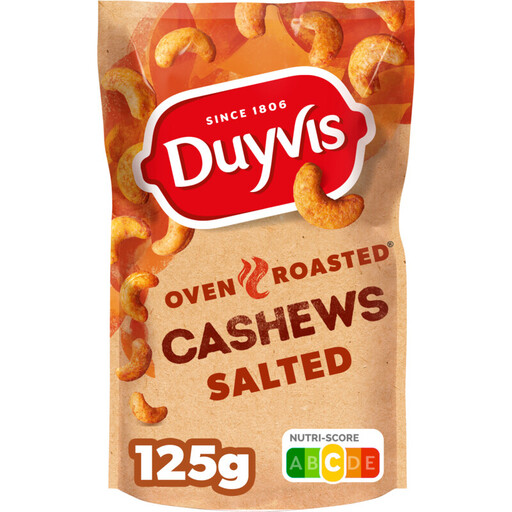 Image unavailable
Duyvis Dry Roasted Cashews, 125 g
A good choice if you’re looking for dry-roasted cashews made without added oil; that preparation method doesn’t automatically mean the product is low fat.
The pack is described as containing 4–5 portions. Store in a cool, dry place.
View at Joybuy
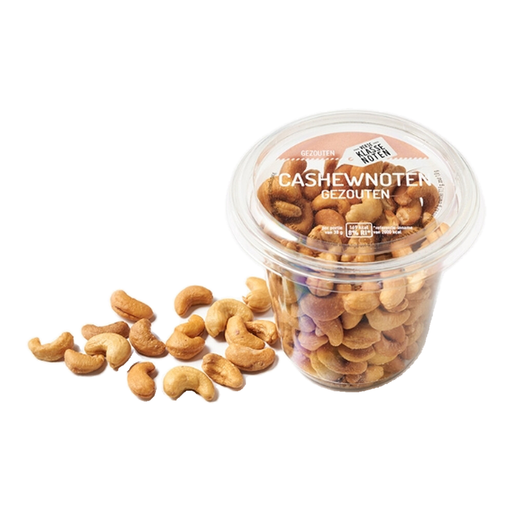 Image unavailable
Verse Klassenoten Salted Cashew Nuts, 150 g
The product title specifies salted cashew nuts; weigh out your preferred breakfast portion beforehand.
Pack size: 150 g. Check the ingredients and nutritional information on the packaging of this product.
View at Joybuy
 Image unavailable
g’woon Cashew Nuts Roasted & Unsalted, 200 g
An option if you want to weigh out roasted, unsalted cashews for breakfast.
Pack size: 200 g. Seal the pack tightly after opening and store in a cool, dry place.
View at Joybuy
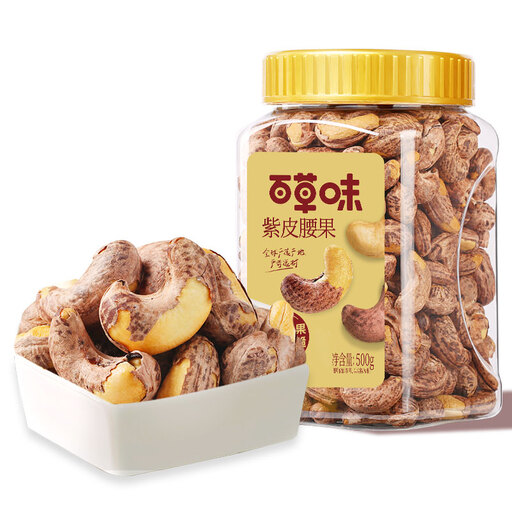 Image unavailable
Be&Cheery Cashews with Purple Skin, 180 grade, 500 g
The product description says these cashews are ready to eat; you can weigh out the amount you want for breakfast in advance.
Pack size: 500 g. Store in a cool, dry place.
View at Joybuy
Frequently asked questions
What does ‘low fat’ mean for cashew nuts?
For solid foods, the European Commission, Food Safety sets a maximum of 3 g of fat per 100 g for the ‘low fat’ claim. Duyvis lists 49 g of fat per 100 g for Cashews Original, Jumbo lists 48.6 g for Cashewnoten Ongezouten and PLUS lists 46.5 g for Cashewnoten ongezouten ongebrand; all these figures are above the limit.
Are unsalted or oil-free roasted cashews also low fat?
Not based on those descriptions alone. ‘Unsalted’ describes the salt content, while ‘made without added oil’ describes the preparation method. To check the fat content, look at the nutritional information per 100 g for the exact product.
How do I work out the nutritional value of my breakfast portion?
Multiply the value on the label per 100 g by the weight of your portion, then divide by 100. Voedingscentrum gives 154 kcal and 12.2 g of fat as a general reference for 25 g of unsalted cashew nuts; for a branded product, use its own nutritional information.
Can cashew nuts and yoghurt be stored in the same way?
No, follow the storage instructions for each ingredient separately. Store nuts according to the packaging; Voedingscentrum advises putting yoghurt back in the fridge at 4 °C soon after use.
What should I check if I have an allergy?
Read the allergen information on the packaging of the exact product. The Netherlands Food and Consumer Product Safety Authority explains that allergens must be clearly declared; PLUS notes that its product may contain peanuts, while Jumbo notes possible traces of nuts and peanuts.


