What should you look for when choosing?
First, identify the ingredient you want to avoid. Then check the ingredients, dietary claims and allergen warnings for the exact product variant, and confirm that the retailer delivers to your address.
| What to consider |
What to check when buying |
Who is this important for? |
| Specific allergen |
Check both ‘contains’ and ‘may contain’ statements. If you have a cashew allergy, don’t choose cashew nuts. |
If I need to avoid a specific allergen, I check the product information carefully; if I have a cashew allergy, this category is not suitable. Around 36% of consumers put allergen safety first. |
| Gluten-free choice |
Look for an explicit gluten-free claim, and also read the ingredients and warnings. |
If I need to avoid gluten and can eat cashew, I look for a gluten-free claim rather than relying on words such as ‘natural’ or ‘unsalted’. Around 29% of consumers say avoiding gluten is their top priority. |
| Lactose and milk protein |
If you’re limiting lactose, look for the relevant dietary claim; if you have a milk protein allergy, check the ingredients and allergen information separately. |
If I want to limit lactose, I look for lactose information without treating it as a check for milk proteins. Around 21% of consumers put limiting lactose first. |
| Ordering and packaging |
Check whether delivery is available to your address and, when your order arrives, compare the product supplied with its label. |
Once I’ve found a suitable dietary option, I also want to know whether my shopping can actually be delivered to my home and whether I’ll receive the right variant. Around 14% of consumers put convenience when ordering first. |
Cashew nuts at Joybuy
These Joybuy products are cashew nuts in a range of varieties. Before ordering and before eating the product, check the information on the exact packaging; all products in this selection contain cashew.
 Image unavailable
Jiazhouyuanye Original Flavour large cashew nuts 160 g
An option if you’re looking for cashew nuts with cashew as the only listed ingredient and you can eat cashew.
The product description lists 100% cashew kernels. Contains cashew; not suitable if you have a cashew allergy.
View at Joybuy
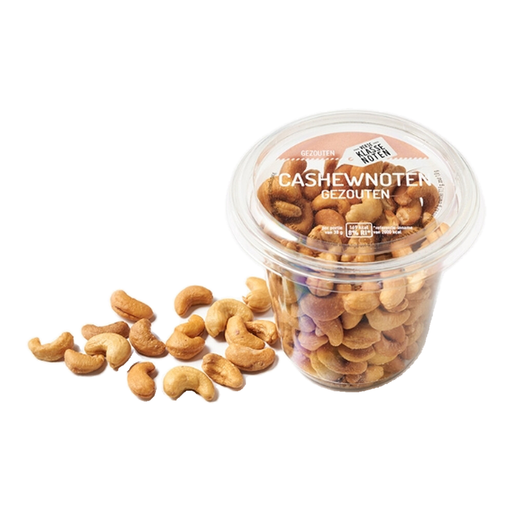 Image unavailable
Verse Klassenoten salted cashew nuts 150 g
An option if you’re looking for salted cashew nuts and the listed ingredients suit your diet.
The description lists 98% cashew, sunflower oil and 1% salt. Contains cashew; not suitable if you have a cashew allergy.
View at Joybuy
 Image unavailable
g'woon roasted, unsalted cashew nuts 200 g
An option if you’re looking for roasted, unsalted cashew nuts and you can eat cashew.
The product information lists cashew nuts as an ingredient and identifies cashew as an allergen. Not suitable if you have a cashew allergy.
View at Joybuy
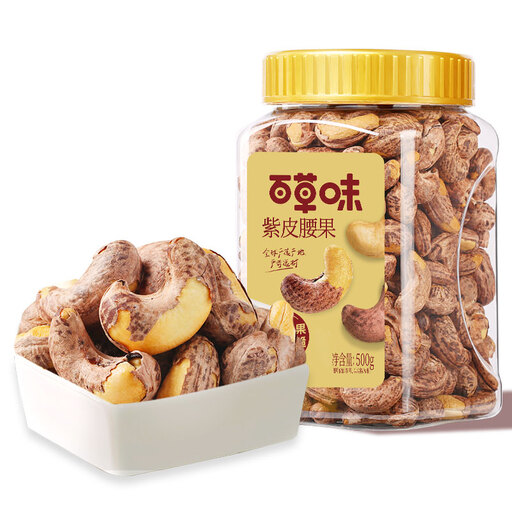 Image unavailable
Be&Cheery cashew nuts with purple skin, 180 grade, 500 g
An option if you’re looking for cashew nuts with purple skin and you can eat cashew.
The product description lists cashew kernels and salt. Contains cashew; not suitable if you have a cashew allergy.
View at Joybuy
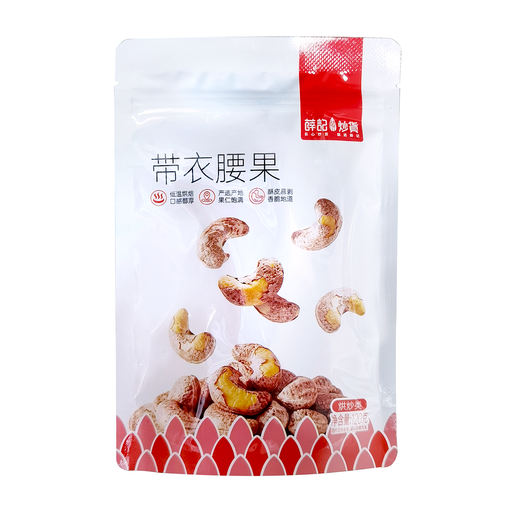 Image unavailable
Xue Ji Chaohuo salted cashew nuts in shell 120 g
An option if you’re looking for salted cashew nuts in their shells and you can eat cashew.
The product information lists cashews and salt. Contains cashew; not suitable if you have a cashew allergy.
View at Joybuy
Frequently asked questions
Can choosing roasted cashew nuts help if you have a cashew allergy?
No. Roasted cashew nuts still contain cashew. Stichting Voedselallergie explains that the nut allergen remains stable when heated; if you have a cashew allergy, don’t choose cashew nuts.
Does gluten-free mean cashew nuts are free from all allergens?
No. A gluten-free claim doesn’t tell you whether a product is suitable for someone with another allergy. Check the ingredients and warnings for the exact product variant too; it still contains cashew.
Is lactose-free enough if you have a cow’s milk allergy?
No. Lactose is milk sugar, while a cow’s milk allergy concerns milk proteins. If you have a milk protein allergy, check the ingredients and allergen information separately.
Does allergen information also need to be available online?
Yes. The NVWA describes allergen information as a legal requirement. Dutch government guidance on food labelling states that label information must also be available online. So use a search filter as a tool, not as a substitute for the product information.
What should you do if you receive a different variant from the one you ordered?
Before eating the product, check the packaging you received again for ingredients and allergens. If the variant or information is unclear, contact customer services.


