What should you look for when buying?
First, check whether cashews are allowed and whether the place where the snack will be eaten accepts nuts. Then check the specific dietary claim and ingredients; packaging and storage come after that.
| What to consider |
What to check when buying |
Who this is for |
| Cashews and where the snack will be eaten |
Check whether cashews are allowed and read any warnings about the possible presence of peanuts or other nuts. Ask the school or after-school club about its rules. |
If I need to take cashews or the school’s rules about nuts into account, this category may not be suitable. Around 36% of consumers give top priority to whether cashews are allowed or to the rules at the place where the snack will be eaten. |
| Specific dietary claim |
Check the claim on the exact variant and distinguish between gluten, lactose and milk protein. A lactose claim doesn’t tell you whether a product is suitable for someone with a milk allergy. |
If I want to avoid gluten or lactose, I look for the relevant claim and also check the ingredients. For around 29% of consumers, this kind of specific dietary requirement comes first. |
| Everyday choice |
Compare unsalted and salted variants, and read the ingredients. Unsalted, on its own, tells you nothing about oil or allergens. |
If I’m giving this as a regular snack, I want to know whether the nuts are unsalted and what else they contain. Around 21% of consumers put this everyday food choice first. |
| Packaging and storage |
Choose a pack size that suits how you’ll use it, and store nuts in a dry, tightly sealed container. Follow the storage and best-before information on the packaging too. |
If I’m choosing a pack for home, I want to be able to store it properly once opened. For around 14% of consumers, pack size and storage are the main considerations. |
Cashew nuts at Joybuy
The Joybuy products shown are cashew nuts for a snack. Product titles and information include both unsalted and salted variants; check the ingredients, allergen warnings and where the snack will be eaten for each pack.
 No image available
Jiazhouyuanye Original Flavour Large Cashew Nuts, 160 g
The product description says the nuts are ready to eat and lists 100% cashew kernels as the only ingredient.
Contains cashews; not suitable if cashews need to be avoided.
Check whether cashew nuts are allowed at the school or after-school club.
Joybuy
 No image available
g'woon Cashew Nuts Roasted & Unsalted, 200 g
The title describes roasted, unsalted cashew nuts; the product description lists cashew nuts among the ingredients.
The pack contains 200 g. Once opened, store in a dry, tightly sealed container.
Contains cashews and other tree nuts; not suitable if cashews need to be avoided. Check the school or after-school club’s rules.
Joybuy
 No image available
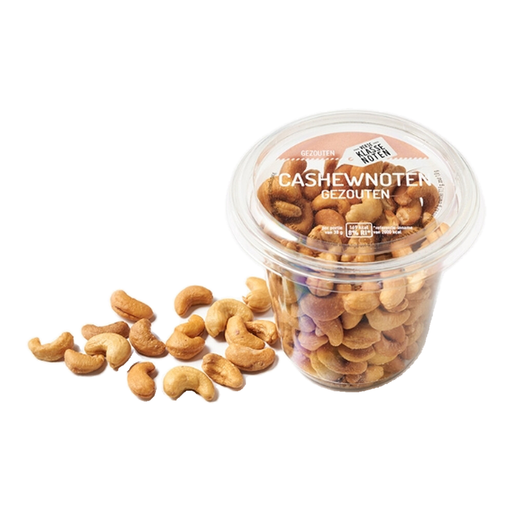
Verse Klassenoten Salted Cashew Nuts, 150 g
The ingredients information lists cashews, sunflower oil and salt; the title gives the pack size as 150 g.
Contains salt; choose another variant if you’re looking for unsalted cashew nuts.
Contains cashews and isn’t suitable if cashews need to be avoided. Check whether nuts are allowed at the school or after-school club.
Joybuy
 No image available
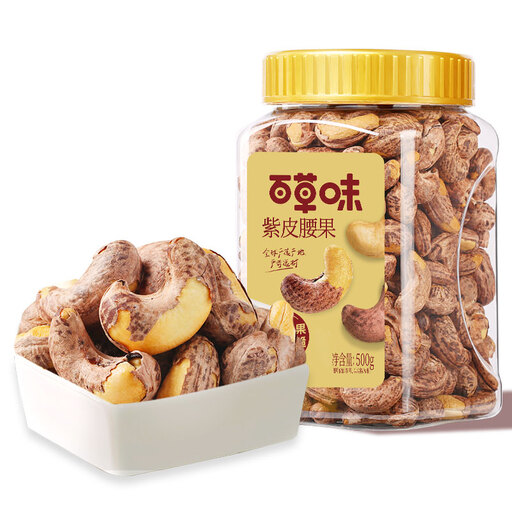
Be&Cheery Cashews with Purple Skin, 180 grade, 500 g
The product information lists cashews and salt; the pack contains 500 g.
Contains salt; choose another variant if you’re looking for unsalted cashew nuts.
Once opened, store according to the product information. Contains cashews and isn’t suitable if cashews need to be avoided.
Joybuy
 No image available
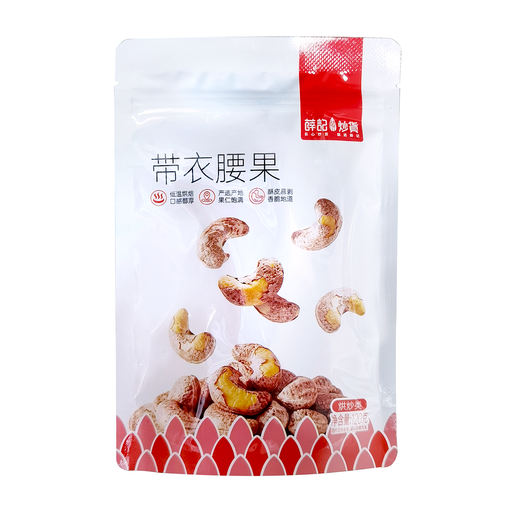
Xue Ji Chaohuo Salted Cashews with Skin, 120 g
The ingredients information lists cashews, sunflower oil and salt. The product description says it comes in a handy 120 g pack.
Contains salt; choose another variant if you’re looking for unsalted cashew nuts.
Contains cashews and isn’t suitable if cashews need to be avoided. Check whether nuts are allowed at the school or after-school club.
Joybuy
Frequently asked questions
Are lactose-free cashew nuts automatically suitable for someone with a cow’s milk allergy?
No. Lactose intolerance is about milk sugar; a cow’s milk allergy is about milk proteins. The Netherlands Nutrition Centre explains the difference. If you have a milk allergy, check for milk ingredients and relevant allergen warnings, not just a lactose-free claim.
Can I send cashew nuts to school or an after-school club with my child?
That depends on the rules at the school or club. If nuts aren’t allowed there, don’t send cashew nuts with your child. Allergie op School also recommends agreeing that children won’t share food and that surfaces will be cleaned after eating. A dietary claim doesn’t change the venue’s rules.
What does ‘may contain’ mean on a Dutch label?
The warning refers to the possible accidental presence of an allergen due to cross-contamination. It doesn’t mean that the allergen has been added as an ingredient. According to the NVWA, rules on risk assessment and the wording ‘May contain X’ or ‘Not suitable for people with an X allergy’ have applied since 1 January 2026.
Are whole cashew nuts a suitable snack for every child?
No. The product information for the checked Jumbo and PLUS variants warns that young children can choke on nuts. Consider the way the snack is served and follow the warnings on the packaging; being unsalted or gluten-free doesn’t remove this risk.
What should I do if my pack is covered by an NVWA warning?
Don’t eat the affected product and follow the instructions in the warning. The NVWA warning of 20 May 2026 specifically concerned 170 g packs of Trader Joe’s unsalted cashew nuts, with barcode 2003020120930 and best-before date 23-09-2026. It doesn’t automatically apply to other variants or pack sizes.


