
A lighter snack after your workout
You want to keep eating cashew nuts, but compare the fat and energy in a weighed portion. Unroasted or unsalted doesn’t, by itself, tell you anything about the fat content.


If you want a lighter snack after exercise, compare the fat and energy per 100 g and per portion. Unsalted or made without added oil doesn’t automatically mean low in fat. For recovery after intense exercise, the protein and carbohydrates in your whole eating occasion matter too, so think of cashew nuts as part of a meal rather than assuming they’re a complete recovery food.
You want to keep eating cashew nuts, but compare the fat and energy in a weighed portion. Unroasted or unsalted doesn’t, by itself, tell you anything about the fat content.
You want to know how a portion of nuts fits into your recovery meal, especially if you’ll be training again soon. Look at the protein and carbohydrates in the whole eating occasion.
You’re looking for cashew nuts without added salt and want to compare salt separately from fat. An unsalted variety can still be high in fat.
First decide what matters to you: portion size, the make-up of your recovery meal, or flavour and ingredients. Unsalted, unroasted and made without added oil describe different qualities; they aren’t synonyms for low-fat.
| What to consider | What to look for | Who might find this more important? |
|---|---|---|
| Fat and energy | Compare fat and energy per 100 g, then calculate the amounts for your weighed portion. | If I want a smaller snack after exercise, I weigh my portion rather than relying on the wording on the packet. Around 42% of consumers prioritise fat and energy. |
| Contribution to recovery | Look at the protein and carbohydrates in the whole eating occasion, not just the nuts. | If I need to perform again soon after intense exercise, I want to know what my whole meal contains. Around 33% of consumers prioritise the contribution to recovery. |
| Salt and ingredients | Check the salt content and ingredients of the exact variety. | If I want to limit salt or other additives, I compare the ingredients list and nutrition information separately. Around 17% of consumers prioritise salt and additives. |
| Packaging and storage | Compare the net weight with your portion and follow the storage instructions on the packet. | If I use cashew nuts regularly, I want to be able to store and measure out a pack in a way that suits how I use them. Around 8% of consumers prioritise practical buying and storage. |
For the ‘low fat’ claim on solid foods, the European Commission sets a limit of 3 g of fat per 100 g. That’s why the nutrition information for specific varieties of cashew nuts matters: for example, the AH variety lists 45 g of fat per 100 g. A small portion changes how much you eat, not the composition per 100 g.
These terms describe the salt content or preparation method; they don’t automatically mean a lower fat content. For the ‘low fat’ claim on solid foods, the European Commission sets a limit of no more than 3 g of fat per 100 g.
Compare fat and energy per 100 g, then calculate the amounts for the portion you actually eat. Treat salt and preparation method as separate factors when choosing.
A 25 g portion of the AH variety provides 5.25 g of protein, but also 11.25 g of fat and 146.25 kcal. A larger portion therefore increases the amount of protein, fat and energy at the same time.
First consider what you need your whole recovery meal to provide, then use cashew nuts as a measured part of it.
The NVWA warned of possible metal particles in Trader Joe’s unsalted cashew nuts, 170 g, with barcode 2003020120930 and best-before date 23-09-2026. The warning applies to that specific pack.
If you have this exact pack, follow the NVWA warning and don’t eat the cashew nuts. Don’t assume the warning applies to other packs or batches.
Albert Heijn’s product page describes the 150 g organic, unroasted variety and gives a portion size of 25 g.
Jumbo Unroasted Cashew Nuts 200 g is described on the product page as 100% cashew nuts.
PLUS Unsalted Unroasted Cashew Nuts 200 g is an option to compare if you’re looking for unsalted cashew nuts.
Duyvis describes Cashews Original as oven-roasted without added oil.
ALDI Netherlands lists roasted, unsalted Trader Joe’s cashew nuts in a 250 g pack.
Lidl has a Dutch cashew nuts product page, so it’s one of the brands you can compare.
These Joybuy product picks are cashew nuts to weigh out as a snack or add to an eating occasion. Compare the figures per 100 g with your own portion; unsalted or roasted doesn’t automatically mean low in fat.
 No image available
Could suit you if you want to weigh out cashew nuts as a snack or add them to yoghurt or muesli; these uses are mentioned in the product description.
Per 100 g: 604 kcal, 47.7 g of fat, 19.8 g of protein and 0.028 g of salt. This isn’t a low-fat option.
 No image available
Could suit you if you’re looking for dry-roasted cashew nuts without added oil; the product description says they’re oven-roasted without added fat or oil.
Per 100 g: 586 kcal, 43 g of fat, 18 g of protein and 0.92 g of salt. Made without added oil doesn’t mean low in fat.
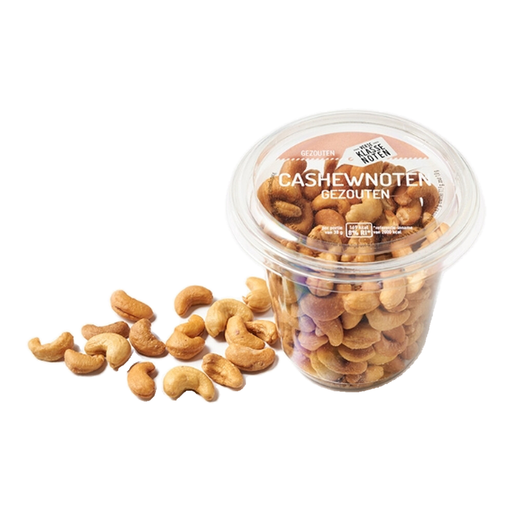 No image available
Could suit you if you want to take ingredients and salt into account when choosing a cashew variety.
Per 100 g: 48 g of fat, 21 g of protein and 1.0 g of salt. The ingredients list includes 98% cashew nuts, sunflower oil and salt.
 No image available
Could suit you if you’re looking for roasted cashew nuts without salt and want to weigh out your own portion.
Per 100 g: 596 kcal, 46.67 g of fat, 18.67 g of protein and 0.067 g of salt. The ingredients list includes cashew nuts; unsalted doesn’t mean low in fat.
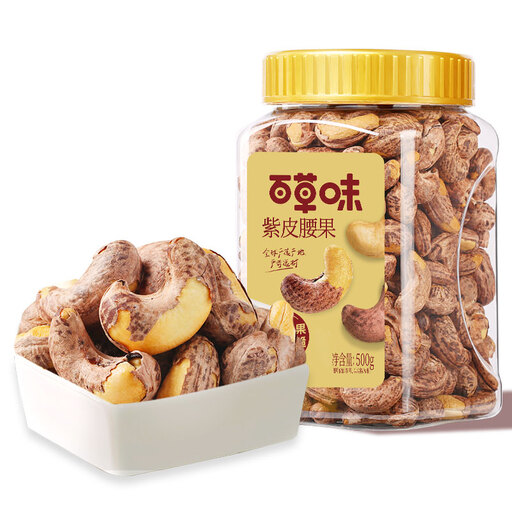 No image available
Could suit you if you want to weigh out cashew nuts as a snack and assess the nutrition figures per portion.
Per 100 g: 679 kcal, 60.1 g of fat, 16.4 g of protein and 1.2 g of salt. The ingredients list includes cashew kernels and salt.
For solid foods, the European Commission sets a limit of 3 g of fat per 100 g for the ‘low fat’ claim. The AH, Jumbo and PLUS varieties listed contain considerably higher amounts, so they aren’t low-fat cashew nuts on that basis.
Assess the cashew nuts as part of your whole eating occasion. The Dutch Association of Sports Nutrition Experts recommends consuming 0.2–0.4 g of protein per kg of body weight within two hours of intense exercise, particularly if another bout of exercise follows soon; this is advice for specific situations, not a fixed amount for every workout.
Check the ingredients and allergen information on the exact pack. The NVWA requires allergens to be clearly distinguishable in the ingredients list. A fat-related label says nothing about whether a product is suitable for someone with an allergy.
No. The NVWA warning issued on 20 May 2026 concerns Trader Joe’s unsalted cashew nuts, 170 g, with barcode 2003020120930 and best-before date 23-09-2026. The warning says not to eat these specific cashew nuts because of possible metal particles; don’t assume it applies to other packs or batches.
Store cashew nuts in a tightly sealed container in a dry place. The Netherlands Nutrition Centre advises storing nuts this way because they’re susceptible to mould; also follow the storage instructions on the pack.