
Runners avoiding specific foods
You can eat cashews but want to avoid gluten or lactose, for example. You need a claim that matches the specific food you are avoiding; cashew itself remains a tree nut allergen, as Stichting Voedselallergie explains.


Cashew nuts are not a universally allergy-free snack: cashew itself is a tree nut allergen, as Stichting Voedselallergie explains. If you can eat cashews but want to avoid gluten or lactose, for example, check the claim on the exact product. Albert Heijn describes its 170 g unsalted cashews as gluten-free and lactose-free, but this does not rule out other allergens. Treat cashew nuts as a snack, not automatically as a replacement for a carbohydrate plan for long training sessions. Voedingscentrum also points out that foods high in fat, protein or fibre can cause stomach problems shortly before exercise.
You can eat cashews but want to avoid gluten or lactose, for example. You need a claim that matches the specific food you are avoiding; cashew itself remains a tree nut allergen, as Stichting Voedselallergie explains.
You want to know whether cashew nuts work as a snack or as fuel during long training sessions. Voedingscentrum highlights that carbohydrates are part of the diet for endurance sports.
You’re looking for a snack that suits the time you plan to run. Voedingscentrum advises paying attention to foods high in fat, protein or fibre shortly before exercise.
First, identify which food you need to avoid. Then consider the snack’s role in your training diet, and finally check the portion, when you plan to eat it and the packaging.
| What to consider | What should you check? | Who is this important for? |
|---|---|---|
| The right dietary claim | Check the exact product, the specific free-from claim, the ingredients and allergen warnings. | If you can eat cashews but want to avoid gluten or lactose, for example, look for a claim that matches exactly what you need to avoid. Around 36% of consumers put dietary suitability first. |
| Fuel for long training sessions | Compare carbohydrates, fat and protein per 100 g and in the portion you plan to eat; decide whether you need a snack or fuel for on the go. | If you’re mainly looking for suitable fuel for marathon training, you’ll want to factor the nutritional composition into your plan. Around 29% of consumers prioritise this training fuel. |
| When to eat it and how well you tolerate it | Consider the portion size, ingredients and flavourings in relation to when you plan to run. | If you’re mindful of stomach or digestive discomfort when running, tailor the portion and timing to what you can tolerate. Around 21% of consumers look at this first. |
| Packaging and use | Check the net weight, portion information and storage and resealing instructions. | If you want to use a pack over several training days, the quantity and storage instructions matter in practice. Around 14% of consumers start with these practical considerations. |
A gluten-free or lactose-free claim does not mean that a product contains no cashew or other declared allergens.
Match each claim to the ingredient you want to avoid, and check the ingredients and warnings for the specific product.
Jumbo lists 622 kcal and 22.9 g of carbohydrates per 100 g for its unsalted cashew nuts. Voedingscentrum stresses that getting enough carbohydrates matters in endurance sports; a calorie figure doesn’t tell you how many carbohydrates you’ll get.
Check the carbohydrate content for the portion you’ll actually eat, and decide first what role the snack will play in your training diet.
You may also need other foods to top up your carbohydrate plan.
According to Voedingscentrum, foods high in fat, protein or fibre can cause stomach problems shortly before exercise. The nutritional composition and when you eat it are therefore important.
Adjust the portion and timing to your training and what you can tolerate; don’t assume there’s one standard portion that suits everyone.
Duyvis describes its Cashews Original as roasted without added oil. On its own, this preparation claim does not mean the product is unsalted, fat-free or allergen-free.
Consider the preparation method, ingredients and nutritional information as separate features.
The Cashews Original range is a seasoned, oven-roasted snack in a 125 g pack.
AH Cashewnoten ongezouten 170 g is a specific product to consider if you avoid gluten or lactose.
According to its product information, Jumbo Cashewnoten Ongezouten 200 g contains 99% cashew nuts and sunflower oil.
Lidl lists cashew nuts in its Alesto range, including Way To Go cashew nuts.
ALDI lists Trader Joe's Cashewnoten geroosterd en ongezouten in a 250 g pack.
PLUS Cashewnoten ongezouten ongebrand 200 g is a product with a short ingredients list.
These products are cashew nut options, not general recommendations for people avoiding allergens. Check the information on the exact product to make sure it suits your diet.
 No image available
An option if you can eat cashews and want a snack that, according to the product description, is ready to eat straight from the pack.
Pack size: 160 g.
 No image available
A roasted option to consider if you can eat cashews and are specifically looking for this preparation method.
The listed allergens include cashew, gluten, wheat and peanuts; check the packaging of the exact product.
Pack size: 125 g.
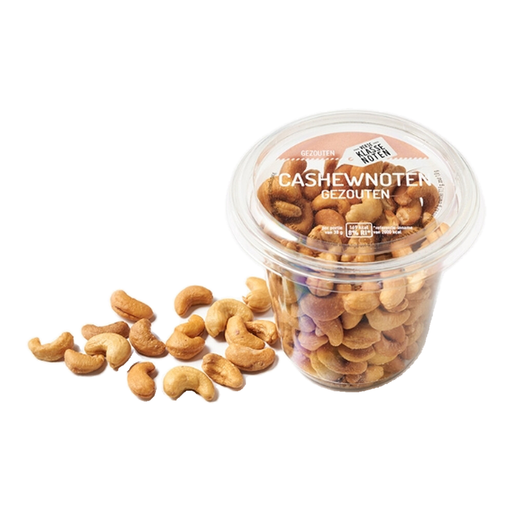 No image available
An option if you can eat cashews and are looking for a salted variety.
Pack size: 150 g.
 No image available
An option if you can eat cashews and want a roasted, unsalted variety.
The product information lists cashew and other tree nuts; check the allergen information on the exact pack.
Pack size: 200 g.
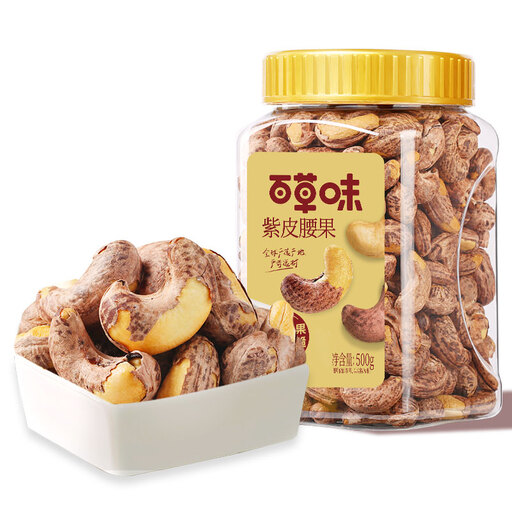 No image available
An option if you can eat cashews and are looking for a variety with purple skin.
Pack size: 500 g. The product information lists cashew and salt as ingredients.
No. Albert Heijn describes AH Cashewnoten ongezouten 170 g as gluten-free, but the product contains cashew. European rules on the gluten-free claim cover gluten and do not automatically rule out other allergens.
Yes, check the packaging of the exact product you’re buying. Albert Heijn and PLUS advise checking the ingredients and allergen information again, as product information can change.
The NVWA states that allergen labelling is required for 14 allergens and that allergens must be clearly identifiable in the ingredients list. This information requirement does not automatically make a product suitable for every dietary need.
According to the NVWA, the new rules for precautionary allergen warnings have applied since 1 January 2026. A risk assessment determines whether a reference value could be exceeded; the absence of a warning is not a general claim that a product contains no allergens.
It depends on your portion, when you eat it and what you can tolerate. Voedingscentrum advises paying attention to foods high in fat, protein or fibre shortly before exercise; don’t assume there’s one standard portion that suits everyone.
Do not eat the 170 g pack of Trader Joe's Cashewnoten ongezouten with barcode 2003020120930 and best-before date 23-09-2026. The NVWA warning issued on 20 May 2026 mentions possible metal fragments; it applies to that specific pack and date, not automatically to other varieties.