
Small carving maker
You want to capture the grooves, edges and finish of small ornaments clearly. Lens magnification is an important factor when choosing, as information from Shopify Nederland, Nikon Nederland and Fujifilm X also shows.


Start with the smallest carving marks you want to capture in close-up, and check the maximum magnification of the exact lens. The camera body or the word ‘macro’ alone won’t tell you enough. A kit zoom may be enough for full ornaments and a range of compositions, while tiny details may justify a separate macro lens. Controlled lighting and a fixed set-up are also important for consistent portfolio shots.
You want to capture the grooves, edges and finish of small ornaments clearly. Lens magnification is an important factor when choosing, as information from Shopify Nederland, Nikon Nederland and Fujifilm X also shows.
You photograph several pieces and want to keep colour, lighting and presentation consistent between shooting days. Shopify Nederland also highlights the importance of preparation, lighting and choosing a suitable background.
You want to photograph both full ornaments and occasional small details, and are looking for a combination of camera body, lens and any accessories you may need. Check exactly which lens comes with the kit; Nikon Nederland and Canon Nederland describe what their specified kits include.
First decide between a kit zoom for wider shots and a suitable macro lens for small details. Also consider whether you can keep your lighting and set-up consistent.
Best if: you mainly photograph full ornaments and want to start with a range of compositions.
Bear in mind: maximum magnification varies by lens. Canon lists a maximum of 0.16× with autofocus for the RF-S 18–45mm at 45mm.
Best if: you want to show small grooves or grain in close-up; Nikon, Fujifilm and Sony each list dedicated 1:1 macro lenses.
Bear in mind: a macro lens isn’t automatically included with a standard kit, so you may need to buy one separately.
Best if: your current camera captures enough detail, but reflections, changing light or shifting angles are making your portfolio shots less consistent.
Bear in mind: a fixed background and lighting set-up need space and preparation time. Shopify Nederland describes these considerations for product photography.
| Consideration | What to look for | Who should consider this? |
|---|---|---|
| Fine carving details | Compare the lens’s maximum magnification and mount with the dimensions of your smallest ornament. | If I want to capture fine grooves in close-up, magnification is what I focus on. Around 33% of consumers prioritise detail. |
| Colour and lighting | Check whether you can set your lighting and white balance consistently, and whether you have room for lights and a background. | For a portfolio with consistent colours across shooting days, I want to be able to repeat my lighting set-up. Around 27% of consumers give consistent colour and lighting top priority. |
| Keeping the whole ornament in focus | Check whether the zoom range suits your working space and whether focus bracketing is available if a single close-up doesn’t provide enough depth of field. | When I want to show the whole ornament clearly and in focus, I consider composition and depth of field. Around 20% of consumers prioritise full-piece photographs. |
| A complete, practical set | Check the exact contents of the kit and whether you’ll need a macro lens or any other parts for your set-up. | When putting together my set, I want to know what’s already included with the camera and what I’ll need separately. Around 20% of consumers prioritise what’s included in the set. |
A kit zoom may offer different magnification from a dedicated macro lens. Canon lists a maximum of 0.16× with autofocus and 0.26× with manual focus for the RF-S 18–45mm at 45mm.
Compare the maximum magnification and included lens of the exact kit with the size of your smallest carving.
If the kit zoom doesn’t show enough detail, you may need a separate lens with a compatible mount.
Preparation, reflections, background and lighting all affect how small products appear in photos. Shopify Nederland covers these factors in its product photography guidance.
Take comparable test shots using a fixed background and controlled lighting before deciding that a camera body upgrade is the answer.
A fixed set-up may need space for lighting and a background.
At high magnification, depth of field can be shallow. Canon describes focus stacking as a way to combine shots taken at different focus points into an image with greater depth of field.
Check whether the exact camera model supports focus bracketing, and whether taking extra shots and editing them afterwards suit your workflow.
Focus stacking can involve taking extra shots and editing them afterwards.
The EOS R50 kit with RF-S 18–45mm is an option for wider shots; the RF 35mm F1.8 IS Macro STM lens is a separate option for macro photography.
The Z50II standard kit comes with a Z DX 16–50mm zoom lens; the NIKKOR Z MC 50mm f/2.8 is a separate macro option.
The X-S20 kit with XC15–45mm is an option for wider shots; the XF30mmF2.8 R LM WR Macro is a separate lens.
The ILCE-6400 is an APS-C camera with an E-mount; the E 30mm F3.5 Macro is a separate lens option for small details.
This Joybuy selection includes cameras for photography, including a Sony ZV-E10 kit with a 16–50mm zoom. Check whether each model’s camera type and lens options suit your portfolio of carved ornaments.
 No image available
The product title describes it as a photography camera. Check whether it and your chosen composition capture enough detail from your smallest carving.
The product title lists 12× optical zoom, 4K, WiFi and 64MP.
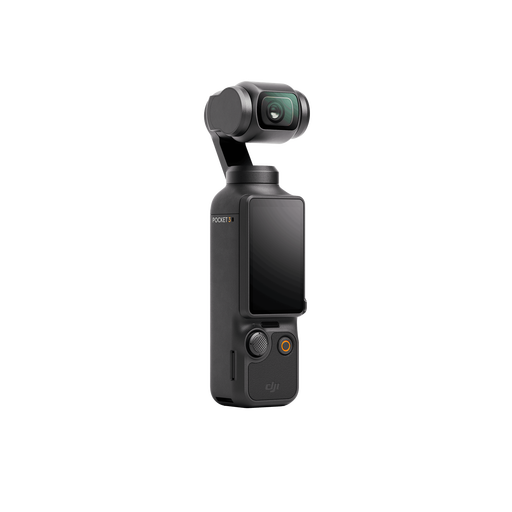 No image available
The product information mentions fast focusing for still images. Try a close-up of your ornament to see whether it captures the details you want.
The product title lists a 1-inch CMOS sensor, 4K/120fps video and an included microphone.
 No image available
The product title describes it as a photography camera. Take some test shots to check whether it captures the small details of your ornament clearly enough.
The product title lists a 1-inch CMOS sensor, 4K/120fps video and a 2-inch rotating touchscreen.
 No image available
The kit includes a 16–50mm zoom lens for a range of compositions. Check whether its magnification and minimum focusing distance suit small carvings.
The product information lists a 24.2MP APS-C sensor and a vari-angle LCD screen. According to the product description, the adapter/charger isn’t included.
 No image available
The 16–50mm lens offers a range of compositions. Check its maximum magnification before choosing it for small carving marks.
The product description lists a 24.2MP sensor, touchscreen and electronic viewfinder.
It depends on the size of the detail and the composition you want. Canon lists a maximum of 0.16× with autofocus or 0.26× with manual focus for the RF-S 18–45mm at 45mm. Try some test shots before choosing a separate macro lens.
If needed, take a series of shots with different focus points and combine them. Canon describes focus stacking as a way to increase depth of field; check whether your chosen camera body supports focus bracketing or in-camera merging.
Use a fixed background and repeatable lighting, and prepare the ornament in the same way for each session. Shopify Nederland highlights preparation, background and lighting as key considerations, and recommends avoiding distracting marks and reflections.
Yes. Compare what’s included in the kit with your need for a macro lens and a fixed set-up. Nikon, for example, states that the Z50II standard kit includes a Z DX 16–50mm lens, but doesn’t include a charger.
If a product doesn’t meet the expectations you were entitled to have, the seller must resolve the issue. According to the Dutch government, there is no fixed statutory guarantee period in the Netherlands; the assessment depends on the product and circumstances.