
Vandaag of morgen in huis

Kwaliteit gegarandeerd

Welkomstaanbiedingen ontgrendelen: GRATIS bezorging | Tot 80% korting | Gratis 30 dagen JoyPlus-proefperiode
Download de app
A long drive to southern Europe, a weekend with a caravan or daily work with a lorry requires more than just a full tank. With the right car safety accessories, you can keep a closer eye on tyre pressure and make a stationary vehicle more visible in the event of a breakdown.
Even so, it is easy to make a purchase based on a striking number of LEDs, a wide measuring range or a promising alarm function. In practice, details such as compatibility, battery life and legal application often matter most. Below, you will find the key points to check, along with a selection for different types of vehicle.
A TPMS tyre pressure monitoring system for a passenger car is not automatically suitable for a motorhome, caravan or lorry. A set with four sensors may be ideal for a car or compact motorhome, but it will not be enough if you want to monitor ten or more tyres.
Pay attention to:
For a lorry or trailer, a standard lorry tyre pressure gauge can sometimes be a useful addition, but real-time monitoring while driving offers a different use case. Also check whether the sensors are suitable for your vehicle’s valves.
A car emergency signal or breakdown warning light can improve visibility in the event of a breakdown, but not every model replaces a warning triangle or complies with local regulations. OSRAM’s product description states that the TRUCK FLARE TA19 Essential is approved under §53a StVZO and is mandatory for vehicles weighing at least 3.5 tonnes in Germany. This is a German regulation; before using it in the Netherlands or other countries, check the current road traffic rules.
Always position a light in accordance with local regulations and do not stand on the carriageway unless necessary. A compact light that requires no installation is convenient, but the driver remains responsible for setting it up safely.
For an LED product, a rating such as IP65 is relevant, but it does not mean that the product can be used underwater. IP65 generally refers to protection against dust and water jets in the product information. Also check:
A flexible RGB LED display for a car can attract attention, but do not use it as a replacement for legally required lighting or signalling.
Choose a TPMS based on your vehicle’s recommended tyre pressure, rather than simply looking at the highest figure in the product title. For passenger cars and some SUVs, a range up to 116 psi is often sufficient. For motorhomes, caravans, trailers and lorries, a range up to 188 or 203 psi is more practical.
A useful system should preferably display:
Also consider the measurement tolerance. The supplied product information for the Tymate and GUTA systems states a deviation of less than 2 psi. This is a manufacturer’s product specification and does not guarantee that every measurement will be identical under all conditions.
In practice, a TPMS for a motorhome works differently from a system for a short passenger car. A long caravan combination or trailer may require a more stable signal. A repeater can help support the connection between the sensors and the display, but always check the stated maximum length.
External sensors are easy to screw onto the valve. However, check that they are securely fitted, do not touch the wheel rim and are suitable for metal or other types of valve. Bear in mind that they use replaceable coin-cell batteries, such as CR1632 or CR1632, and plan regular checks.
A lorry LED warning light with its own AA batteries remains useful when the vehicle battery cannot be accessed. Look at:
According to OSRAM’s product information, the TA19 Essential has a stated operating time of more than 15 hours and an integrated battery check. According to the manufacturer, the OSRAM Truck Flare Signal TA19 combines an orange flashing light with a white torch. These manufacturer claims are based on the product description; check the current manual and local regulations before buying.
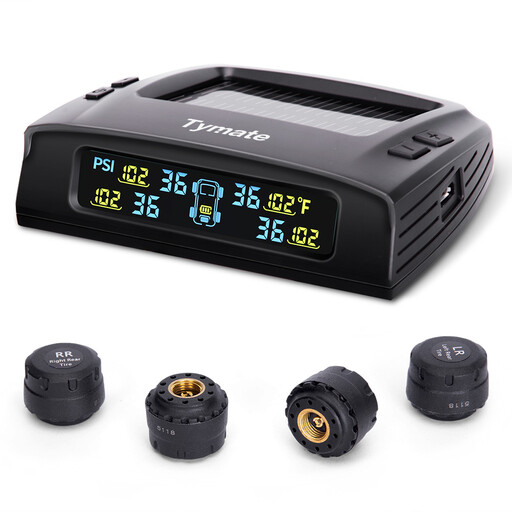
Why it suits this profile: For motorists, SUV drivers and smaller motorhome owners who want to monitor four tyres during a journey without a complicated installation.
The specifications list four sensors, a range of 0–116 psi and an automatic sleep mode. However, check whether the maximum vehicle length of approximately 20 feet suits your combination.
Colour display, temperature measurement from -20 to 85 °C and CR1632 sensor batteries with a stated life of approximately two years.
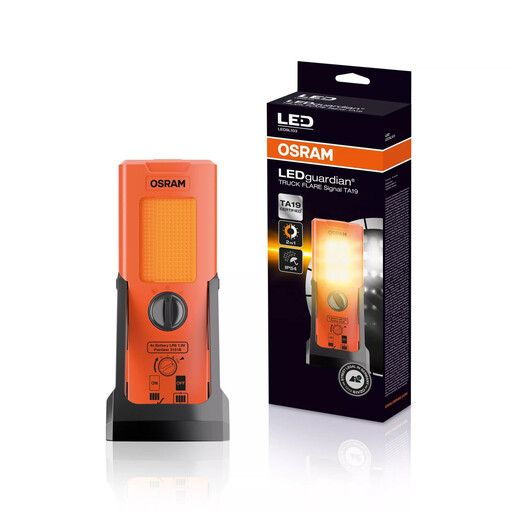
Why it suits this profile: For drivers who want one portable device for warning other road users and providing additional lighting in the event of a breakdown.
The device is portable and requires no permanent mounting or vehicle power supply. You should check the stated GGVS/ADR certification separately for your type of transport and country.
Orange flashing light, white torch, six white and six orange LEDs, plus four AA batteries supplied.
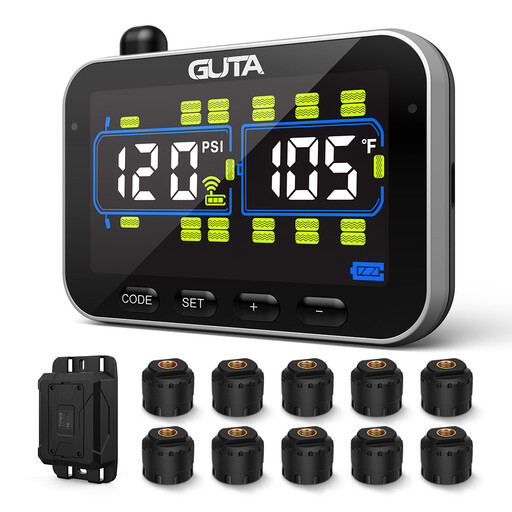
Why it suits this profile: Designed for motorhomes, caravans, semi-trailers, lorries and fleets with multiple tyres and greater distances between the vehicle and trailer.
The system includes ten sensors and a repeater. This makes it better suited to long vehicles, but check that the number of positions and tyre pressure match your combination.
Measuring range up to 188 psi according to the product information, six alarm types, an 850mAh battery and a stated sensor battery life of approximately four years.
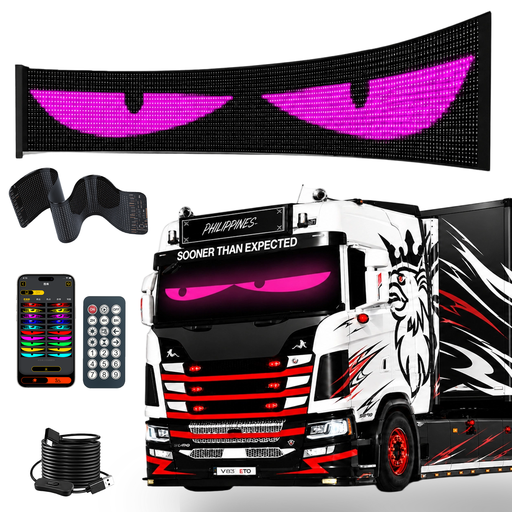
Why it suits this profile: For users looking for additional visibility or a visual display for a car or lorry, alongside the required safety equipment.
The product description states IP65 water resistance, adjustable brightness and included mounting materials. Do not use it as a replacement for official vehicle lighting.
Flexible size of approximately 69,37 × 7,56 inches, 3072 LEDs, USB power, remote control and app control according to the product information.
We have put together a complete, up-to-date list of products that fully meet these strict selection criteria and the applicable European safety regulations.
Not automatically. Check the number of sensors, maximum pressure range and communication distance. For a caravan or trailer, a system with a repeater may be more suitable than a compact four-sensor set. Also check that the sensors fit the valves.
This varies by model and usage. The supplied product information states approximately two years for the Tymate sensors and approximately four years for the GUTA sensors. These are manufacturer-stated figures. Check the battery status regularly, especially before long journeys.
The requirement depends on the vehicle, the situation and the country where you are driving. The information for OSRAM TA19 models refers specifically to Germany’s §53a StVZO for vehicles weighing 3.5 tonnes or more. Do not automatically use this claim as evidence of Dutch regulations, and consult the latest government information before putting together your safety equipment.
