
Vandaag of morgen in huis

Kwaliteit gegarandeerd

Welkomstaanbiedingen ontgrendelen: GRATIS bezorging | Tot 80% korting | Gratis 30 dagen JoyPlus-proefperiode
Download de app
A carry-on suitcase may seem straightforward to choose, until you reach the gate and discover that the dimensions do not fit, or that the heavy frame leaves barely any room for your belongings. Marketing terms such as “extra sturdy”, “quiet” and “airline-approved” only mean something once you have checked the measurements and construction.
For travellers in the Netherlands, three pitfalls are particularly important:
A cabin suitcase or trolley suitcase must fit within the limits of the airline you are flying with. There is no universal hand-luggage size. Some airlines, for example, set a maximum height of around 55 cm, while others also enforce strict limits on width, depth or weight.
When comparing models, look out for:
An 18-inch suitcase is often intended for short flights. A 24-inch suitcase offers more space, but is usually checked in as hold luggage. Do not therefore treat the term “airline-approved” as a general guarantee: always check the baggage conditions for your airline and flight.
A hard-shell suitcase protects your belongings with a rigid outer shell. Polycarbonate, often abbreviated to PC, is known as a relatively lightweight material that can flex under pressure. A polycarbonate suitcase can therefore be an appealing choice for air travel where luggage is moved frequently.
ABS is another widely used plastic. With an ABS model such as the ProWorld Explorer, the focus is on low weight and a hard exterior. As well as the material, look at:
A scratch-resistant texture will not stop a suitcase from developing signs of use. Treat this type of description as information about the design, rather than a promise that the shell will always remain scratch-free.
360-degree wheels turn in multiple directions, making it easier to roll a suitcase beside you, for example through a station or airport. Double spinner wheels can provide extra stability, but also pay attention to the wheel housings. Protruding parts are more likely to catch on kerbs or luggage conveyors.
A suitcase with a TSA lock is practical for international air travel. Check whether the lock is integrated rather than hanging loose from the zip. On some models, the handles and lock are recessed, making them less likely to catch on things.
A claim about a zip should be read in the right context. According to the product description for the NINETYGO Rhine 2.0, the double zip has been tested for more than 2,500 cycles and a pulling force of 800 N. This is a stated product specification, not a guarantee that the zip will continue to work flawlessly in every travel situation.

Why it suits this profile: The 30-litre capacity and 2.5 kg weight are well suited to short trips, weekend breaks or travellers buying a cabin suitcase for the first time.
The product information gives specific external dimensions of 34 x 22 x 52 cm and a capacity of 30 litres. Even so, check these measurements against your airline's rules.
ABS exterior, swivel wheels, combination lock, extendable handle up to 100 cm and internal compartments.
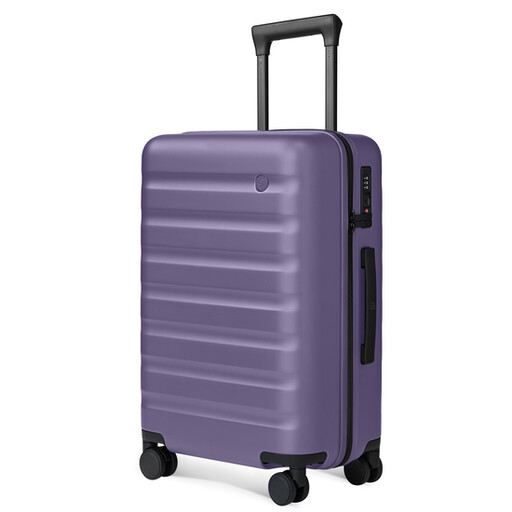
Why it suits this profile: This carry-on suitcase combines a PC shell with a practical interior layout for business trips and short holidays of 3 to 5 days.
The design features recessed hardware, compression straps and a water-repellent PVC pouch. This makes the layout clearer than that of a suitcase with one empty main compartment.
PC hard shell, dimensions of 56 x 38.5 x 23 cm, TSA lock, double 360° wheels and a flat top handle.
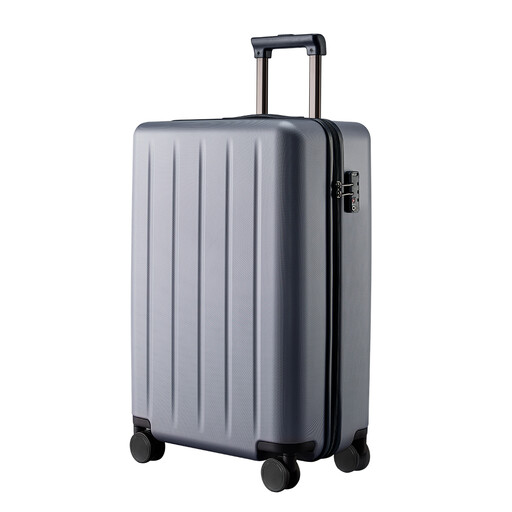
Why it suits this profile: The stated 38-litre capacity is ideal for frequent flyers and travellers who want to pack efficiently for 3 to 5 days.
The listing provides the external dimensions, as well as a weight of 3 kg and a capacity of 38 litres. This allows you to compare capacity with the baggage allowance in advance.
PC shell, double spinner wheels, aluminium telescopic handle, internal zipped pocket, X-shaped packing strap and built-in TSA lock.
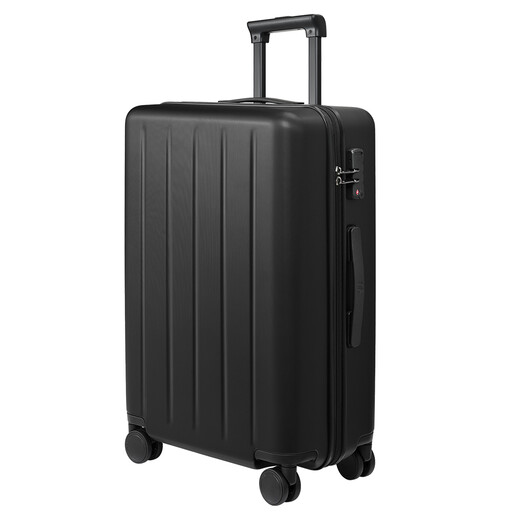
Why it suits this profile: This larger suitcase is designed for trips of 5 to 7 days or for travellers taking more clothes and shoes. Due to its size, it is generally suitable as hold luggage rather than hand luggage.
The product name lists dimensions of 66 x 45.5 x 25.5 cm. Use these to check in advance whether the suitcase falls within your airline's hold-luggage limits.
PC hard shell, double spinner wheels, telescopic handle, internal zipped pocket, packing strap and TSA lock.
We have put together a complete, up-to-date list of products that fully meet these strict selection criteria and the applicable European safety regulations.
Use this quick checklist before paying for a carry-on suitcase:
This varies by airline, ticket type and sometimes even route. An 20-inch suitcase may be suitable as hand luggage, but the specific model's dimensions must always be compared with the airline's current conditions.
Its lifespan depends on use, how heavily it is packed, the surface it is used on and how it is handled during transport. A PC or ABS shell, a sturdy zip and securely attached wheels are relevant buying criteria, but they do not guarantee a fixed service life. Avoid overloading the suitcase and clean the exterior with a soft, damp cloth.
A TSA lock can be useful when travelling to destinations where luggage may be opened during an inspection. The lock does not replace careful packing: fragile or valuable items should be suitably protected, and it is best to keep important documents in your personal bag.
