
Vandaag of morgen in huis

Kwaliteit gegarandeerd

Welkomstaanbiedingen ontgrendelen: GRATIS bezorging | Tot 80% korting | Gratis 30 dagen JoyPlus-proefperiode
Download de app
A good carry-on suitcase is the foundation of a smooth journey. Yet, the search for one is often frustrating. The market is flooded with models that promise a lot but quickly disappoint in practice. Before you invest in a new cabin suitcase, it's wise to know what to look for. Many travelers fall into the same traps, resulting in a broken suitcase and unnecessary stress.
As a Joybuy Product Recommendation Officer, I see which products are returned and why on a daily basis. Here are the three most common problems that you can easily avoid:
4-wheel carry-on suitcase seems ideal until one wheel locks up in a busy airport. Cheap plastic wheels are the weakest point of many trolleys and often give out after a single city trip.hard-shell carry-on provides a sense of security, but the material is everything. Many cheaper models use ABS plastic, which looks sturdy but can crack upon impact or a fall.By understanding these points, you can search more effectively for a travel suitcase for short trips that truly suits you and will last for years.
To avoid buyer's remorse, focus on a few objective features. These specifications determine the durability and ease of use of your carry-on trolley.
The IATA (International Air Transport Association) recommends a standard size of 55 x 35 x 20 cm. Most major airlines accept this. However, carriers like Ryanair, Transavia, and EasyJet often have their own, smaller limits.
Practical tip: Always check the current carry-on regulations of the airline you fly with most often before purchasing. Measure the suitcase including its wheels and handles. A 56 cm high suitcase may not fit in a luggage sizer for 55 cm.
With a hard-shell suitcase, the choice of material is crucial. The two most common materials are:
lightweight suitcase made of 100% polycarbonate is therefore often a more durable choice for the frequent traveler.Two details make a world of difference in user experience:
4-wheel carry-on suitcase (a spinner) offers superior maneuverability. You can effortlessly push the suitcase alongside you instead of pulling it behind you. Look for double wheels (eight in total) and materials that roll smoothly and quietly.Not everyone needs the same suitcase. Below are a few options, tailored to specific travel profiles.

Why it's a match for this profile: Ideal for those who go on a weekend getaway or a short holiday a few times a year. This suitcase offers basic functionalities like a hard shell, spinner wheels, and a combination lock at a very accessible price point.
Its dimensions (52 cm high) are compact, increasing the likelihood that it will be accepted by most airlines. It's an ABS suitcase, which explains the lower price, but this is often sufficient for occasional use.
A functional and affordable start. Equipped with a retractable handle, combination lock, and internal compartments for basic organization.
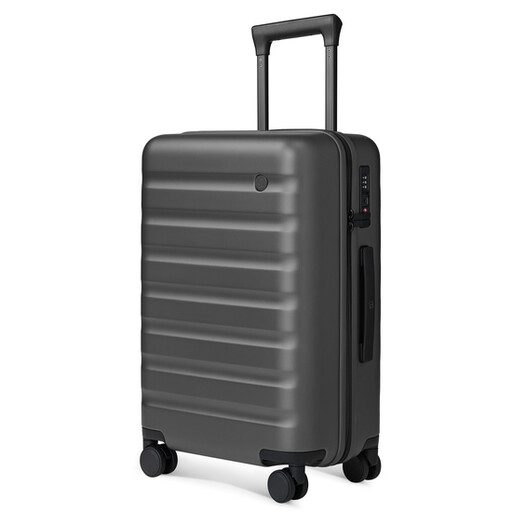
Why it's a match for this profile: For those who travel weekly or monthly, reliability and durability are not luxuries but necessities. This NINETYGO suitcase is designed for intensive use, with a focus on strong materials and smooth rolling comfort.
This suitcase is made of 100% Polycarbonate (PC), making it both lightweight and shock-resistant. The silent 360° spinner wheels are designed for a smooth ride, and the zipper is extra sturdy. The built-in TSA lock is a standard feature.
Durability and ease of use. The combination of PC material, high-quality wheels, and a TSA lock makes this a reliable partner for any journey.
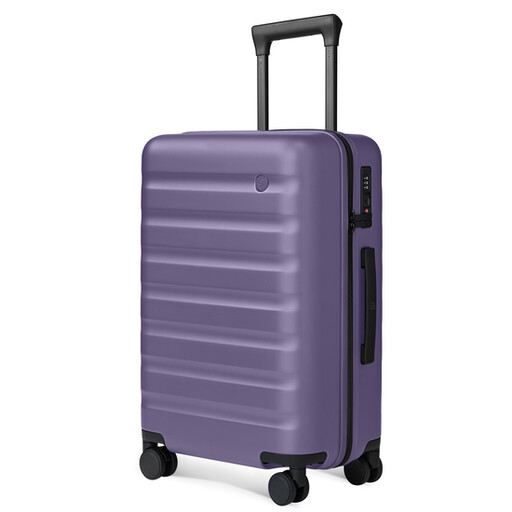
Why it's a match for this profile: For a short 3-5 day trip, every inch counts. This traveler wants to pack smart and move swiftly. The focus is on practical features that make the journey more efficient.
The design is focused on functionality. The recessed handles and TSA lock prevent the suitcase from snagging. The flat top can serve as a temporary table for your laptop or coffee, which is unexpectedly handy in a busy airport.
Smart design details. The internal organization with a waterproof pocket and compression straps helps you pack maximum contents into a compact suitcase.
These are some popular choices, but there are more suitcases that meet these criteria. Check out our full, up-to-date selection to find the perfect match for your travel style.
Most combination locks work on a similar principle. The lock is often preset to 0-0-0. To set a new code, look for a small reset button, usually next to the number dials. Press it with a pen while you set your new code. Then, slide the opening button; you will often hear a click, and your new code is set. Always consult the manufacturer's specific instructions.
A 2-wheel suitcase (upright) is pulled behind you. This can be more stable on uneven surfaces like cobblestones. A 4-wheel carry-on suitcase (spinner) can be pushed upright beside you, which is much less strain on your arm and shoulder. This is ideal for the smooth floors of airports and train stations. The maneuverability is a major advantage, provided the wheels are of good quality.
Not necessarily; it depends on your preference. A hard-shell carry-on offers better protection for fragile items inside. A soft-shell suitcase is often lighter and more flexible, sometimes allowing you to squeeze in a little extra. Soft-shell suitcases also frequently have exterior pockets for items you need to access quickly. The choice is personal and depends on what you are carrying.
