
For cooking and blending in the pan
You cook your soup on the hob and want to avoid transferring it to another container. Bosch describes blending in the pan as one of the uses for its stick blenders.


If you want to purée cooked carrot and ginger soup without transferring it to another container, a stick blender is an obvious choice; Bosch describes puréeing in the pan as one of its uses. Choose a jug blender only if the manual for the exact model allows for the temperature and quantity. Philips gives different temperature instructions for specific models. A heated soup maker is a good fit if you also want to automate the cooking; compare its maximum hot fill level with your recipe, and check the applicable product safety information for the specific model before buying.
You cook your soup on the hob and want to avoid transferring it to another container. Bosch describes blending in the pan as one of the uses for its stick blenders.
You’re mainly interested in how to blend cooked carrot and ginger. If you choose a jug blender, check the temperature instructions for the exact model; Philips gives different guidance for specific models.
You want to heat and blend your soup in one appliance. Compare the permitted hot capacity with your recipe; for example, Tefal lists a lower capacity for hot than cold recipes for the BL5768F0.
| What to consider | What should you look for? | Who should pay particular attention? |
|---|---|---|
| Blending hot soup | Check the temperature and filling instructions for the exact model. Philips gives different temperature instructions for specific blender models. | If I’ve just cooked the soup, I want to know whether I can blend it straight away or need to let it cool first. Around 36% of consumers give safe handling of hot soup their highest priority. |
| Desired texture | Check the available speeds and included accessories. Bosch lists two settings for the MSM66110; Braun lists 21 settings and a 500 ml chopper for the MQ50236M. | I want to choose how finely the carrot and ginger are puréed. Around 29% of consumers give their desired texture the highest priority. |
| Preparation and quantity | Compare the maximum hot capacity and programmes with your recipe. Tefal lists 1,2 L for hot recipes and 1,5 L for cold recipes for the BL5768F0; Philips lists a 1,2-litre jug for the HR2204/80R1. | If I also want to automate the cooking, the hot capacity needs to suit the amount of soup I’m making. Around 21% of consumers give automation and a suitable capacity the highest priority. |
| Cleaning and storage | Check which parts can be removed and how they can be cleaned. Bosch lists a detachable blending foot for the MSM66110; Tefal lists an automatic cleaning programme for the BL5768F0. | After cooking, I don’t want to clean or store more parts than necessary. Around 14% of consumers give cleaning and storage the highest priority. |
Temperature instructions can vary between models. For some of the models mentioned, Philips recommends using cold or room-temperature liquids only; for other specific models, Philips advises letting liquids cool to below 60 °C first.
Before pouring in the soup, check the manual for the full model number and follow the stated temperature and filling limits.
If the manual says to let the soup cool first, blending will take longer.
According to Tefal, the BL5768F0 has a capacity of 1,5 L for cold recipes and 1,2 L for hot recipes. This difference applies to this model and is not a general limit for soup makers.
Compare the quantity in your recipe with the maximum hot capacity of the model you’re considering.
If your recipe exceeds the hot fill limit, you may need to prepare the soup in several batches.
According to the Dutch government, there is no fixed statutory guarantee period in the Netherlands. If a product is faulty, you should contact the seller; a manufacturer’s guarantee is in addition to your statutory rights.
Keep your proof of purchase and check any additional manufacturer’s guarantee terms separately.
Bosch makes stick blenders for tasks including blending directly in the pan.
The MultiQuick range includes stick blenders with a choice of speeds and accessories.
Philips offers SoupMaker models with programmes for making soup.
The Blendforce Cook BL5768F0 is a blender with a heating function.
This selection includes stick blenders and jug blenders for puréeing soup. A product listing doesn’t automatically mean the model is suitable for boiling liquids. Follow the manual for the exact model and check the applicable electrical product information and CE marking before buying.
 No image available
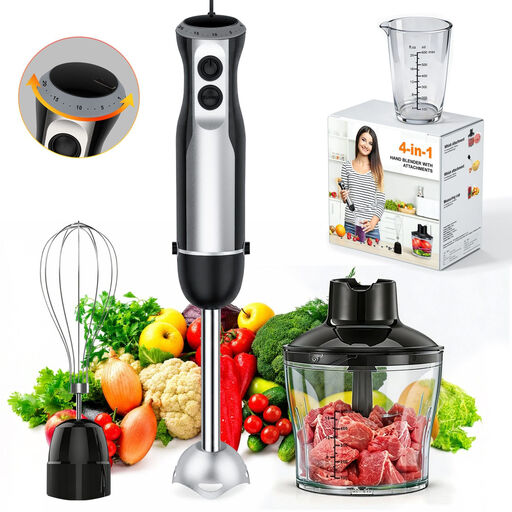
A hand blender for soup, with accessories for a range of food preparation tasks.
The set includes a 500 ml chopper, a whisk and a 700 ml measuring beaker. Use the blender as instructed: run it for a maximum of 1 minute at a time, followed by 1 minute of rest.
 No image available
The product description lists soup as one use for the blending jug; check the manual before blending hot soup.
The set includes a 1.500 ml blending jug, a 600 ml travel bottle and a 300 ml chopper cup. It also features two speeds, a pulse function and six stainless steel blades.
 No image available
The product description lists puréeing soup as one use for this hand blender.
This model has 20 speeds, a turbo function, a whisk and a 500 ml chopper. Check which accessories are included with your model.
 No image available
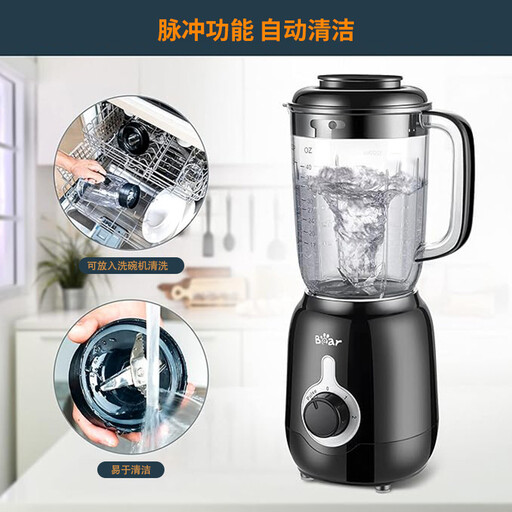
A jug blender for puréeing. Don’t assume it’s suitable for hot soup without checking the model instructions.
The product description lists a 1,2-litre jug, two speeds, a pulse function and four stainless steel blades. Separate grinding and chopping cups are also mentioned.
 No image available
The product description lists smooth soups as one use for the blending foot.
According to the description, this model has 25 speeds, a turbo function and a chopper with settings for fine, medium and coarse textures. Don’t use the blender with boiling liquids.
No, it depends on the exact model. For the HR3756/00, HR3752/00 and HR3868/00, Philips advises using cold or room-temperature liquids only; for the HR2512/90, HR2511/90 and HR2510/90, Philips advises letting liquids cool to below 60 °C first. These instructions apply to specific models and aren’t a general limit for all blenders.
The Netherlands Nutrition Centre advises covering leftovers, letting them cool and putting them in the fridge within 2 hours of cooking. Set your fridge to 4 °C.
No. According to the Dutch government, there is no fixed statutory guarantee period in the Netherlands. If a product is faulty, contact the seller for a solution; a manufacturer’s guarantee is in addition to your statutory rights.
CE marking is compulsory for electrical products covered by the applicable rules. For the low-voltage rules it cites, the Netherlands Food and Consumer Product Safety Authority (NVWA) gives a range of 50–1000 V AC. Check that the rules apply to the specific model and that it carries the required marking. CE marking doesn’t indicate how finely a blender will purée soup.