Which option is right for you?

Blending soup in the pan

You cook the carrots yourself and want to blend the soup straight in the pan for lunch, without transferring it to a hot jug. The Dutch Consumers' Association notes that blending in the pan is a practical use for a stick blender.

Making several portions

You’re making soup for more people and are mainly comparing the usable jug capacity and how smooth the soup will be. The Dutch Consumers' Association points out that a jug blender must be suitable for the temperature of the soup.

Heating and blending with one appliance

You want a heating or soup programme as well as blending, and are happy with the jug capacity and cleaning method of the model you choose.

What should you look for when choosing?

Stick blender

A good choice if: you want to blend cooked carrots straight in the pan without transferring them.

The trade-off: the Dutch Consumers' Association considers a stick blender handy for blending in the pan; a jug blender may give a smoother result.

Standard jug blender

A good choice if: you want to blend several portions of soup and the specific jug is suitable for the temperature you’ll be using.

The trade-off: you’ll need to transfer the soup into the jug and allow for extra space and washing up.

Soup maker or cooking blender

A good choice if: you want to use a heating or soup programme and the capacity suits your portions.

The trade-off: it’s a separate appliance, so check the permitted filling level and how to clean the parts.

What to consider What should you check? Who is this important for?
Blending straight in the pan Check whether the instructions allow you to use it with hot soup and whether you can detach the blending foot for cleaning. If I want to leave the soup in the cooking pan rather than transfer it, I’ll choose based on that. Around 33% of consumers give blending in the pan top priority.
Blending several portions Compare the permitted filling level with your recipe and check the temperature instructions for the specific jug. If I’m making several portions for lunch, I look for a suitable capacity and a smooth blend. Around 27% of consumers prioritise portion size and smooth blending.
Heating and blending Check whether the specific model has a heating soup programme, how much it can hold and which parts need cleaning. I want to heat and blend in one appliance, and I’m happy with the fixed jug capacity if it suits my lunch. Around 20% of consumers give this combination top priority.
Washing up and storage Check which parts can be detached, which cleaning methods are allowed in the instructions and how much space the appliance takes up. For a lunch I make occasionally, I’d rather wash fewer parts and be able to store the appliance easily. Around 20% of consumers prioritise easy cleaning and storage.

Common mistakes

  • Assuming every blender jug is suitable for piping-hot soup

    Temperature instructions vary by model. Philips says that for some jugs, ingredients should first be allowed to cool to below 60 °C, while for other models it recommends using only cold or room-temperature liquids.

    Check the instructions for the full model code and let the soup cool if required.

  • Looking only at the stated jug capacity

    The total capacity isn’t necessarily the permitted filling level for soup. A jug blender may also take up more space than a stick blender.

    Compare the volume of your recipe with the maximum filling level, and consider storage space and washing up too.

  • Assuming two versions are identical based on the model name alone

    Braun lists the MultiQuick 7 MQ7000WH at 850 W, while a Joybuy listing states 1000 W. This difference makes it important to compare the version on offer and its specifications carefully.

    Only assume they’re the same version once the full specifications match.

Brands to compare

Bosch

The ErgoMixx MSM66110 is an example of a straightforward stick blender for soup that’s already been cooked in the pan.

  • Bosch lists a detachable metal blending foot, two speeds and 600 W for this model.
  • These specifications alone don’t tell you how smooth the soup will be, or whether every Bosch model is suitable for hot soup.

Braun

The MultiQuick 7 MQ7000WH is a stick blender with pressure-sensitive speed control.

  • Braun lists a metal blending foot, measuring beaker and 850 W for this model.
  • A Joybuy listing with the same model code states 1000 W, so check the full specifications of the version you’re viewing.

Philips

The Viva SoupMaker HR2204/80R1 is a heated soup maker with a stated jug capacity of 1.2 litres.

  • Philips lists six programmes for this model.
  • This particular item is described as refurbished. Temperature advice for other Philips jugs doesn’t automatically apply to this SoupMaker.

Tefal

The Perfectmix Cook BL83SD30 is a cooking blender with programmes for hot and cold preparations.

  • Tefal lists a 1.75-litre jug, ten programmes and 1400 W for this model.
  • The stated capacity isn’t necessarily the permitted filling level for every recipe; check the model’s instructions.

Joybuy products for blending soup

This selection focuses mainly on stick blenders for blending soup, with a jug blender included for blending in a jug.

Emerio HB-130492 Hand Blender Set

Emerio HB-130492 Hand Blender Set

A good choice if you want to blend soup with a hand blender and are looking for a set with several attachments.

The set includes a detachable stainless steel blending foot, whisk, chopper and measuring beaker. For hot ingredients, the product description recommends using a heat-resistant bowl and working in small portions.

View at Joybuy

Tefal PerfectMix+ BL871A High Speed Blender

Tefal PerfectMix+ BL871A

A good choice if you want to blend soup in a jug and are looking for a model that, according to the product description, can handle hot and cold preparations.

Stated power: 1200 W. The stated usable jug capacity is 1.5 litres; the description mentions a heat-resistant glass jug, automatic programmes and a cleaning programme.

View at Joybuy

ROUNY H1 4-in-1 Hand Immersion Blender

ROUNY H1 4-in-1 Hand Immersion Blender

A good choice if you’re looking for a hand blender for soup and want to be able to select from different speeds.

The product name states up to 1200 W, 15000 rpm, a 700 ml beaker and a 500 ml chopper. The description recommends using it continuously for no more than one minute, followed by a one-minute rest.

View at Joybuy

Royalty Line Hand Blender 800W Stainless Steel

Royalty Line Hand Blender 800W Stainless Steel

A good choice if you want to blend soup with a hand blender and use several speed settings.

The product description lists 20 speeds, a turbo setting and detachable parts.

View at Joybuy
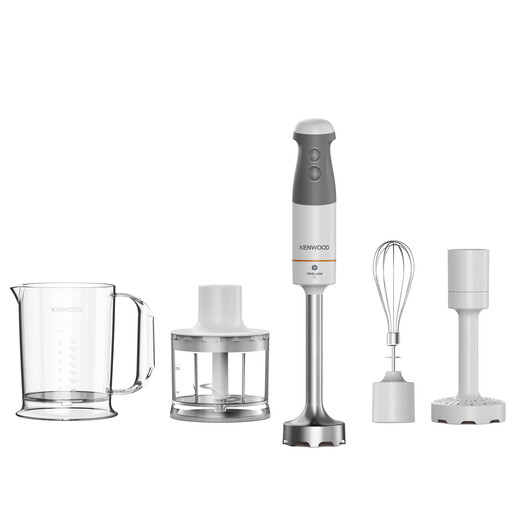
Kenwood Triblade XL HBM40 Hand Blender White

Kenwood Triblade XL HBM40 Hand Blender White

A good choice if you want to blend cooked soup with a hand blender.

The product description lists an 850 W motor, three blades and an included blending foot.

View at Joybuy

Frequently asked questions

Can I pour boiling-hot carrot soup into any blender jug?

No, the permitted temperature depends on the specific model. For some jugs, Philips recommends allowing ingredients to cool to below 60 °C first; for other jugs, it states that only cold or room-temperature liquids are permitted. Follow the instructions for the specific jug.

Do I need to cook the carrots before blending them?

Cooked carrots are a practical choice for a standard stick blender or jug blender. The Dutch Consumers' Association notes that hard vegetables are easier to blend after cooking. If you’re using a soup maker with a heating programme, follow its own recipe and filling instructions.

How should I store any soup left over after lunch?

The Netherlands Nutrition Centre advises covering leftover food and putting it in the fridge or freezer within two hours of cooking. Soup can be kept in the fridge for up to two days.

Who should I contact about a faulty appliance, and does the manufacturer’s guarantee replace my statutory rights?

In the Netherlands, the seller is responsible for the statutory guarantee if a product is faulty. A manufacturer’s guarantee doesn’t replace those rights; what you can expect from the product depends, among other things, on normal use and the circumstances.

Is CE marking required for an electric blender sold in the Netherlands?

CE marking is required for mains-powered electrical kitchen appliances covered by the Dutch Electrical Equipment Decree. The cited low-voltage rules apply to a rated AC voltage of 50–1000 V. The Netherlands Food and Consumer Product Safety Authority explains that the manufacturer declares the product’s conformity, and that CE marking alone is not proof of independent testing. Check the information for the exact appliance on offer.
