
You blend the soup straight in the pan
You’re cooking your carrot and ginger soup in a pan and mainly want a stick blender to blend it there.


If you’re blending your carrot and ginger soup in the pan you cooked it in, a stick blender is the most straightforward choice. If you’d rather use a separate jug, check its usable capacity and the instructions for hot ingredients. A heated blender is worth considering if you also want an appliance that cooks hot soup, but check the manual for each model’s temperature limits, fill level and instructions for use.
You’re cooking your carrot and ginger soup in a pan and mainly want a stick blender to blend it there.
You’re considering a blender jug and want to match its usable capacity to the amount of soup you’re making, while checking its permitted fill level for hot ingredients.
You’re looking at a heated blender with soup programmes and want to check that its functions and permitted capacity suit your meal.
Choose this if: you want to blend the soup in the pan without transferring it first.
Bear in mind: you’ll need to hold the blender yourself, and the space in the pan determines where you can work.
Choose this if: you want to use a separate jug and its usable capacity is right for the amount of soup you’re making.
Bear in mind: you’ll need to transfer the soup. A heat-resistant jug isn’t automatically suitable for every temperature or fill level.
Choose this if: you want to use hot soup programmes in the same appliance as well as blend ingredients.
Bear in mind: you’ll need to follow the permitted capacity and the instructions for use and cleaning for your chosen model.
| What to consider | What to look for | Who is this important for? |
|---|---|---|
| Blending in the pan | Check that the blender foot is suitable for the task and read the instructions for hot soup. | If I’d rather blend the soup in the pan than transfer it to a jug, being able to work directly in the pan matters most to me. Around 36% of consumers give blending in the pan top priority. |
| Capacity for several people | Compare the usable capacity with the amount of soup you’re making, and check the permitted fill level for hot preparations. | When I’m making soup for several people, I want to know whether the portion will fit in a single blending cycle without exceeding the permitted limit. Around 29% of consumers prioritise capacity for a shared meal. |
| Processing hot soup | Check the temperature, lid and fill-level instructions for the exact model. | If I want to process cooked soup, I want to know in advance what the manual for that model allows. Around 21% of consumers make processing hot soup their top priority. |
| Cleaning and other uses | Check whether the blender foot is detachable, which accessories are included and how the parts can be cleaned. | After cooking, I want to know how much cleaning the parts will need and whether I’ll use the accessories for other recipes too. Around 14% of consumers prioritise easy cleaning or extra uses. |
Temperature limits and instructions for use vary by model. Using hot contents incorrectly can cause splashes and burns.
Before use, read the manual for the exact model and follow its temperature, fill-level and lid instructions.
The product title for the Tefal BL811D38 gives a capacity of 1.5 L, while the description mentions a 2-litre jug. The product information therefore gives different capacity figures.
Compare the usable capacity and fill limit with the amount of soup you’re actually making.
If the permitted capacity isn’t enough, you may need to process the soup in several batches.
A chopper and whisk are designed for tasks other than simply blending soup.
First decide whether you’ll use those accessories. If not, compare a simpler stick blender too.
Extra parts take up storage space and need cleaning.
The MultiQuick 5 MQ50236M is a stick blender for anyone considering accessories as well as blending.
The MSM66110 is a straightforward stick blender option for soup you blend in the pan.
The Perfectmix range includes models with a heat-resistant jug, as well as a heated blender with soup programmes.
The 3000 Series HR2520/00 is a compact stick blender option for tasks including making soup.
These product picks are mainly stick blenders for blending in the pan. There’s also a jug blender for anyone who wants to process soup within the stated temperature limit.
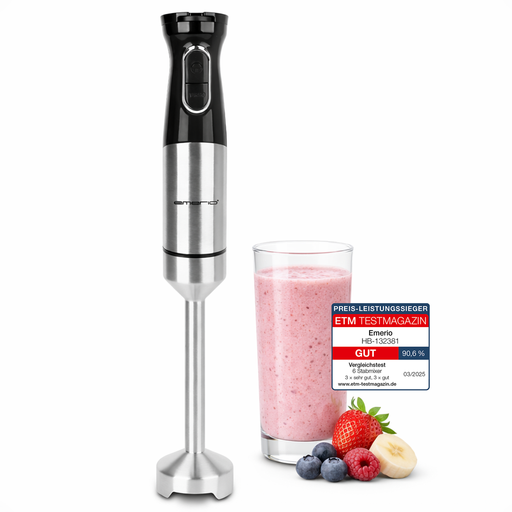 No image available
Suitable if you want to blend soup with a stick blender and adjust the speed as you go.
1000 W; variable speed; detachable stainless steel blender foot. For hot ingredients, use a heat-resistant container and work in small batches to prevent overflowing.
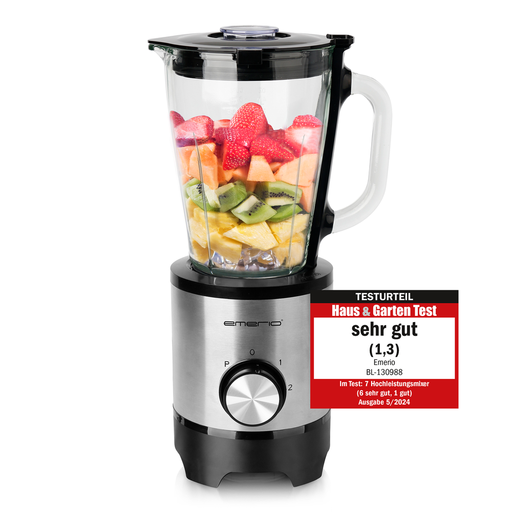 No image available
Suitable if you want to blend soup in a separate jug and can keep within the stated temperature limit.
1.5-litre glass jug; two speeds and a pulse function. Do not fill the jug with liquids hotter than 60°C. The jug, lid and blades are described as dishwasher-safe.
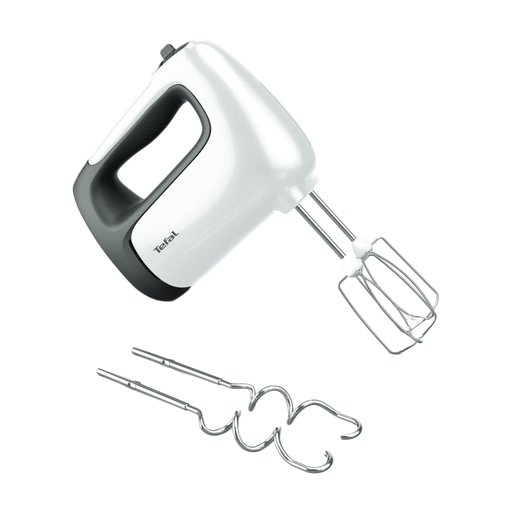 No image available
The blender foot is described as suitable for blending soup, among other things; the set also includes accessories for other tasks.
450 W; five speeds; stainless steel blender foot. The product description also lists a whisk and dough hooks.
 No image available
Suitable if you want to blend soup in the pan and adjust the speed as you blend.
1000 W; 25 speeds and a turbo function. Do not use this appliance to process boiling liquids.
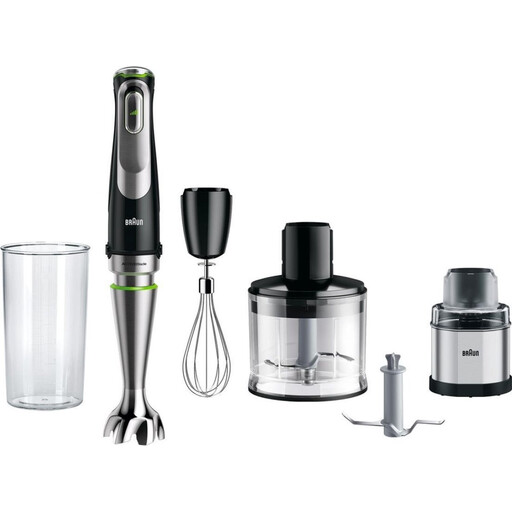 No image available
Suitable if you want to blend soup with a stick blender and also need accessories for other tasks.
1200 W; 600 ml measuring beaker; ActiveBlade blender foot. The product description also lists a whisk and chopper. Check the manual for the permitted temperature and instructions for use.
No. Check the instructions for the exact model. The Dutch Consumers’ Association recommends using a heat-resistant jug for soup in a blender. Philips specifies cold or room-temperature liquids only for certain named blender models; that restriction doesn’t automatically apply to other models.
Check whether the blender foot is detachable and follow the cleaning instructions for each part. The Dutch Consumers’ Association says a detachable foot is easier to clean; check whether the parts of your chosen model are dishwasher-safe.
The Netherlands Nutrition Centre advises cooling leftovers quickly and putting them in a sealed container in the fridge or freezer within 2 hours. Leftovers can be kept in the fridge for up to 2 days.
According to ACM ConsuWijzer, online purchases generally come with a statutory 14-day cooling-off period after delivery. Your statutory guarantee is separate from any manufacturer’s warranty: if a product doesn’t perform as you could reasonably expect when used normally, the seller is responsible for resolving the issue under the applicable terms.
For electrical equipment covered by the Dutch Commodities Act Decree on Electrical Equipment, the Netherlands Food and Consumer Product Safety Authority (NVWA) states that CE marking is mandatory. For the underlying Low Voltage Directive, the NVWA gives a nominal AC voltage range of 50 V to 1000 V. For a specific appliance, check the relevant product details and documentation; CE marking on its own isn’t proof that the soup will be of good quality.