
Vandaag of morgen in huis

Kwaliteit gegarandeerd

Welkomstaanbiedingen ontgrendelen: GRATIS bezorging | Tot 80% korting | Gratis 30 dagen JoyPlus-proefperiode
Download de app
A carpet cleaner can help remove stains from rugs, sofas, stair treads and car seats. Yet many people buy a machine that turns out to be awkward after just a few uses. A short hose, a small dirty-water tank or complicated filter maintenance can make cleaning more time-consuming than expected.
That is why choosing the right machine starts not with the highest wattage or a striking marketing term, but with how you intend to use it. Are you looking for a compact spot cleaner for a spilt drink? Do you want a carpet cleaner for sofas and stairs? Or do you need a wet and dry vacuum cleaner for regular use around the home and car?
A higher wattage does not automatically indicate how much dirt the machine actually picks up. Performance also depends on the spray nozzle, suction function, air path and tank design. A compact carpet cleaner with 500 watts can be practical for localised stains, while a larger 1300-watt model may be better suited to several rooms or more intensive work.
As well as power, consider:
A carpet cleaner with a heating function can be appealing for dried-in stains. According to Vacmaster’s product description, the SCC1201H offers a normal and a heated mode. That does not mean every stain will disappear on its own. The result also depends on the material, how old the stain is, the cleaning formula used and the correct dwell time.
Test a cleaning product on an inconspicuous area first. Also check the care label on the upholstery or carpet. Some fabrics may discolour, shrink or retain moisture for longer.
A machine with dual tanks uses clean water for spraying and collects dirty water separately. This is practical, but both reservoirs need to be emptied and rinsed after use. Otherwise, filters, hoses and spray nozzles can cause odours or reduced performance.
Look for a removable tank, an easily accessible filter and, where possible, a self-cleaning hose. This is particularly relevant if you use the machine regularly as a furniture cleaner, upholstery cleaner or pet carpet cleaner.
A small clean-water tank keeps the machine compact, but means it needs refilling more often. For a sofa, a few stairs or a car seat, this is usually not a major problem. For several carpets, a larger tank is more convenient.
Bear in mind that manufacturers sometimes list different capacities, such as the clean-water tank, dirty-water tank or total product capacity. Always compare like-for-like measurements. According to the product specifications, the Vacmaster SCC1201H has a 1.6-litre clean-water tank and a 0.95-litre dirty-water tank.
A 1.8-metre hose gives you more freedom of movement around a sofa, staircase or car seat. Also check whether the spray-extraction head is suitable for the surface. A machine may technically be suitable for carpets and upholstery, but without the right nozzle it can still be difficult to reach corners or seams properly.
For a car interior, a compact body, flexible hose and narrow suction nozzle are often more important than a very large tank.
With a wet and dry vacuum cleaner, you need to check which filter to use for dry vacuuming, wet pick-up and shampoo extraction. According to the product information, the Vacmaster VK1323PFR uses different filters for dry and wet use, including a foam filter for wet pick-up and shampoo.
Follow the instructions when changing filters. Disconnect the machine from the power supply before maintaining the tanks, hose or filters. Do not use a carpet cleaner for hazardous substances or in an explosive environment.

Why it suits this profile: This compact model is designed for localised stains on carpets, rugs, sofas, stairs and car seats. According to the product specifications, the unit weighs 3.4 kg.
The integrated 1.8-metre hose means you do not have to move the entire machine every time. The dual tanks keep clean and dirty water separate.
500-watt motor, removable reservoirs and included Spot & Pet cleaning formula, according to the product description.
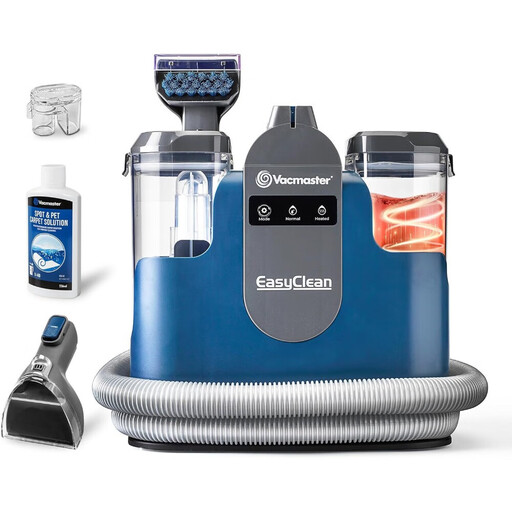
Why it suits this profile: This model is suitable for households that regularly treat stains and want the option of choosing between a normal and heated cleaning mode.
You are not limited to a single setting: according to Vacmaster, you can switch between normal cleaning and a heated mode for stubborn stains.
1.6-litre clean-water tank, 0.95-litre dirty-water tank, 1.8-metre hose and self-cleaning attachment.
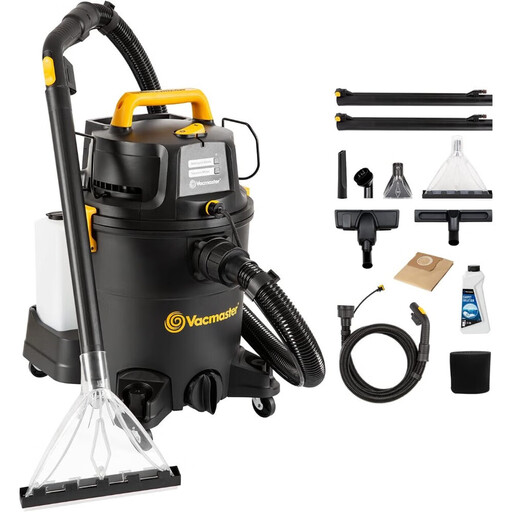
Why it suits this profile: This larger model is designed for those who want to combine dry vacuuming, wet pick-up and carpet cleaning in one machine, for example in a large household or for intensive use.
The larger tanks reduce interruptions during longer cleaning sessions. However, change the filter according to the selected dry, wet or shampoo setting.
1300 watts, 23-litre tank, 6-litre detergent tank, HEPA exhaust filter for dry vacuuming and multiple accessories, according to the product specifications.
For households with pets, a model with a suitable stain-removal formula is useful, but remove loose hair first with a standard vacuum cleaner. A carpet cleaner is not a substitute for a separate vacuum cleaner for carpets and upholstery when you want to remove dry dirt every day.
We have put together a complete, up-to-date list of products that fully meet these strict selection criteria and the applicable European safety regulations.
You can, provided the manufacturer confirms that the machine is suitable for upholstery and car interiors. Check the fabric, the size of the cleaning nozzle and the hose length beforehand. Use minimal moisture on delicate upholstery and always test on a concealed area first.
Empty and rinse the clean- and dirty-water tanks after every cleaning session. Check the filters and spray nozzle regularly. With frequent use, for example in homes with pets or in a car with a lot of dirt, additional checks are needed. The exact intervals are given in the model’s manual.
In addition to the purchase price, you pay for water, electricity and, where applicable, cleaning formula. Running costs depend on the power, cleaning time and amount of product used. A model with dual tanks can work more efficiently because clean and dirty water remain separate, but never add more cleaning product than stated on the label.
