
Vandaag of morgen in huis

Kwaliteit gegarandeerd

Welkomstaanbiedingen ontgrendelen: GRATIS bezorging | Tot 80% korting | Gratis 30 dagen JoyPlus-proefperiode
Download de app
A knocked-over glass, muddy dog paws or a stain on the sofa calls for more than just a cloth. A carpet and upholstery spot cleaner sprays water and cleaning solution into the fabric, then vacuums up the dirty liquid. This makes such a machine useful for carpets, sofas, mattresses, stairs and car interiors.
Yet many models look alike in online shops. A high wattage or a claim such as “deep cleaning” does not tell the whole story. Below are the key points to consider as a household, pet owner or car owner.
A motor power of 600 watts or suction power of 18,000 Pa may sound impressive, but it does not automatically indicate how convenient the machine is to use. The suction head, hose, water flow and seals all help determine how much moisture is actually removed from the fabric.
So pay attention to the combination of:
A powerful motor without a suitable suction head can still be awkward to use on stairs or car seats.
With a basic model, the water can become dirty more quickly during cleaning. A dual water tank keeps clean water and extracted dirty water separate. This makes filling, emptying and rinsing more straightforward.
Do check the capacity of each tank separately. A large clean-water tank is useful for a large rug, while a compact tank makes the machine lighter for use on a sofa or in a car. Also check whether the tanks are removable and whether the openings are large enough to clean them properly.
According to product descriptions, steam can help with certain cleaning applications, but not every carpet or upholstery fabric can withstand heat and moisture. Wool, bonded underlay, delicate colours and some synthetic fabrics may be damaged.
Always test the machine on an inconspicuous area first and follow the care label provided by the upholstery manufacturer. Do not use boiling water. For example, the Omeser C688A specifies a maximum temperature of 40 °C when filling the clean-water tank.
A spot cleaner should not only spray water, but also recover as much moisture as possible. The models in this selection state suction values of 10 to 18 kPa or 13,500 to 18,000 Pa. These figures are useful for comparing products, but they do not guarantee the same results on every fabric.
When cleaning a sofa or car seat, you mainly need a narrow suction head and good control over the amount of water used. Pull the suction head slowly across the surface and work in narrow strips. Too much liquid can extend the drying time.
The following dimensions are practical for a portable carpet cleaner:
A long hose does not automatically make a machine compact. So also check its dimensions, weight and storage requirements.
A brush should be suited to the job. A wide brush works efficiently on a rug, while a narrow tool is more practical for seams, corners and spot-cleaning a sofa. Check whether replacement parts and suitable cleaning solutions are available.
After every use, empty the dirty-water tank, rinse the tanks and allow the hose, brush and filters to dry completely. This helps reduce trapped moisture and unpleasant odours. Only use a wet and dry cleaner in accordance with the instructions, and never vacuum up flammable liquids.

Why it suits this profile: This compact model is designed for carpets, sofas, stairs and car seats. Its dual tanks and integrated hose make it easy to manage for regular use, without having to store a large machine.
The product information states that it has separate clean- and dirty-water tanks with capacities of 1.6 and 0.95 litres. This means you do not have to rely on a single mixed tank.
500 W motor, 1.8-metre hose, removable tanks and Spot & Pet cleaning solution included.
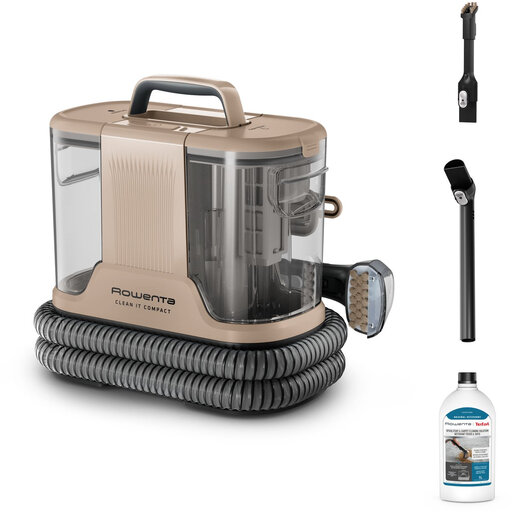
Why it suits this profile: A household with children or pets can benefit from the range of brushes supplied and the self-cleaning accessory. This model is designed for everyday use on sofas, mattresses, carpets and car interiors.
The stated suction power of 11.5 kPa is combined with two tanks, a 1.75-metre hose and a maintenance accessory. So the choice is not based on wattage alone.
400 W, 1.5-litre clean-water tank, 0.85-litre dirty-water tank, several attachments and a 4-metre cable.
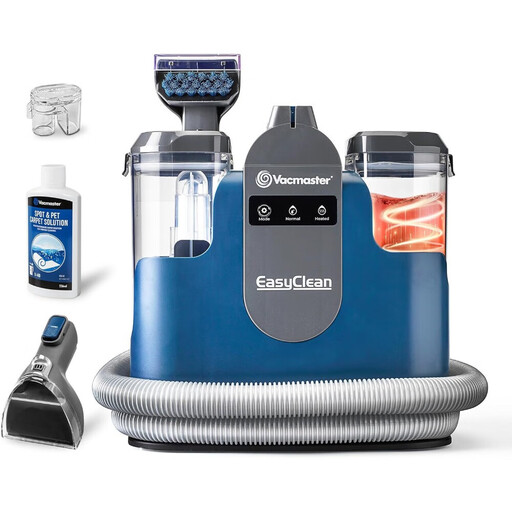
Why it suits this profile: This model is suitable for people who regularly clean larger surfaces, stairs, sofas or car seats and are looking for a heated cleaning option.
The heated function can be adjusted alongside a normal setting. However, check in advance that your fabric is heat-resistant and follow the instructions.
500 W, dual 1.6- and 0.95-litre tanks, 1.8-metre hose and a self-cleaning attachment.
We have put together a complete, up-to-date list of products that fully meet these strict selection criteria and the applicable European safety regulations.
When dealing with pet stains, acting quickly is practical, but you should not treat a product claim about odour or bacteria removal as a guaranteed result. According to a brand’s own research, a machine may claim to deliver a particular effect; the outcome depends on the stain, material, cleaning solution and how the machine is used.
It can be, provided the fabric is water-resistant and the care label permits wet cleaning. Use a narrow upholstery cleaner, test it on an inconspicuous area first and avoid soaking the sofa completely.
This depends on the amount of water used, ventilation, temperature and fibre structure. Good suction limits residual moisture, but allow sufficient drying time. Open windows or use ventilation, and only put furniture back once the surface feels dry.
As well as electricity, you will use water and possibly cleaning solution. A 400 to 600-watt machine uses relatively little energy during a short spot-cleaning session; the cost of cleaning solution and maintenance is often more significant with regular use. Also check whether filters, brushes and tanks are readily available.
