
Vandaag of morgen in huis

Kwaliteit gegarandeerd

Welkomstaanbiedingen ontgrendelen: GRATIS bezorging | Tot 80% korting | Gratis 30 dagen JoyPlus-proefperiode
Download de app
A coffee stain on the sofa, mud on the rug or pet hair on the car seat: a standard vacuum cleaner removes loose dirt, but it won’t always tackle damp stains or deeply ingrained residue. So if you’re looking for the best stain remover for carpets and sofas, don’t compare models based solely on wattage or a bold claim on the packaging.
For UK households, the cleaning method, suction power, maintenance and practical uses are the key things to consider. Below, we cover the main pitfalls, important technical details and three product options for different needs.
A higher wattage doesn’t automatically mean an appliance will pick up dirt more effectively. Wattage mainly tells you about the motor’s electrical power. Actual performance also depends on airflow, the nozzle, the seal and how the manufacturer measures suction power.
Look for a specific figure such as Pa or kPa, but only compare figures when the measurement methods are similar. For example, a stated value of 18,000 Pa and 20 kPa may seem close, but on their own they don’t tell you how well an appliance will clean a particular carpet or upholstery fabric.
A portable steam cleaner can be useful for certain hard surfaces and some fabric applications. However, heat and moisture can cause discolouration, shrinkage or damage to delicate upholstery, leather, carpets with glued backings and mattresses.
Always check the fabric care label and test the appliance on an inconspicuous area first. A product listing may mention features such as “30-second steam sterilisation”; treat this as a claim from the product information, not as a general guarantee of disinfection or health benefits.
Compact appliances are easy to store and suitable for spot cleaning. But if you’re cleaning several chairs, a large sofa or an entire carpet, you’ll need to refill the clean water tank more often. The dirty water tank is just as important: empty and clean it after use to help prevent residue and unpleasant odours.
For wet cleaning, look for a combination of spraying, brushing and suction. A carpet cleaner with strong suction helps leave less moisture in the fabric, but drying time also depends on how much water you use, the material and ventilation.
A handheld vacuum works differently. It’s mainly suited to dry dirt, crumbs, hair and dust. A motorised upholstery tool can be useful for sofas, mattresses and car seats. If you also want to tackle liquid stains, choose a model specifically designed for that purpose rather than just a handheld car vacuum.
Separate clean and dirty water tanks prevent used water from being spread back over the upholstery. Check:
A 2-in-1 tank design can save space, but check how the separation works inside and how you can dry the parts after use.
A 75 dB appliance may feel different to use at home from an 84 dB model, especially in a small room. Manufacturers don’t always measure noise under exactly the same conditions, so treat the figure as a guide.
For a corded upholstery cleaner, cable length and reach are important. With a cordless handheld vacuum, check the stated running time and the difference between eco and turbo modes. The maximum battery life usually doesn’t apply when using the most powerful setting continuously.
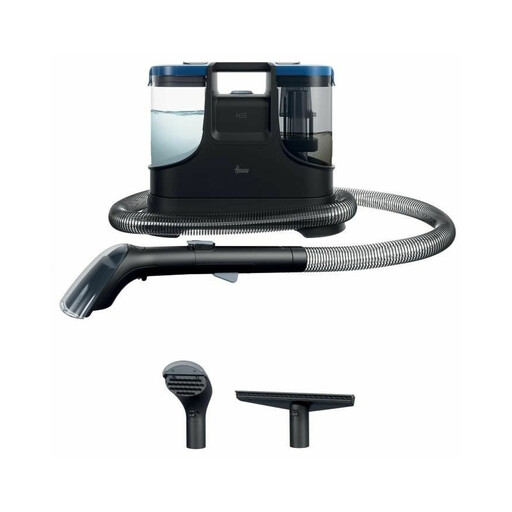
Why it suits this type of user: This model combines spraying, brushing and vacuuming. According to the product information, it’s designed for sofas, carpets, car interiors and pet beds, among other things. That makes it a good choice if you’re looking for one appliance for different surfaces.
The removable tanks make emptying and refilling more straightforward. However, check the stated noise level of 84 dB if you’ll mainly be cleaning in a quiet living space.
1.5-litre clean water tank, 0.8-litre dirty water tank, 5-metre cable and stated vacuum pressure of 10 kPa.
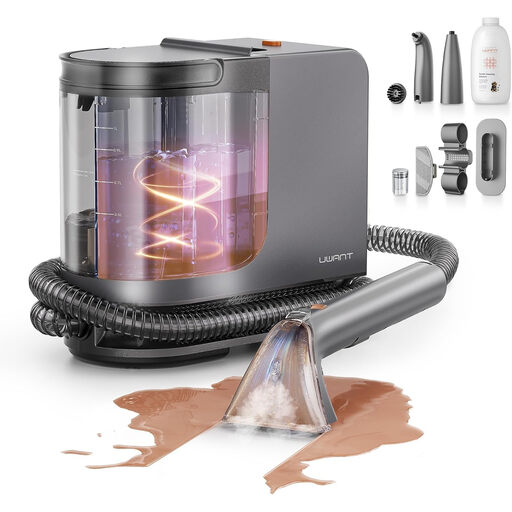
Why it suits this type of user: The combination of wet and dry cleaning, a wide 14 cm brush and stated suction power of 18,000 Pa makes this a good fit for households that regularly clean sofas, carpets, beds or car interiors.
The product information describes a 2-in-1 design for clean and dirty water. Even so, check after use that both sections can be fully emptied and dried.
600 W motor, stated suction power of 18,000 Pa and a noise level of around 75 dB, according to the product description.
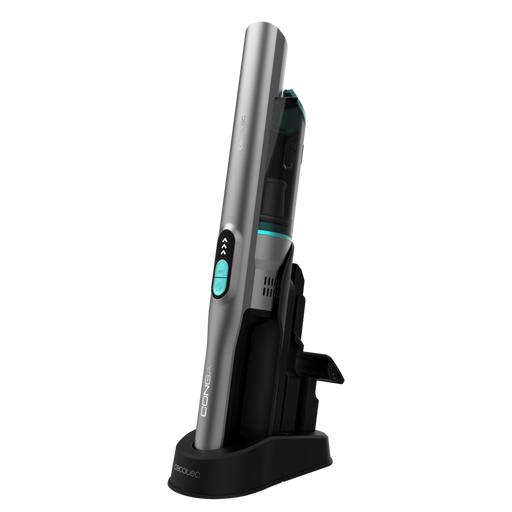
Why it suits this type of user: This is a cordless handheld vacuum for dry dirt, suitable for picking up crumbs, hair and dust from furniture, mattresses and car interiors. It’s ideal if you want to clean small areas quickly without water or a cable.
Its clear focus on dry cleaning helps prevent you from using a handheld vacuum on liquid stains. You’ll need a separate upholstery cleaner for wet messes.
Stated suction power of 20 kPa, up to 40 minutes’ running time and a motorised mattress and upholstery tool, according to the product information.
We’ve put together a complete, up-to-date list of products that meet these strict selection criteria and current European safety requirements.
It depends on the upholstery and the type of stain. For liquid stains, a wet upholstery cleaner with spray and suction functions is a good choice. A handheld vacuum with an upholstery tool is often enough for crumbs, hair and dry dust. Always check the sofa’s care label first.
Only if the product information says it’s suitable and the material can be cleaned with water. Use very little water, clean evenly and allow plenty of time to dry. A model with a narrower nozzle is more practical for a mattress or sofa than a large floor brush.
As well as the purchase price, you’ll need to factor in electricity, water and, if required, a suitable cleaning solution. How much you use per cleaning session depends on the motor, running time and amount of water. A compact appliance can be an economical choice for spot cleaning, while a larger tank is more convenient when cleaning several surfaces one after another.
