
Vandaag of morgen in huis

Kwaliteit gegarandeerd

Welkomstaanbiedingen ontgrendelen: GRATIS bezorging | Tot 80% korting | Gratis 30 dagen JoyPlus-proefperiode
Download de app
A coffee spill, mud from outdoor shoes or a pet stain on the sofa calls for more than an ordinary vacuum cleaner. A carpet cleaner sprays water mixed with cleaning solution onto the surface, then sucks the dirty water back up. This makes these machines useful as spot cleaners, upholstery cleaners, fabric cleaners and car cleaning machines too.
However, not every model is right for every home. Some have a small tank, a short hose or limited suction. Others are marketed as steam cleaners for carpets, even though steam is not suitable for every fabric or carpet. Use the following checks to reduce the risk of making the wrong choice.
A higher wattage does not automatically mean a machine picks up more dirt or moisture. Motor power tells you something about electricity consumption, but practical performance also depends on suction power, the brush, airflow and the shape of the nozzle.
So check whether the manufacturer gives a figure in Pa or kPa as well as the wattage. Not all brands measure this in the same way, so it’s best to compare models within the same product category.
In a machine with one tank, clean and dirty water can mix more easily during use. A dual water tank keeps clean water separate from dirty water. This makes filling, emptying and cleaning more straightforward.
Check the capacity of each tank too. A large clean water tank is handy for cleaning several chairs or a sofa, but it often makes the machine heavier. For occasional spills, a compact model with smaller tanks may be more convenient.
A steam function may seem appealing for grease or dried-on dirt. However, not all carpets, upholstery and car seats can withstand heat and moisture. Always check the fabric care label, test on an inconspicuous area first and follow the instructions.
For many fabric surfaces, a carpet cleaner with spray and suction functions is a better starting point than automatically opting for a steam cleaner.
For stains and deeply ingrained dirt, a combination of spraying, brushing and suction is useful. The cleaner applies liquid, loosens the dirt and removes the dirty water. A transparent nozzle makes it easier to see how much moisture is being picked up.
A higher stated suction power can be useful, but consider drying time too. Excess moisture left behind can cause odours and is inconvenient for everyday use. Move the nozzle slowly over the surface without adding more liquid.
A model with a dual water tank means you won’t have to keep emptying and refilling the same tank. Check:
After each cleaning session, it’s a good idea to empty and rinse the dirty water tank. Leave removable parts to air-dry before putting them back. This helps reduce musty smells and residue.
A portable carpet cleaner is particularly useful for stairs, sofas, car seats and small stains. A cord means there’s no need to recharge it, but you’ll need to stay near a power socket. So check the length of the cord and hose.
For a Dutch household with several floors, a long cable, flexible hose and handle are often more important than an extra cleaning mode. Also check whether the machine will fit in a cupboard or under a worktop.
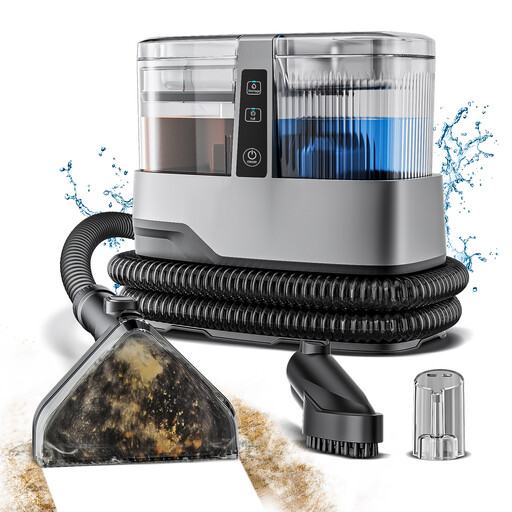
Why it suits this type of user: This corded model is designed for targeted cleaning of carpets, sofas and car seats. The 5-metre cable gives you room to move without having to recharge between uses.
The product information lists both 600 W and 17,000 Pa suction power, as well as a dual tank. So you don’t have to judge it on wattage alone.
Handheld design, wet cleaning and separate clean and dirty water tanks.
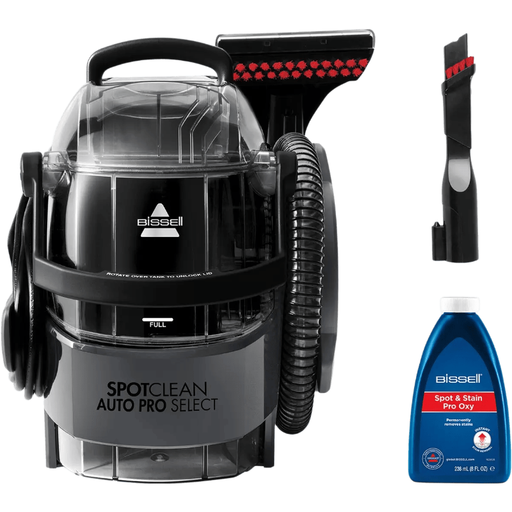
Why it suits this type of user: This model combines 750 W of power with large, separate tanks and several brushes for carpets, stairs, furniture and car interiors.
The two XL water tanks mean you’ll often need to refill less frequently, while keeping clean and dirty water separate. The product information also lists a 2-year warranty.
750 W of power, a 15 cm-wide stain brush and an 8 cm brush for targeted cleaning.
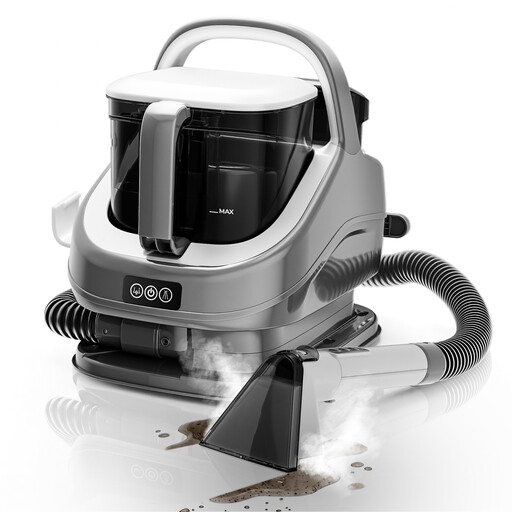
Why it suits this type of user: This model has cold water, hot water and steam modes. It’s a good option for households looking to tackle different fabrics and stains, provided the material is suitable.
The three modes mean you don’t have to use steam by default. The instructions also warn against using the machine on fabrics that are not water-resistant.
1300 W, 13 kPa suction power and dual tanks with capacities of 1400 ml and 1200 ml.
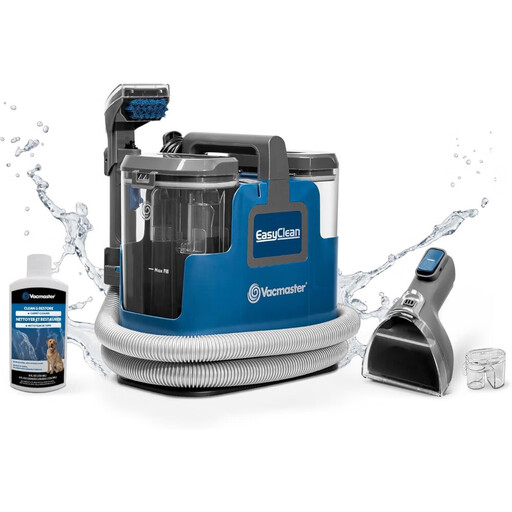
Why it suits this type of user: The compact design, 1.8-metre hose and included Spot & Pet cleaning solution make it a good fit for homes and cars where small stains are a regular occurrence.
The separate tanks are removable, and the hose helps you reach corners and car seats. The specifications list 500 W of power and a 0.95-litre dirty water tank.
Compact design, dual tanks and suitable for carpets, furniture and car interiors.
We’ve put together a complete, up-to-date list of products that meet these strict selection criteria and current European safety regulations.
Don’t use boiling water. Some models have a maximum temperature, such as 40 °C or 60 °C. Follow the limit stated in the product manual exactly.
You can with models that the product information says are suitable for upholstery and car interiors. Check the material and care label first. Leather, delicate fabrics and surfaces that can only be dry-cleaned need a different approach.
Empty and rinse the dirty water tank after every use. Clean the hose, brush and filters according to the instructions too. Let all parts dry completely before putting them away. This helps keep the machine working well and smelling fresh.
Running costs mainly include electricity, water and cleaning solution. A corded model doesn’t have a battery to charge, but it uses electricity while cleaning. The cost per clean depends on how long you use it, the motor power and how much solution you use. Don’t use more cleaning solution than recommended.
