
Vandaag of morgen in huis

Kwaliteit gegarandeerd

Welkomstaanbiedingen ontgrendelen: GRATIS bezorging | Tot 80% korting | Gratis 30 dagen JoyPlus-proefperiode
Download de app
A stain on the carpet, mud on the car seat or a pet accident calls for a targeted approach. A standard vacuum cleaner removes loose dirt, but it won’t lift damp stains from the fibres. A carpet cleaner sprays water, sometimes mixed with cleaning solution, into the upholstery and then sucks the dirty water back up.
However, not every machine is right for every home. A high suction-power figure on the packaging, for example, doesn’t tell you everything about how quickly the fabric will dry. Read on to find out which features matter and which pitfalls you can avoid.
A figure such as 13, 15 or 17 kPa may seem clear-cut, but real-world performance also depends on the nozzle, hose, airflow and seal. A machine with a high stated figure may be less convenient if the hose clogs easily or the nozzle doesn’t make good contact with the surface.
So use the Pa rating as one point of comparison. Also consider:
A compact portable carpet cleaner is easy to store, but a small clean-water tank may mean you need to refill it regularly. That’s no problem when you’re tackling a single stain on a dining chair, but it can be a hassle when cleaning a large rug, several stairs or a car interior.
Also check the difference between the clean- and dirty-water tanks. A dual-tank system keeps the two water supplies separate. Check the capacity in litres and see whether the tanks can be removed.
A steam carpet cleaner or a carpet cleaner with a heated setting may sound appealing for stubborn dirt. However, not every fabric is suitable for heat or a lot of moisture. Always test an inconspicuous area first and follow the care label for your carpet, sofa or car seat.
A heated setting is an extra feature, not a guarantee of suitable results on every type of upholstery. Don’t use boiling water unless the manual expressly allows it.
Strong suction helps remove dirty water from fabric. Some models’ product descriptions, for example, list 13 kPa, 15 kPa or 17 kPa. These are verifiable product specifications, but always compare them alongside the design of the nozzle and hose.
After cleaning, the fabric needs to be able to dry properly. Don’t use too much liquid, make several slow suction passes without adding more water, and ventilate the room.
A compact machine is often enough for occasional stains. For a family with children or pets, or several upholstered surfaces, a larger tank and longer hose are more practical. A dual-tank system is especially useful for sofas, mattresses, stairs and car seats.
Also check:
A corded model has a continuous power supply while you use it, but you’ll need a socket nearby. A battery-powered model gives you more freedom when cleaning a car, but check which battery is included, along with the charging time and run time. For a car interior, a long hose and a power cord several metres long are often more important than a high wattage alone.
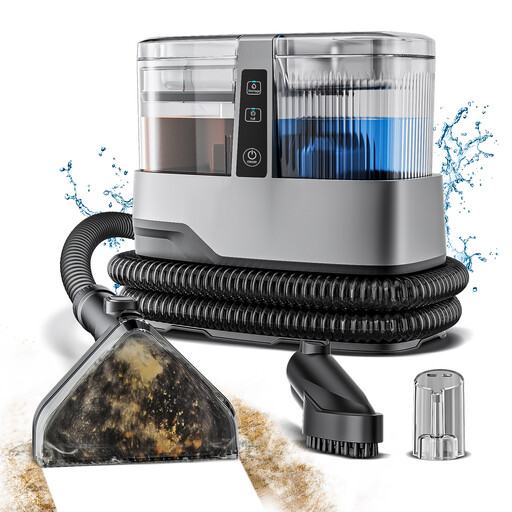
Why it suits this user: This corded model is designed for spot cleaning carpets, sofas, stairs and car seats. Its straightforward controls make it a good choice if you’re using a spot cleaner for the first time.
The product information lists a dual-tank system and a 5-metre hose. This keeps clean and dirty water separate and gives you more reach around furniture.
According to the product specifications: 600 W of power, 17,000 Pa suction and a compact design for wet cleaning fabrics.
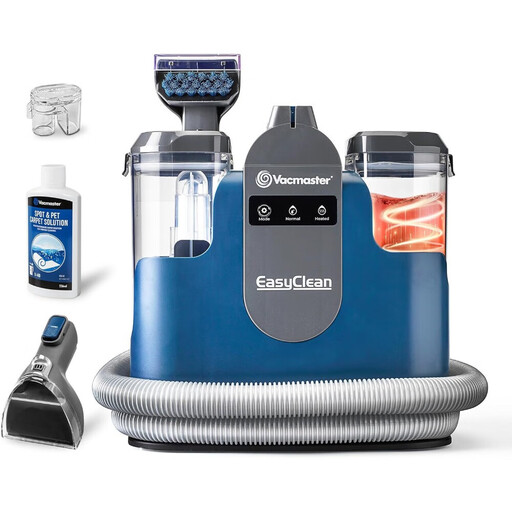
Why it suits this user: A good choice for households that regularly clean sofas, rugs, stairs and car seats, and value keeping clean and dirty water separate.
The product information lists two tanks with capacities of 1.6 and 0.95 litres. The heated setting can be switched off; only use heat when it’s suitable for the material.
500 W of power, a 1.8-metre hose and a self-cleaning hose attachment, according to the stated product specifications.
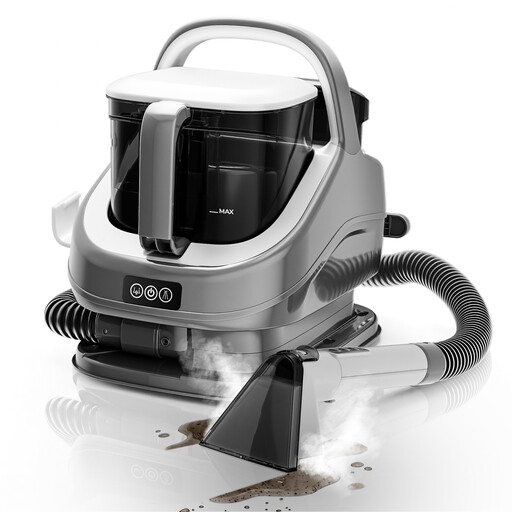
Why it suits this user: A handy option if you clean different types of fabric surfaces, from sofas and carpets to stairs and car interiors, and want a choice of cleaning modes.
According to the product description, you can choose between cold water, warm water and steam. This means you don’t have to use a warm setting by default, but always check that the fabric is suitable first.
1300 W, 13 kPa suction, a 1400 ml clean-water tank, a 1200 ml dirty-water tank and a 3-metre power cord.
A carpet cleaner isn’t a substitute for products designed to maintain household appliances. For a washing machine, for example, you could consider Calgon Washing Machine Descaler 750 ml or Calgon 4in1 Washing Machine Cleaner 350 g. According to their product descriptions, these are designed to help tackle limescale, residue and odours. Always follow the label and your washing machine manufacturer’s instructions.
For your dishwasher, there are other options, such as At Home Dishwasher Cleaner Lemon 250 ml. According to the packaging, this product has an oxygen-active formula. Check the safety warnings: the product may cause skin irritation and serious eye damage. Wear the recommended protection and keep it out of reach of children.
If you’re maintaining a coffee machine, you could look at Philips Saeco Coffee Machine Cleaner Tablets. Only use the tablets as directed in the manual for your specific appliance, and rinse the system as instructed.
We’ve put together a complete, up-to-date list of products that meet these strict selection criteria and the applicable European safety requirements.
No. Check the care label and test an inconspicuous area first. Some fabrics aren’t water-resistant or may discolour when exposed to heat. Use as little liquid as possible and let the upholstery dry completely.
Empty and rinse the dirty-water tank straight after use. Clean the hose, nozzle and filters as directed in the manual. Let any removable parts air-dry completely before putting them back. Ventilate the room and don’t use more cleaning solution than the recommended amount.
Many portable models are described as suitable for carpets, sofas, car seats and areas used by pets. Check the hose length, tank capacity and included brushes beforehand. If your car doesn’t have a power socket, a battery-powered model may be more practical; for longer cleaning sessions, a corded model generally provides continuous power.
