
Vandaag of morgen in huis

Kwaliteit gegarandeerd

Welkomstaanbiedingen ontgrendelen: GRATIS bezorging | Tot 80% korting | Gratis 30 dagen JoyPlus-proefperiode
Download de app
A coffee stain on the carpet, mud on the sofa or a pet accident can quickly soak into fabric. A carpet cleaner can help tackle these spots with a targeted wet clean, but not every machine is right for every situation. Some models have a small dirty-water tank, others are noisy, and some are best suited to occasional use.
When comparing models, don’t focus only on claims such as “professional”, “deep cleaning” or “extra-strong suction”. Start by checking the specifications you can verify, then consider how you’ll actually use the machine.
A higher wattage doesn’t automatically mean your carpet will dry faster. A higher kPa or Pa rating doesn’t tell the whole story about cleaning performance either. The brush, spray nozzle, airflow, hose and seals all play a part.
So use suction power as one point of comparison, rather than as your only reason to buy. Also check whether the manufacturer provides information about the tanks, accessories and maintenance.
A wet cleaner sprays water or cleaning solution into the fibres, then sucks it back up. Some moisture will always remain, though. Using too much liquid, having a blocked hose or allowing the dirty-water tank to fill up can all increase drying time.
First, test the cleaner on a small, inconspicuous area. Check that the fabric is water-resistant, too. Delicate fabrics, some mattresses and materials such as untreated leather aren’t automatically suitable for cleaning with a carpet cleaner.
Separate clean- and dirty-water tanks stop you from cleaning with the same water throughout, but you’ll still need to clean the machine after every use. Empty the dirty-water tank, rinse the spray nozzle and let all the parts dry completely. Otherwise, smells can develop and suction may decrease.
A self-cleaning hose or an easy-to-remove tank can be especially useful for families, pet owners and motorists who use their machine regularly.
A good spot cleaner usually combines three steps: spraying, brushing and suction. Several models describe this as a 3-in-1 system. The brush loosens dirt, while the suction nozzle removes water and dislodged dirt.
Suction ratings vary across the range, from 10 kPa for the Hoover HS500 to 17 kPa for the OMESER C688A, for example. These figures come from product information and aren’t always measured under exactly the same conditions. So consider them alongside the other specifications.
Two separate tanks are practical: clean and dirty water stay apart. Check the capacity, as a smaller tank means more frequent refilling and emptying.
Examples from the range:
Never fill the tank above the marked maximum line. Only use cleaning products that are suitable for the machine and the fabric you’re cleaning.
A portable carpet cleaner is handy for stairs, sofas and car interiors, but the cord and hose determine how far you can actually reach. A longer cable means you won’t have to keep changing sockets. A wide brush is efficient on a rug, while a narrow spray nozzle is better suited to seams, car seats and small stains.
Check the weight, too. A machine weighing around four kilograms is easier to carry upstairs than one weighing over six kilograms. For cleaning a sofa, mattress or car, a flexible hose and a targeted upholstery brush are often more important than a larger overall design.
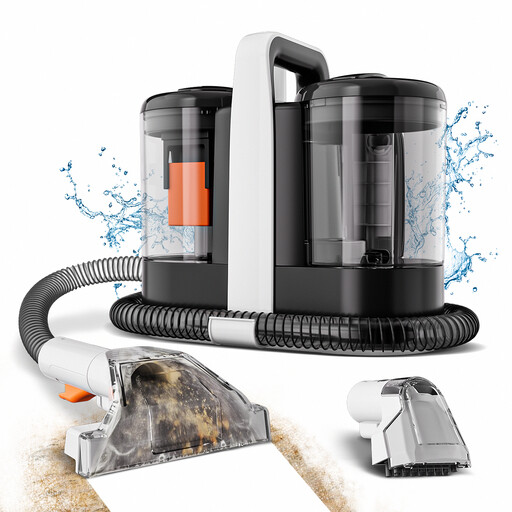
Why it suits this type of user: A compact option for small stains on carpets, sofas, mattresses or car interiors. The 9.84 ft cable and 4.26 ft hose give you extra reach without needing to charge a battery.
The dual-tank design clearly separates 1.5 litres of clean water from 0.8 litres of dirty water. The product information also lists two brushes for different surfaces.
600 W, stated suction power of 15 kPa, compact design and separate tanks.
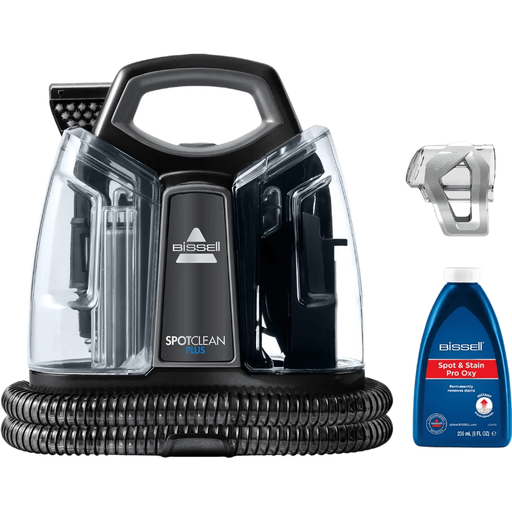
Why it suits this type of user: A good choice for households looking for a straightforward machine for stairs, furniture and car interiors, with useful reach and easy maintenance.
The product description lists a self-cleaning HydroRinse tool and two separate tanks. This means maintenance doesn’t rely entirely on manually flushing the hose.
2.2-metre hose, 5-metre cable, 1.1-litre clean-water tank and a weight of 4.17 kg.
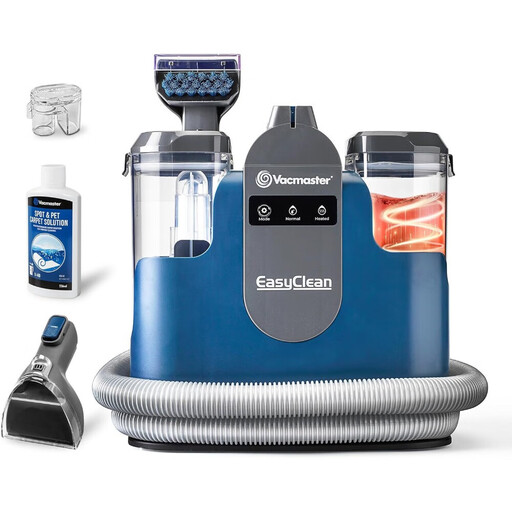
Why it suits this type of user: A good option if you regularly clean carpets, sofas, stairs and car seats, and want the option of a heated cleaning mode.
The standard and heated modes are listed separately. Tank capacities are specified, too: 1.6 litres of clean water and 0.95 litres of dirty water.
500 W, integrated 1.8-metre hose and a self-cleaning attachment, according to the product information.
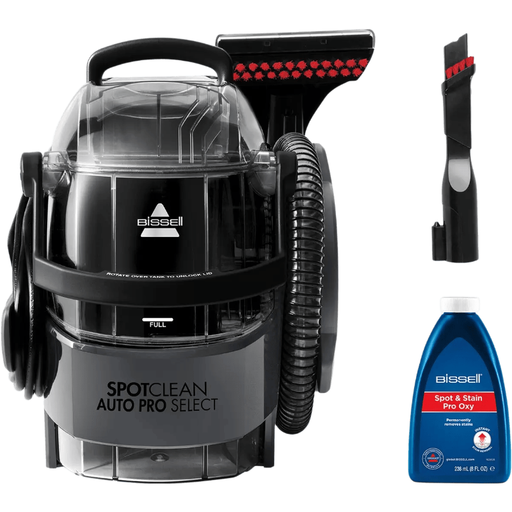
Why it suits this type of user: Designed for more frequent cleaning of car interiors, carpets, stairs and upholstery. The included brushes are intended for both larger areas and targeted stain removal.
The product specifications list a 750W motor, two XL water tanks and separate 15 cm and 8 cm tools. This gives you a clearer idea of the accessories and intended uses than a general performance claim alone.
750 W, two XL tanks, 5.8 kg and a cleaning solution included, according to the product description.
If you want to remove pet stains, choose a product that’s suitable for textiles and follow the dosage instructions on the label. A formula may tackle odours or stains, according to a brand’s own research or claims, but results also depend on the type of fabric, how old the stain is and how much product you use.
We’ve put together a complete, up-to-date list of products that meet these strict selection criteria and the applicable European safety regulations.
Often, yes, if the upholstery is water-resistant and you use a suitable furniture or upholstery brush. Always test a small, inconspicuous area first. Use only as much liquid as necessary and let the sofa dry completely.
Empty and rinse the dirty-water tank after every use. Clean the hose, brush and spray nozzle according to the instructions, too. Let removable parts air-dry before putting them back. This helps reduce odours and blockages.
As well as the purchase price, you’ll pay for water, cleaning solution and electricity. A machine with a larger tank may be more efficient when cleaning several stains, while a compact model could be more economical for occasional use. Also check that the recommended cleaning solution is available and how much you’ll need for each cleaning session.
