
Vandaag of morgen in huis

Kwaliteit gegarandeerd

Welkomstaanbiedingen ontgrendelen: GRATIS bezorging | Tot 80% korting | Gratis 30 dagen JoyPlus-proefperiode
Download de app
A carpet cleaner can be useful for stains on a rug, a sofa after a drink spill or your car upholstery. However, machines vary considerably in terms of use, capacity and maintenance. A model that is suitable for a small stain is not automatically practical for cleaning an entire carpet.
So don't focus solely on terms such as “professional cleaning” or “extra-powerful performance”. Pay particular attention to measurable features such as suction power, tank capacity, cleaning method, hose length and noise level.
A carpet cleaner with heated water sprays warm water onto the fabric and then sucks it back up along with the loosened dirt. A steam cleaner for carpets uses steam at a higher temperature and works differently. Not every carpet, mattress or piece of furniture is suitable for steam cleaning. Always check the care label and test the machine on an inconspicuous area first.
Warm water can help with certain stains, but temperature alone does not determine the result. The right cleaning solution, sufficient contact time and properly removing moisture are at least as important.
Specifications such as 13 kPa or 15,000 Pa may sound clear, but manufacturers can use different measuring methods. So don't compare the figure alone. Also consider the hose length, nozzle, water drainage and ability to go over a surface several times.
High suction power is particularly useful when cleaning furniture, stairs or car interiors. However, on fabrics that dry too slowly, residual moisture can cause odours or new water marks.
A spray-extraction cleaner uses water and collects dirt. After use, the tanks, hose, filters and nozzle need to be emptied and rinsed. A machine without separate water reservoirs can be less straightforward to use.
Look for a dual water tank so that clean and dirty water remain separate. Also check whether the tanks can be removed and whether the hose is easy to clean. These features can determine whether you will actually use the machine again after dealing with a small stain.
A carpet and upholstery cleaner usually sprays water or cleaning solution onto a surface and then vacuums it up. This is suitable for many water-resistant carpets, sofas, stairs and car seats. An upholstery cleaner with a narrow nozzle is more convenient for small areas than a large floor nozzle.
Do not use a machine on fabrics that, according to the care label, must not be cleaned with water. Extra care is needed with delicate materials such as certain types of wool, velour or bonded upholstery.
A compact reservoir is often sufficient for a sofa or a few stains. For several rooms, a larger clean-water tank is more practical, as you won't need to refill it as often.
Check both capacities:
A larger tank doesn't automatically make a machine easier to handle. Also consider the weight when the machine is full.
A long hose and a sufficiently long power cable are important for sofas, stairs and cars. A compact machine is easier to store, while a larger model may be more suitable for repeated use in several rooms.
Noise levels of around 80 dB or more can be clearly audible. Plan your cleaning for a time when noise won't be an issue. Allow cleaned surfaces to dry thoroughly with good ventilation, and don't use more water than necessary.
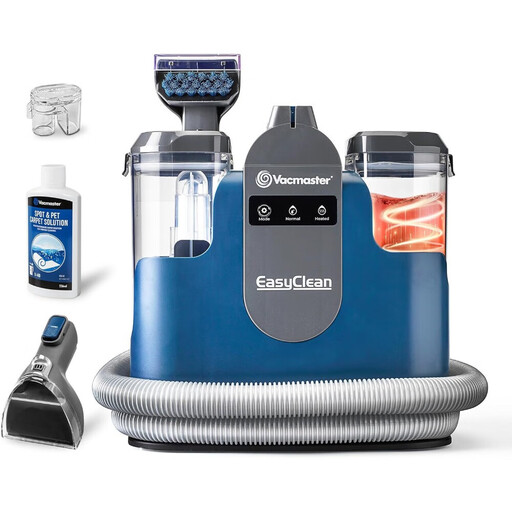
Why it suits this profile: This model is designed for stains on sofas, stairs, carpets and car seats, without the need for a large floor-cleaning system.
The dual tank keeps clean and dirty water separate. The standard and heated settings clearly distinguish between everyday use and more stubborn stains.
500 W motor, 1.6-litre clean-water tank, 0.95-litre dirty-water tank and a 1.8-metre hose with self-cleaning connection.
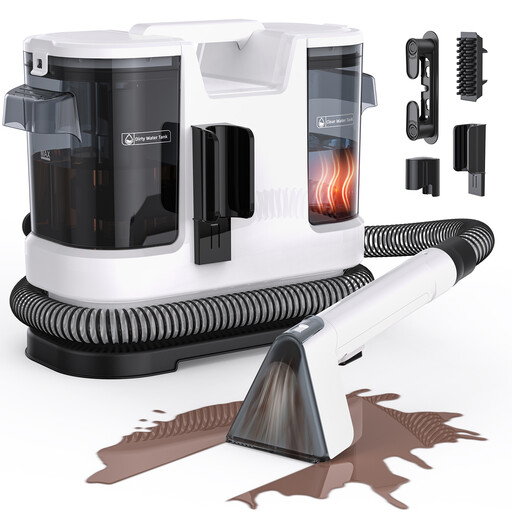
Why it suits this profile: Suitable for households that regularly want to clean carpets, sofas and car interiors, while valuing good reach and a high stated suction power.
The product listing states a suction power of 15,000 Pa and a large tank. Before buying, check the exact tank capacity and included accessories in the current product specifications.
1400 W power, corded operation and use on carpets, sofas and car interiors, according to the product description.
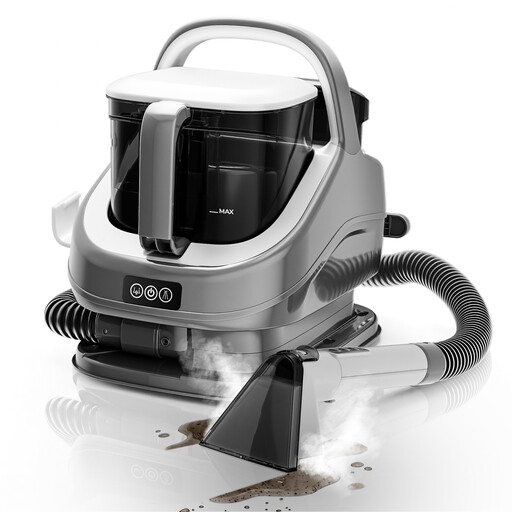
Why it suits this profile: A practical choice for families, pet owners and car owners who want to tackle different surfaces and types of dirt.
The three settings for cold water, hot water and steam make it more suitable for specific applications. Only use steam on materials that are suitable for it.
Stated vacuum pressure of 13 kPa, 1400 and 1200 ml tanks, plus a 1.1-metre hose and 3-metre power cable.
When removing pet stains, it's best to pick up any solid dirt first and follow the cleaning solution's instructions. A carpet cleaner removes dirt and moisture, but the result also depends on the material, the age of the stain and the method selected.
We've put together a complete, up-to-date list of products that fully meet these strict selection criteria and the applicable European safety regulations.
You can, provided the upholstery is water-resistant and the manufacturer permits it. Use a narrow upholstery nozzle, don't soak the surface and test it on an inconspicuous area first. For car seats, a compact model with a hose is often easier to handle.
Empty and rinse the clean- and dirty-water tanks after every use. Clean the filters and hose according to the manual. Allow all parts to dry completely before storing them. This helps limit odours and the build-up of dirt inside the machine.
Consumption depends on the motor power and how long the machine is used. For example, a 1300 W model uses more power while running than a 500 W model, but the total cost depends on how long and how often you use the machine. When comparing running costs, also consider water, cleaning solution and any replacement filters.
