
Vandaag of morgen in huis

Kwaliteit gegarandeerd

Welkomstaanbiedingen ontgrendelen: GRATIS bezorging | Tot 80% korting | Gratis 30 dagen JoyPlus-proefperiode
Download de app
A carpet cleaner can come in handy for stains on carpets, fabric sofas, stairs or car seats. However, not every machine is suitable for every surface. A model with strong suction, for example, may be unnecessarily large for small spills, while a compact spot cleaner may struggle with several rooms.
The main pitfalls usually have less to do with colour or the number of accessories and more to do with ease of use and technical details.
A high figure in kPa or Pa may sound appealing, but it doesn’t tell you everything about the end result. Water delivery, the cleaning head, hose length and the way dirty water is collected all matter too. A machine with a powerful motor but a small dirty water tank may need frequent emptying during a big clean.
Not every sofa, mattress, car seat or carpet fibre is suitable for hot water or steam. Check the fabric care label first and test an inconspicuous area. Too much moisture can cause discolouration, shrinkage or longer drying times on some materials.
A seller may describe a steam function or hot-water mode as suitable for stubborn dirt. This is a product claim made by the seller, not a guarantee that it will work on every fabric or stain.
A carpet cleaner needs to be emptied, rinsed and dried after use. Otherwise, residue can remain in the hose, brush or tank. Check the length of the power cable and hose too. A portable carpet cleaner with limited reach may be less practical than expected in a car or on stairs.
Suction power is often shown in kPa or Pa. This helps you compare models, but don’t use it as your only selection criterion. The stated motor power, such as 1300 W or 1400 W, indicates how much electrical power the machine uses. It doesn’t directly tell you how much water it will extract from a particular fabric.
For regular cleaning of carpets, sofas and car interiors, a good combination of suction power, a suitable cleaning head and a well-sealed dirty water tank is more practical than a high figure on its own.
A system with separate tanks prevents clean water and extracted dirty water from mixing. Check:
A machine with a tank of around 1 to 1.5 litres is often a good fit for spot cleaning. A larger tank can save time when cleaning several rooms, but it may make the machine heavier.
If you’re looking for a carpet cleaner for a sofa, stairs or car, a flexible hose and good reach are important. Also check whether the manufacturer specifically lists carpets, upholstery, car seats or pet messes as suitable uses.
An upholstery cleaner or car interior cleaner isn’t automatically suitable for leather, silk, non-water-resistant fabrics or surfaces with delicate coatings. Follow the instructions and use only cleaning products that the manufacturer recommends.
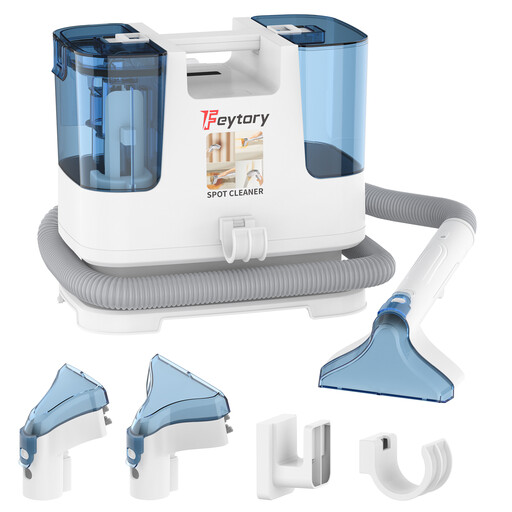
Why it suits this profile: Its compact handheld design is made for spot-cleaning sofas, carpets and vehicle interiors. It’s a good fit for households that don’t want to get out a large machine every time there’s a small stain.
The stated 15 kPa suction power and separate water capacities make it easier to compare with other models. Before buying, check the product page for details of the tank configuration and accessories.
Handheld design; described in the product title as suitable for sofas, carpets and vehicle interiors; handy for small cleaning jobs.
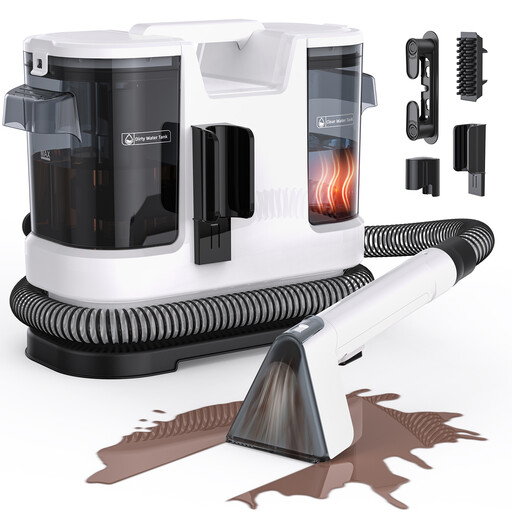
Why it suits this profile: According to the product information, this model is designed for carpets, sofas and car interiors. Its 1400 W motor, 15,000 Pa suction power, large tank and long power cable may suit anyone looking to clean several types of surface.
The listed specifications give you an idea of the power, suction and reach before you buy. Use only water and cleaning products as directed in the manual, and check first that the upholstery is water-resistant.
15,000 Pa according to the product information; 1400 W; designed for carpets, sofas and car interiors; large tank and long power cable according to the product title.
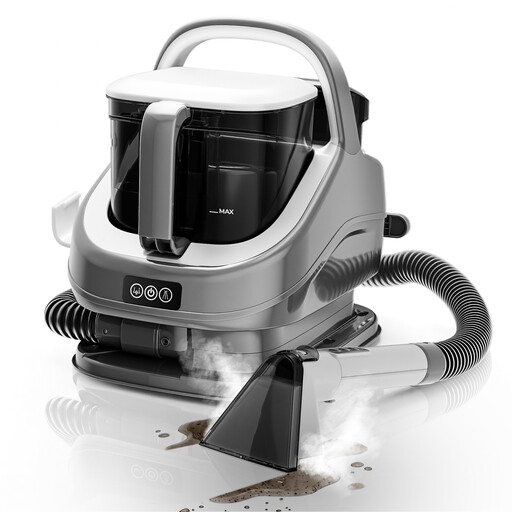
Why it suits this profile: According to the product information, this model offers cold water, hot water and steam, along with a 1400 ml clean water tank and a 1200 ml dirty water tank. This may be useful if you clean a range of water-resistant fabrics.
The separate tanks help keep clean and dirty water apart. Steam mode isn’t a one-size-fits-all solution: don’t use it on materials that, according to their care instructions, can’t withstand heat or moisture.
1300 W; 13 kPa according to the product specifications; three cleaning modes; 1.1-metre hose and 3-metre power cable; listed as suitable for sofas, carpets, stairs and car seats.
For a thorough clean of your car’s interior, you don’t always need just a wet and dry cleaner. A soft car detailing brush can remove dust from air vents, seams and around the centre console before you use any liquid cleaner.
According to the product information, the Car Detailing Brush has soft fibre bristles, a plastic handle and measures 12,3 × 11 × 10 cm. Before use, check that the bristles are free of sand and hard particles. Use light pressure on paintwork, glass and polished surfaces.
For larger exterior surfaces, a car wash brush with a long handle is more practical. According to the product description, the HELLO LEIBOO Car Washer has an extendable aluminium handle, an adjustable brush head and a chenille head. Rinse sand off the car before brushing and washing; any dirt left behind could cause scratches.
The cost of a carpet cleaner isn’t just the purchase price. Remember to factor in water, suitable cleaning products and electricity. To reduce waste:
A steam cleaner for upholstery may seem useful, but it’s only suitable if the fabric can withstand it. If you’re unsure, using less moisture or starting with a manual upholstery cleaner is a safer option.
We’ve put together a complete, up-to-date list of products that meet these strict selection criteria and the applicable European safety regulations.
Only if the upholstery is water-resistant and the sofa manufacturer allows wet cleaning. Test an inconspicuous area first, use no more water than necessary and let the fabric dry thoroughly.
Empty and rinse the dirty water tank after every use. Clean the nozzle and hose too, following the instructions in the manual. If you use the machine regularly, it’s a good idea to check for residue, odours and blockages.
It depends on the motor power and how long you use it for. A 1300 or 1400 W model uses more power while switched on than a smaller machine, but the overall cost mainly depends on how often and for how long you use it. Spot-cleaning stains usually takes less time than cleaning an entire room.
