
Vandaag of morgen in huis

Kwaliteit gegarandeerd

Welkomstaanbiedingen ontgrendelen: GRATIS bezorging | Tot 80% korting | Gratis 30 dagen JoyPlus-proefperiode
Download de app
A cup of coffee on the rug, mud on the stairs or a pet accident on the sofa: a standard vacuum cleaner will pick up loose crumbs, but it cannot always remove moisture and dirt from textiles. A carpet cleaner sprays water and cleaning solution into the fibres, then vacuums up the dirty water. This makes this type of appliance useful for households, car owners and DIY enthusiasts.
However, not every machine is suitable for every job. Some models are designed as portable spot cleaners, while others function mainly as large wet and dry vacuum cleaners for garages, workshops and floors. So do not focus solely on terms such as “powerful suction” or “deep cleaning”; look at verifiable specifications instead.
The motor power in watts indicates how much electrical power the appliance uses. It does not automatically tell you how much dirt or water is actually removed. Where available, also check the stated suction pressure, such as 15 kPa, 17 kPa or 18 kPa, as well as the design of the suction nozzle.
A well-fitting nozzle and an unobstructed hose are at least as important for the results. A compact upholstery cleaner with a hose and narrow handheld nozzle may be more practical for a sofa or car seat than a large floor cleaner.
With a spray-extraction cleaner, the clean-water tank and dirty-water tank are important. With two separate tanks, used water remains separate from clean water. Check:
A small tank is portable, but requires more frequent refilling and emptying. A larger tank is more convenient for several rooms, but makes the appliance heavier.
Carpets, upholstery, mattresses, stair coverings and car interiors do not all react in the same way to water, heat and cleaning solution. Always test the appliance on an inconspicuous area first and check the care label for the upholstery. Use only a suitable solution and do not make the surface wetter than necessary.
A carpet cleaner also does not replace pre-treatment. Vacuum up dry dirt first, blot fresh liquid and treat stubborn stains according to the instructions. This helps prevent sand, hair and other dirt from clogging the filter or hose more quickly.
The stated suction pressure is usually expressed in kPa. A higher value may indicate greater pressure when extracting liquid, but the results in actual use also depend on the nozzle, airflow and the way you work. Move the nozzle slowly and evenly over the fabric, then allow the surface to ventilate thoroughly.
Some product descriptions mention a shorter drying time. Treat this as a product specification or brand claim, not as a guaranteed result for every floor or type of upholstery. Drying time depends, among other things, on the amount of water used, ventilation, temperature and material.
For a carpet cleaner for sofas, stairs or cars, a dual-tank system is practical. You fill the clean-water tank and empty the dirty-water tank separately. For larger surfaces, an appliance with a 20 to 30-litre tank is more convenient, particularly if you also want to vacuum up spilled liquids in the garage or cellar.
Check whether a carpet nozzle, upholstery nozzle, crevice nozzle or additional brush is included. The correct filter is needed for dry vacuuming; a foam filter is often used for wet vacuuming. A filter that is not completely dry can restrict airflow and cause unpleasant odours.
Also consider the weight and dimensions. A machine weighing approximately 3 to 4 kilograms is easier to carry to a car or upstairs. A larger stainless-steel tank provides greater capacity, but takes up more storage space.
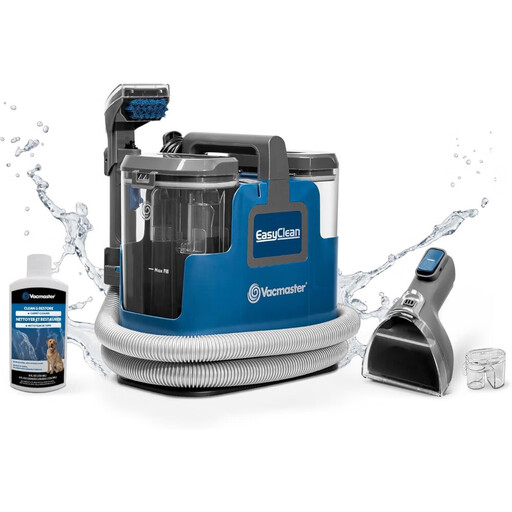
Why it suits this profile: This compact model is designed for small stains on carpets, sofas, stairs and car seats. The integrated 1.8-metre hose helps you reach corners and awkward areas.
The product specification mentions two removable tanks, keeping clean and dirty water separate. However, check the tank capacity before cleaning larger surfaces.
500 W motor, compact housing, 1.8-metre hose and a Spot & Pet cleaning solution included according to the product description.
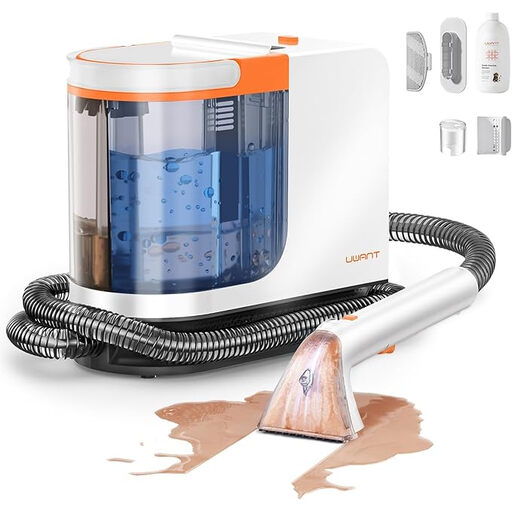
Why it suits this profile: Suitable for anyone looking for one portable machine to deal with stains on sofas, rugs, car interiors and household textiles.
The stated suction power of 18,000 Pa and 14 cm-wide brush are more specific than a general claim about deep cleaning. The manufacturer also mentions a combined tank design.
600 W motor, stated suction pressure of 18 kPa and a noise level of 75 dB quoted by the manufacturer.
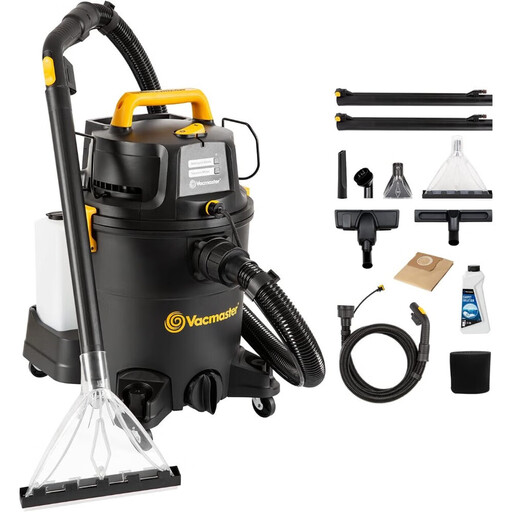
Why it suits this profile: This model is designed for larger cleaning tasks involving carpets, rugs, stairs, upholstery and car interiors.
The machine has separate filters for dry and wet use, as well as a 6-litre cleaning-solution tank. This makes its intended use clearer than that of an appliance designed only for dry vacuuming.
1300 W, 23-litre tank, 6-litre cleaning-solution tank and a stated noise level of 72 dB.
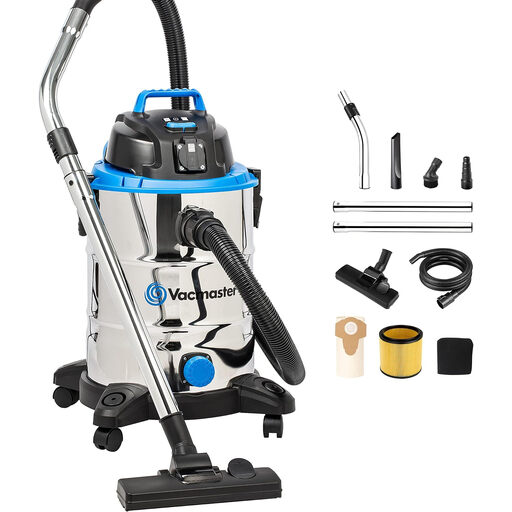
Why it suits this profile: A logical choice for anyone who wants to vacuum up liquids, sawdust or dust in the garage and workshop as well as clean textiles.
The product description distinguishes between a cartridge filter for dry dirt and foam filters for wet vacuuming. Always use the filter appropriate for the function.
1500 W motor, 30-litre stainless-steel tank, EU socket for power tools and a blowing function.
For a pet stain cleaner, acting quickly is important. First remove any solid residue, blot up the liquid, then use the spray and suction functions. No machine can guarantee the same result for every type of stain or material.
We have put together a complete, up-to-date list of products that fully meet these strict selection criteria and the applicable European safety regulations.
Yes, provided the manufacturer states that the appliance is suitable for upholstery. Use a suitable upholstery nozzle, test it on a concealed area first and limit the amount of water. Allow the sofa to ventilate thoroughly before using it again.
Empty and rinse the tanks after every use. Regularly check the filters, hose and suction nozzle for hair and dirt. Allow all parts to dry completely before refitting them. Consult the manual for information about replacing filters and using cleaning solutions.
A wet and dry vacuum cleaner can be suitable for car interiors if it comes with a suitable upholstery or crevice nozzle. Also check the tank size, hose length and weight. For occasional stains, a portable spot cleaner is often easier to transport.
