
Vandaag of morgen in huis

Kwaliteit gegarandeerd

Welkomstaanbiedingen ontgrendelen: GRATIS bezorging | Tot 80% korting | Gratis 30 dagen JoyPlus-proefperiode
Download de app
A carpet cleaner can lift dried-in stains, pet hair and dirt from fabric surfaces. Yet many people buy a machine that ends up sitting unused in the cupboard after just a few cleaning sessions. The reason is often not the cleaning result, but a poor choice for the room, the surface or how often you’ll use it.
A spot cleaner, for example, is handy for a small mark on the sofa, whereas a larger machine is better suited to a whole rug. Also pay attention to how marketing claims are presented. A high suction power figure doesn’t tell you everything about the final result.
Specs like 13, 15 or 17 kPa suction power sound impressive, but they don’t tell you how well a machine actually dries in practice. Airflow, the brush, hose, sprayer and the connection between parts all play a part.
So check whether the machine both sprays and sucks up. A device with just a powerful motor can loosen dirt, but may leave too much moisture behind.
A carpet cleaner with a water tank isn’t automatically more convenient. A bigger tank means less frequent refilling, but also more weight when moving it around. Also check whether the tank is removable and easy to empty.
A system with separate clean and dirty water tanks stops used water from being spread back over the surface. This is especially useful for sofas, mattresses and car seats.
A wet sofa or a thick rug needs time to dry. Too much water can also lead to a musty smell. Claims about “fast drying” come from the manufacturer and are no guarantee for every room or fabric type.
So don’t use more cleaning solution than the instructions recommend. Ventilate the room and test an unknown fabric on an inconspicuous spot first.
For stains and ingrained dirt, a 3-in-1 system is practical: the machine applies water with cleaning solution if needed, loosens the surface with a brush and then sucks the moisture back up. This type works as a compact sofa cleaner, upholstery cleaner and carpet cleaner for car interiors.
Look at the attachments included. A narrow brush is good for car seats and seams, while a wider head works more efficiently on a rug or larger sofa.
A higher kPa value can indicate strong suction, but always compare the whole system. Look at:
A corded model usually delivers consistent power, while a cordless spot cleaner offers more freedom of movement. For a whole interior or several rooms, a long cord is often more practical than a limited battery life.
Not every fabric can handle lots of water, heat or steam. Check the care label on your carpet, sofa, mattress or car seat. A wet-dry vacuum is not the same as a steam cleaner for carpets. Steam works at high temperatures and is therefore not suitable for every synthetic, glued or delicate upholstery.
Only use a cleaner on surfaces the manufacturer says it’s suitable for. Empty the machine after use, rinse parts according to the manual and let hoses and brushes dry completely.
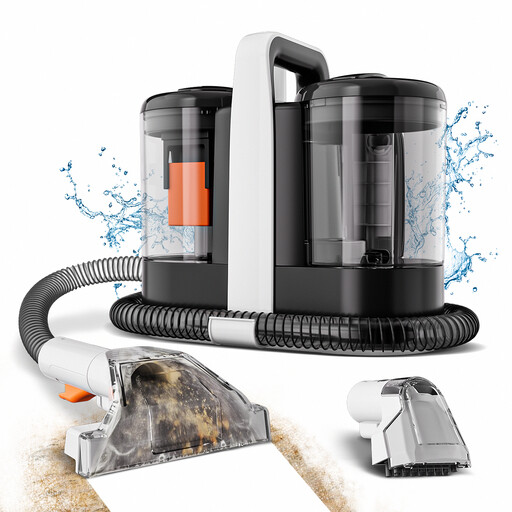
Why it fits this profile: This compact model is designed for stains on sofas, carpets, mattresses, curtains and car seats. The combination of a power cord and portable size suits occasional household use.
The product description mentions a separate clean water tank of 1.5 litres and a dirty water tank of 0.8 litres. Do check the MAX marking and the drying time of the upholstery before use.
According to the product specs: 600 W, 15 kPa, 1.3 metre hose, 3 metre power cord and two brush heads.
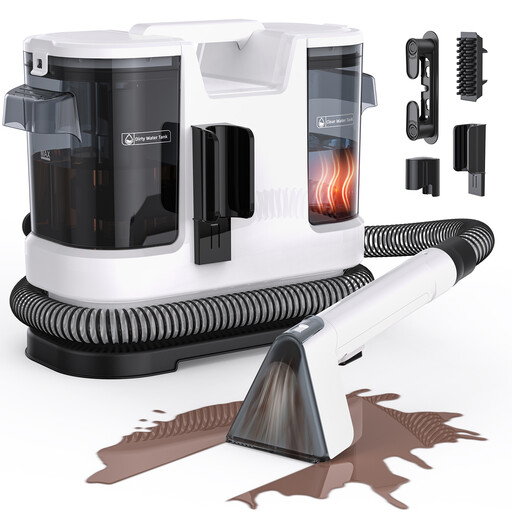
Why it fits this profile: This corded model suits households that regularly clean larger areas, sofas or car interiors and prefer not to rely on a battery.
This model comes with a large tank and a long power cable. That cuts down on interruptions, but check the weight and available storage space beforehand.
The product title states 1,400 W power, 15,000 Pa suction and application for carpets, sofas and car interiors.
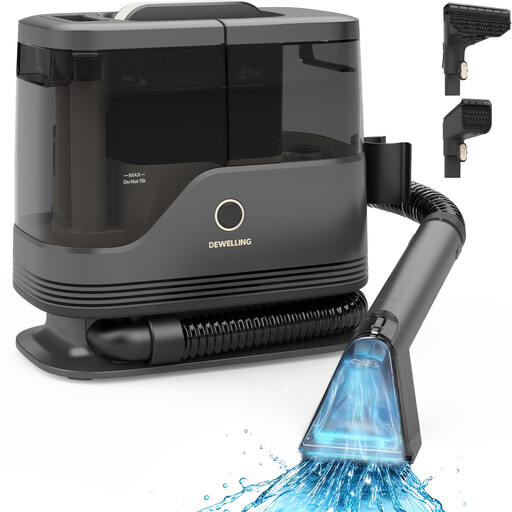
Why it fits this profile: This model is aimed at upholstery and smaller surfaces where a handy cleaner matters more than a large floor vacuum.
The stated separate tanks and self-cleaning function on the handle can make maintenance easier. Check the capacity of both tanks and the accessories included.
According to the product listing: 400 W, 13 kPa, separate clean and dirty water tanks and a portable design.
First vacuum up loose dirt and hairs before using water. Fill the tank with the recommended amount of water and cleaning solution. Move the head slowly over the surface and then make extra dry suction passes without spraying again.
Empty the dirty water after every session. Rinse the hose, brush and tank after use and leave all parts to dry open. Check filters regularly for blockages. This keeps the suction power better maintained and stops residues from developing odours.
The main costs are electricity, cleaning solution and possibly replacement filters. A corded model uses continuous power while cleaning; with a cordless model you need to factor in charging time and battery capacity.
We’ve put together a full, up-to-date list of products that fully meet these strict selection criteria and current European safety regulations.
Only if the manufacturer states the model is suitable for upholstery. Test an inconspicuous spot first, use little liquid and let the fabric dry completely. Take extra care with velvet, wool, glued layers and delicate furniture fabrics.
That depends on use, pets and visible soiling. Clean stains as soon as possible, spot treating them. A full clean may be needed a few times a year, but always follow the carpet’s care advice. Too much wet cleaning can increase drying time and wear.
The electricity used per session is usually only a small part of the cost. Cleaning solution, water, filters and any accessories all add up. A machine with separate tanks and easily available replacement parts can be more practical in the long run than a cheaper model with hard-to-find maintenance items.
