
Vandaag of morgen in huis

Kwaliteit gegarandeerd

Welkomstaanbiedingen ontgrendelen: GRATIS bezorging | Tot 80% korting | Gratis 30 dagen JoyPlus-proefperiode
Download de app
A spilt cup of coffee, muddy paw prints from the dog or an accident on the sofa: a standard vacuum cleaner mainly removes loose dirt. For moisture, stains and dirt deep in the fibres, you need a carpet cleaner. But not every appliance is suitable for every household.
Marketing copy often focuses on high wattages, strong suction or a steam function. That may sound convincing, but it does not tell you everything about everyday use. Pay particular attention to the following pitfalls.
A motor power rating of 1,300 or 1,700 watts does not automatically mean your carpet will be cleaned faster. The nozzle, brush, airflow and the way dirty water is removed also play a part. A carpet cleaner with strong suction is practical, but check that the manufacturer clearly explains how the suction power was measured.
A compact spot cleaner is useful for dealing with accidents, but a small clean-water tank can empty quickly when cleaning a large sofa or several stairs. Check the capacity of both reservoirs. A separate dirty-water tank also prevents you from using contaminated water again.
After use, moisture, hair and cleaning solution can remain in the hose, brush and tanks. Without proper maintenance, unpleasant odours may develop. Choose an appliance with removable tanks, an accessible filter design or a self-cleaning hose. Allow all components to dry completely after rinsing and always follow the instructions.
A carpet cleaner sprays water, with a suitable cleaning solution if required, into the fabric and then extracts it again. For deep carpet cleaning, this combination matters more than any single figure. A wide brush works efficiently on larger areas, while a narrow nozzle is better suited to stairs, car seats and seams.
According to the product description, a steam or heating function may help loosen stubborn dirt. This is not a guarantee of a particular result. Always test the appliance and cleaning solution on an inconspicuous area first. Not every carpet, mattress, leather surface or upholstery fabric is suitable for moisture or heat.
For occasional stains, an appliance with a compact tank is often sufficient. If you are looking for a carpet cleaner for sofas or several rooms, a clean-water tank of around 1 to 1.7 litres and a separate dirty-water tank will be more useful. A long hose and a four- to five-metre power cable make cleaning stairs and furniture easier.
A portable carpet cleaner should remain easy to move around. Appliances in this category weigh approximately 3.4 to 6.5 kilos according to the stated specifications. A heavier model may offer greater tank capacity or extra features, but it will be less convenient if you often clean stairs or a car. Also check the noise level, especially if you have young children or pets at home.
The choices below are based on verifiable specifications such as power, tank design, hose length and included features. Claims about cleaning results come from the relevant product descriptions and should not be regarded as a guarantee for every fabric or stain.
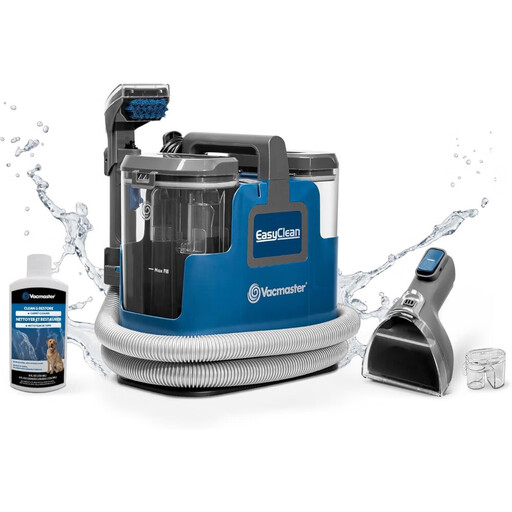
Why it suits this profile: At 3.4 kg, this model is relatively lightweight and designed for carpets, sofas, stairs and car seats. The 1.8-metre hose helps you tackle localised stains without having to move a large appliance.
The two removable water tanks keep clean and dirty water separate. This makes the tank layout clearer than on models where one reservoir combines several functions.
500 W of power, two tanks and a Spot & Pet cleaning solution included, according to the product details.
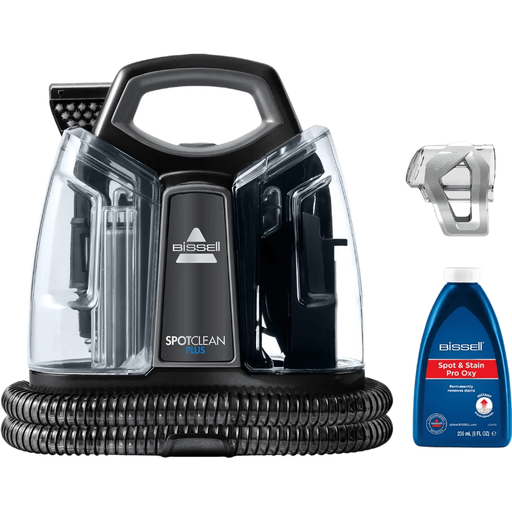
Why it suits this profile: The combination of a compact body, 2.2-metre hose and 5-metre power cable is practical for furniture, stairs and car interiors. The model has a 1.1-litre clean-water tank and a 0.725-litre dirty-water tank.
The separate tanks, HydroRinse tool and clearly stated hose length make maintenance and reach easy to assess, rather than relying solely on marketing terms.
330 W, 74 dB, two tanks and a 2-year warranty according to the product information.
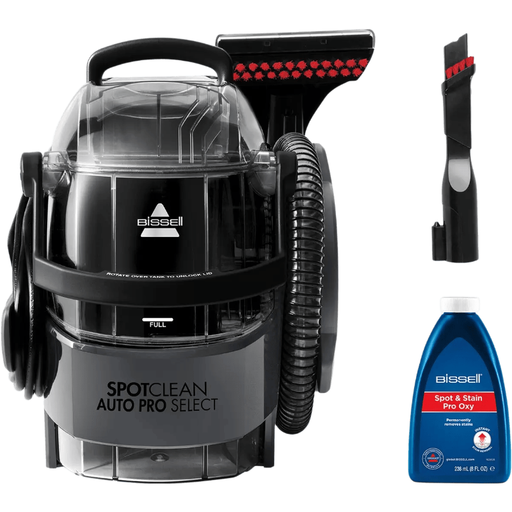
Why it suits this profile: Car owners and households with lots of fabric surfaces may benefit from the stated 750 W of power, XL water tanks and included 8 and 15 cm brushes. The appliance is also designed for carpets, stairs and upholstery.
The specifications cover more than motor power: they also mention spraying, brushing and suction, two tanks and targeted accessories for different surfaces.
750 W, XL tanks, two spot-cleaning brushes and a 2-year warranty according to the product description.
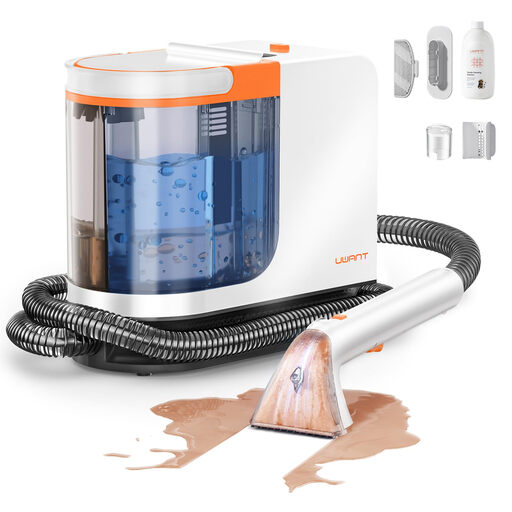
Why it suits this profile: With a stated noise level of up to 69 dB, a weight of 3.5 kg and a 1.5-metre hose, this is a portable option for furniture, carpets and office upholstery.
Alongside the stated 12,000 Pa suction power, the product information also lists the noise level, weight and tank size. This allows you to assess performance and ease of use together.
450 W, 12,000 Pa, up to 69 dB and suitable for water temperatures of up to 60 °C according to the stated specifications.
We have put together a complete, up-to-date list of products that fully meet these strict selection criteria and the applicable European safety regulations.
When using a carpet cleaner for cars, take extra care around connections, seat rails and delicate upholstery. Avoid excessive moisture near electronics and check whether the manufacturer confirms that the material is suitable.
This is possible with many water-resistant carpets, but the result depends on the stain, how old it is and the type of fibres. Blot fresh liquid first, treat the area according to the instructions and avoid soaking the carpet.
A wet vacuum is a broad term for an appliance that can suck up liquids. A carpet cleaner usually sprays water or cleaning solution in a targeted way, brushes the surface and extracts the dirty water. So check whether a wet vacuum is also suitable for textiles, rather than just hard floors.
The running costs mainly consist of electricity, water and cleaning solution. An appliance with larger tanks may be more efficient when cleaning several surfaces, while a compact model uses less water and takes up less storage space for small stains. Empty and rinse the tanks after every session to help prevent maintenance problems.
