
Vandaag of morgen in huis

Kwaliteit gegarandeerd

Welkomstaanbiedingen ontgrendelen: GRATIS bezorging | Tot 80% korting | Gratis 30 dagen JoyPlus-proefperiode
Download de app
A carpet cleaner seems straightforward at first: add water, treat the stain and suck up the dirty water. In practice, carpet cleaning machines vary considerably in suction power, tank design, reach and maintenance. Choose the wrong one and you could end up with a machine that’s too heavy for everyday use, doesn’t extract enough water or is difficult to clean.
Look out for these three common pitfalls:
A spot cleaner sprays water or cleaning solution into the fabric, then extracts it again. So don’t just look at the motor’s power in watts; check the stated suction power in kPa or Pa too. According to the product specifications, a carpet cleaner with 13 to 17 kPa is designed for wet cleaning carpets, sofas and car seats, among other things.
Bear in mind that a higher stated suction power doesn’t guarantee that every stain will disappear. Always test the cleaning solution on an inconspicuous area first, and follow the manufacturer’s care and use instructions.
A dual-tank system keeps clean and dirty water separate. This is practical and stops you from spreading the same water back over the fabric. Check the capacity of each tank individually. A machine with a clean water tank of around 1 to 1.5 litres is suitable for smaller jobs; larger tanks are more convenient for cleaning several rooms.
Empty and rinse the dirty water tank after every use. Allow hoses, filters and spray nozzles to dry completely before putting them away.
A five-metre cord or a long hose can make all the difference when cleaning stairs, sofas and car interiors. A corded model provides a constant power supply while you’re cleaning, whereas a cordless carpet cleaner gives you more freedom to move around.
Check the weight too. A large wet and dry cleaner with a 23-litre tank is suitable for heavier-duty cleaning, but is less convenient if you often need to carry it upstairs. A compact upholstery cleaner is better suited to spot cleaning and smaller areas.
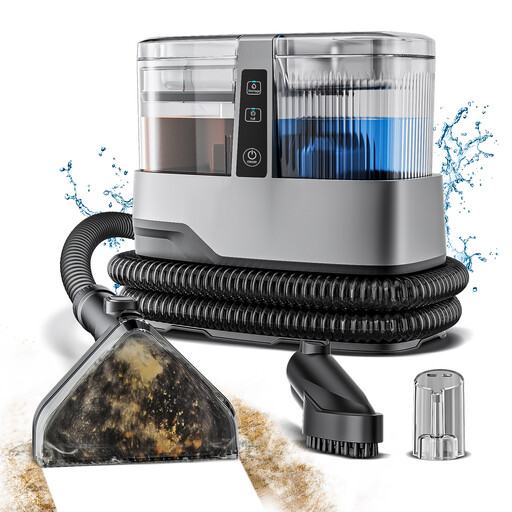
Why it suits this type of user: This handy model is designed for smaller stains on carpets, furniture, stairs and car seats. Its 5-metre cord means you can clean without interruption.
The product specifications list separate clean and dirty water tanks. This means you don’t have to use one tank for both types of water.
600 W power, stated suction power of 17,000 Pa, a handy design and instructions for using warm water up to 40 °C.
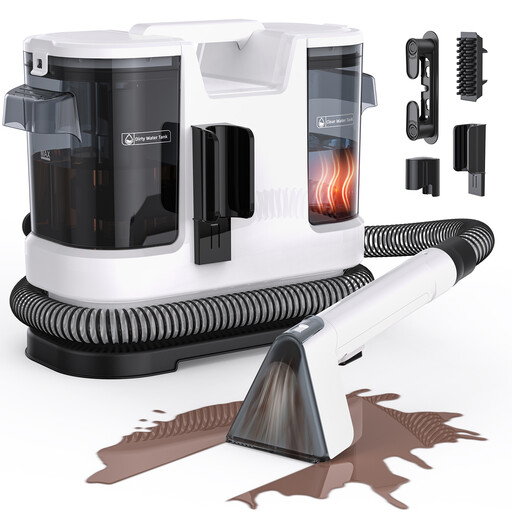
Why it suits this type of user: This corded model is a good option for households that regularly clean carpets, sofas and car interiors and don’t want to worry about charging a battery.
The stated cable length is designed to give you a larger working area. Before use, check that the power socket and the surface you’re cleaning are suitable.
1,400 W power, stated suction power of 15,000 Pa and a design for carpets, upholstery and car interiors.
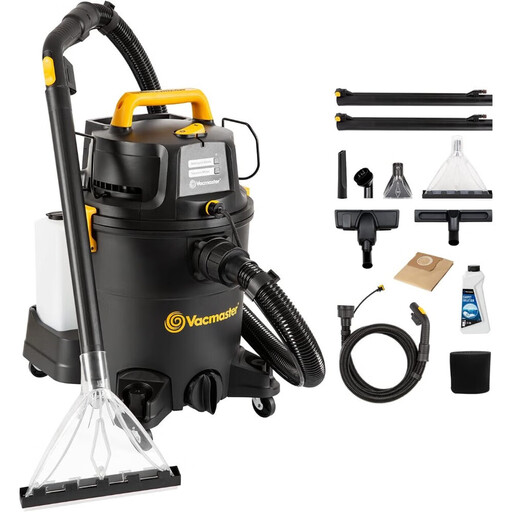
Why it suits this type of user: This larger machine is a good fit if you regularly tackle bigger areas, rugs, stairs, furniture and car interiors.
Its capacity means fewer interruptions during bigger jobs. However, at around 12 kg, it’s less suitable if you only use it occasionally on several floors.
1,300 W power, a 23-litre tank, a 6-litre cleaning solution tank and settings for dry, wet and carpet cleaning.
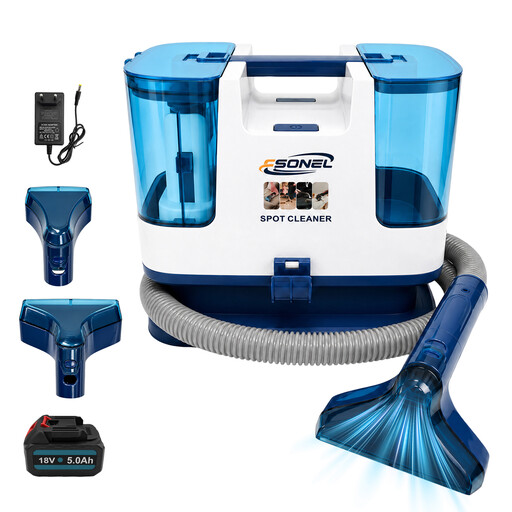
Why it suits this type of user: A cordless machine is handy for car interiors, stairs and places where a power socket is difficult to reach.
You’re not restricted by a long cord. Before buying, check whether the version you’re choosing comes with one or two batteries.
400 W power, stated suction power of 17 kPa and a handheld design for wet fabrics, sofas and car seats.
We’ve put together a complete, up-to-date list of products that meet these strict selection criteria and comply with current European safety regulations.
When removing pet stains, it’s important to act quickly, but you can’t assume that odours will disappear completely. Performance claims of this kind, whether based on a brand’s own research or its marketing, shouldn’t be treated as established fact. So follow the product instructions and test cleaning solutions on a hidden area first.
Only if the manufacturer says the fabric is suitable for water and extraction cleaning. Check the sofa’s care label, use a small amount of liquid and let the upholstery dry completely.
As well as the purchase price, you’ll pay for electricity, water and, if needed, cleaning solution. A corded model uses electricity while cleaning; with a cordless model, you’ll need to factor in charging and battery life. Costs depend on the power rating, how long you use the machine and the size of the area.
Its lifespan depends on how often you use it, how you store it and how well you maintain it. Rinsing it regularly, cleaning the filters, clearing blockages and storing the parts dry can help reduce wear and tear. Before buying, check whether replacement filters, hoses or nozzles are available.
