
Livraison le jour même et le lendemain

Qualité garantie

Débloquez vos offres de bienvenue: Livraison GRATUITE | Jusqu'à -80 % | 30 jours d'essai gratuits à JoyPlus
Téléchargez l'application
Spilt coffee, muddy dog paws or a stain on the sofa often call for more than an ordinary vacuum cleaner. A carpet cleaner sprays water or cleaning solution into the fabric, then sucks up the dirty liquid. This type of appliance can also be used as a spot cleaner, upholstery cleaner, furniture cleaner or car interior cleaner.
However, not every model is right for every home. Read on to find out which features matter and what pitfalls to avoid when buying.
A high wattage doesn’t automatically mean an appliance cleans more effectively. Power consumption and suction pressure are different specifications. A carpet cleaner with strong suction can help draw more moisture out of upholstery, but the final result also depends on the brush, nozzle, hose and how you move the appliance.
So, look at the combination of:
A steam cleaner for carpets works differently from a traditional carpet washer. According to the product description, steam may be designed to loosen dirt, but not all fabrics are suitable for high temperatures. Always check the care label on your carpet, sofa or car seat.
A machine that sprays and vacuums is often more practical for fabric surfaces where you want to remove dirty water. Only use the steam function if the manufacturer and the material allow it.
A small tank can be handy for a single stain, but less practical for a large rug or several seats. Separate clean- and dirty-water tanks mean you won’t keep cleaning with the same water. Also check whether the tanks, filters, hoses and brushes are easy to remove and rinse.
After use, empty the dirty water straight away. Leftover moisture and cleaning solution can cause unpleasant smells. A self-cleaning hose or AutoClean function can make maintenance easier, but it doesn’t replace rinsing removable parts.
A higher stated suction power, such as 12 kPa, 15 kPa or 18 kPa, sounds appealing. These figures come from product information and aren’t always directly comparable across brands. So, take a look at the nozzle and controls too.
When using a carpet cleaner on a sofa, mattress or car seat, you’ll generally want to leave as little moisture behind as possible. Work in overlapping passes, then make extra suction-only passes after spraying, without adding more water.
For regular use, two tanks are practical:
A capacity of around 1 to 1.5 litres per tank is compact and suitable for spot cleaning. Larger tanks mean fewer interruptions, but make the appliance heavier.
For stairs, sofas and car interiors, a flexible hose and a narrow spray-extraction nozzle are more important than a large floor attachment. Check the stated hose and cord lengths. A reach of 5 to 6.5 metres can make a difference when there aren’t many nearby sockets.
Also check whether the set includes an upholstery nozzle, narrow stain brush, stair tool or pet-hair accessory. A wet and dry vacuum isn’t automatically a suitable carpet washer: some models are mainly designed for liquids and don’t have a spray function.

Why it suits this profile: This compact model is designed for spot cleaning carpets, sofas, stairs and car seats. Its stated 1.8-metre hose length helps you reach awkward spots.
The product information lists a 500W motor, two removable water tanks and a cleaning solution included in the box. That means you don’t have to judge it on wattage alone.
Dual-tank system, 1.8-metre hose and a weight of 3.4 kg, according to the product details.
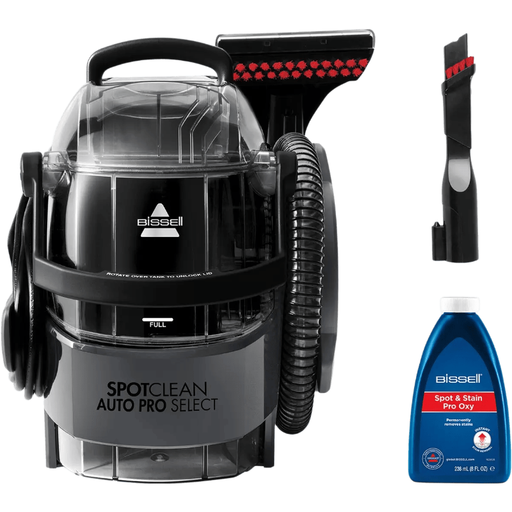
Why it suits this profile: A good fit for households looking for one appliance to use on carpets, upholstery, stairs, mattresses and car interiors.
The product information lists separate clean- and dirty-water tanks, as well as a system for spraying, brushing and suction. This lets you check that the key cleaning steps are covered.
750W of power, two XL tanks and included 8 and 15 cm brushes, according to the product specifications.
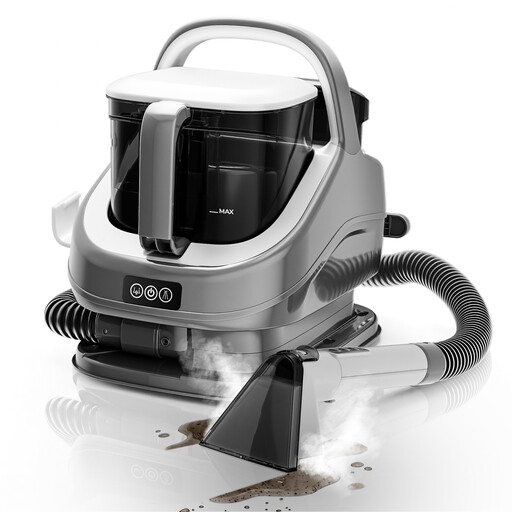
Why it suits this profile: This model is designed for users who want to switch between cold water, hot water and steam when cleaning sofas, carpets, stairs, pet messes and car interiors.
The product information lists three cleaning modes and separate 1,400 ml and 1,200 ml tanks. Before use, check that the material you’re cleaning is suitable for water and heat.
Stated suction power of 13 kPa, a 1.1-metre hose and a 3-metre power cord, according to the product specifications.
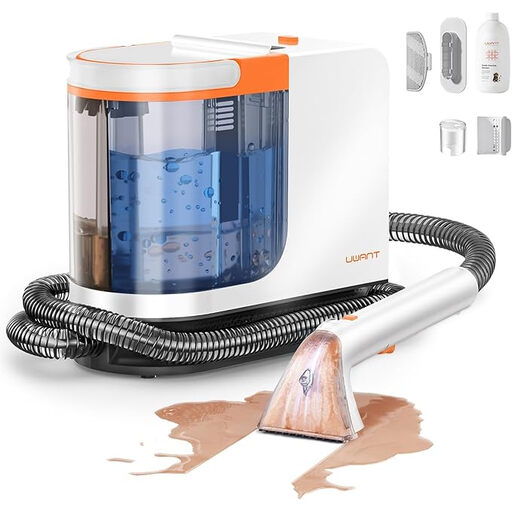
Why it suits this profile: A portable option for households with pets that want to spot clean sofas, rugs, cushions or car interiors regularly.
The manufacturer states a suction power of up to 18,000 Pa, a 14 cm brush and a combined clean- and dirty-water reservoir. These figures are useful for comparison, but don’t guarantee results on every type of stain.
600W motor, stated noise level of 75 dB and 2-in-1 tank, according to the product description.
We’ve put together a complete, up-to-date list of products that meet these strict selection criteria and the applicable European safety requirements.
Never use an appliance on fabrics that aren’t water-resistant. Before carrying out maintenance on an electric carpet cleaner, unplug it from the socket.
Often, yes, provided the upholstery is water-resistant and you use a suitable upholstery or stain nozzle. Always test a hidden area first and avoid soaking the material.
Its lifespan depends on how often you use it, how well you maintain it, and the quality of its hoses, seals and tanks. Emptying, rinsing and drying it after each use helps prevent blockages and unpleasant smells. Also follow the maintenance schedule in the instructions.
As well as the purchase price, you’ll pay for water, electricity and, possibly, cleaning solution. Consumption depends on the tank capacity, power and how often you spray. Only use products recommended in the instructions; using too much can leave extra residue in the fabric.
