
Vandaag of morgen in huis

Kwaliteit gegarandeerd

Welkomstaanbiedingen ontgrendelen: GRATIS bezorging | Tot 80% korting | Gratis 30 dagen JoyPlus-proefperiode
Download de app
A carpet cleaner can come in handy for spilled drinks, mud, pet stains and dirt on fabric upholstery. Yet many households buy a machine that turns out to be less useful in practice than they expected. A short hose, a tank that’s difficult to clean or insufficient suction can make cleaning a sofa, staircase or car seat unnecessarily awkward.
If you’re looking for a carpet cleaner, it’s worth looking beyond terms such as “deep clean” or “extra powerful”. Pay particular attention to the technical specifications, the accessories included and how dirty water is collected.
A higher wattage doesn’t automatically mean a machine cleans better. It mainly tells you about the motor’s electrical power. Suction power, the design of the nozzle and the airflow also matter when it comes to actually removing dirty water.
A compact spot cleaner with 400 to 600 watts may be suitable for isolated stains. For larger areas, a bigger tank, wider accessories and a longer reach are often more important than wattage alone.
With a machine that has a single tank, clean and dirty water can mix more easily. A dual-tank system keeps clean water separate from the dirty water that’s collected. Also check whether both tanks can be removed. This makes them easier to fill, empty and rinse.
Pay attention to the capacity, too. A small tank is handy for a spill on the sofa, but it means more frequent refills and emptying when cleaning a large rug.
A carpet cleaner dampens fabric. If too much water is left behind, carpets and upholstery take longer to dry. A good spray-extraction cleaner should therefore remove the water it applies effectively.
Always empty the dirty-water tank after use, rinse the hose and leave removable parts to dry. Otherwise, leftover moisture and cleaning solution can cause unpleasant smells. Only use the machine on water-resistant materials, and test the cleaning solution on an inconspicuous area first.
For stains on carpets, sofas or car seats, a machine that sprays and extracts is usually more practical than a standard dry vacuum cleaner. The cleaning solution is applied to the fabric, then extracted along with the loosened dirt.
Brands use specifications such as 17 kPa, 13.500 Pa or 15.000 Pa to describe suction performance. Only compare these figures if they’ve been measured in the same way. According to the manufacturers’ own information, real-world performance can depend on the nozzle, hose, filter and level of dirt.
A compact model is often enough for a small household or occasional stains. If you want to clean several sofas, staircases or car seats, look for:
A cordless model can be handy in the car or in places without a plug socket. If you choose one, check the battery life and whether one or two batteries are included.
An upholstery cleaner should suit the jobs you want to use it for. Check whether it comes with a narrow nozzle for staircases and car seats, a brush for sofas and a wider accessory for carpets.
A car upholstery cleaner, sofa cleaner or upholstery cleaner isn’t automatically suitable for every material. Check the upholstery label and the instruction manual. Don’t use a steam or hot-water function on materials that aren’t designed for it.

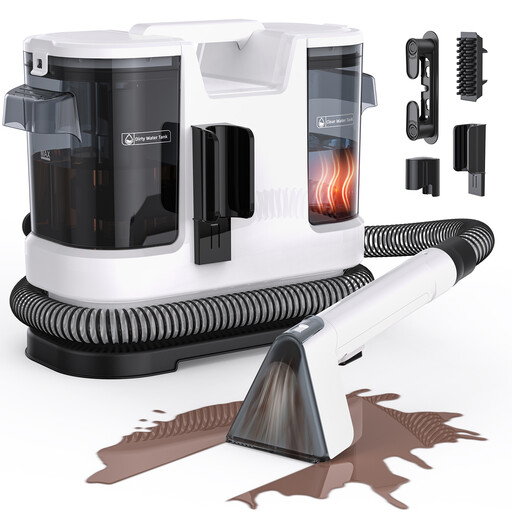
Why it suits this profile: This compact model is designed for spot-cleaning carpets, rugs, sofas, staircases and car seats. The 1.8-metre hose helps you reach awkward areas.
The product information specifies a 500-watt motor, two removable tanks and a separate tank for dirty water.
Compact design, 1.8-metre hose and Spot & Pet cleaning solution included, according to the product description.
Why it suits this profile: With 1400 watts, a stated suction power of 15.000 Pa, a large tank and a long power cord, this model is well suited to regular cleaning of carpets, sofas and car interiors, according to the product listing.
The stated suction power, long cord and large tank put the emphasis on reach and water extraction, rather than motor power alone.
Suitable for several fabric surfaces; the product specifications list a corded design and a large tank.
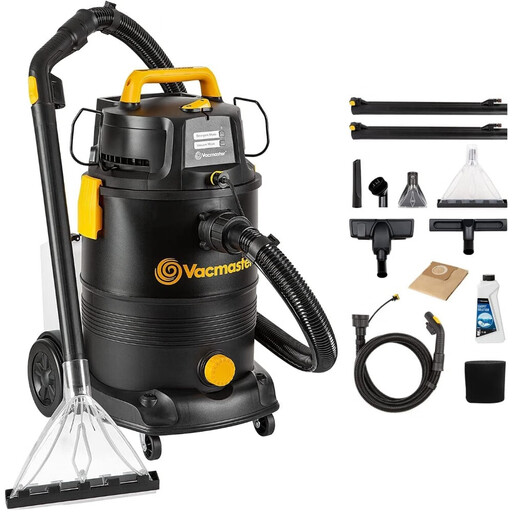
Why it suits this profile: This larger model is designed for anyone who wants to vacuum up dry dirt and liquids as well as clean fabrics, for example in a large household, workspace or car.
The 30-litre collection capacity and 6-litre cleaning solution tank mean fewer interruptions during bigger cleaning jobs.
3-in-1 cleaning for wet, dry and carpet cleaning; the manufacturer also lists several filters and accessories.
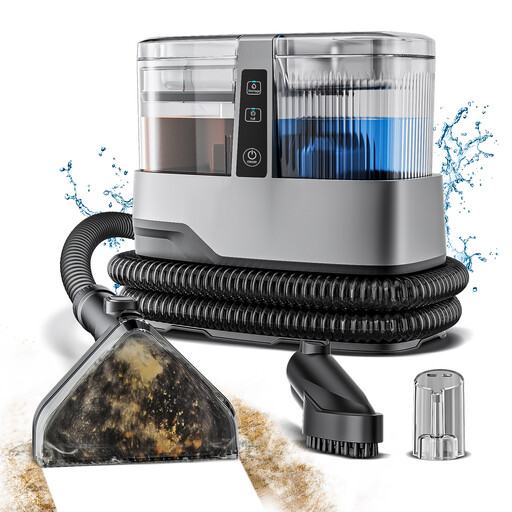
Why it suits this profile: This easy-to-handle corded model is designed for sofas, rugs, staircases, car seats and spot-cleaning pet stains.
The product details list two tanks, 17.000 Pa suction power and a 5-metre cable, keeping clean and dirty water separate.
Handheld design, a 600-watt motor according to the product specifications, and suitable for wet cleaning fabrics.
We’ve put together a complete, up-to-date list of products that meet these strict selection criteria and the applicable European safety regulations.
It’s best to act quickly when dealing with pet stains, but avoid using too much water. A spot cleaner is particularly suitable for localised dirt; for an entire carpet, a larger spray-extraction cleaner may be more practical.
You can, provided the upholstery is water-resistant and the manufacturer says the surface is suitable. Test a small, inconspicuous area first. Use a narrow nozzle for confined areas and take extra time to extract the moisture.
Empty the dirty-water tank after every session. Rinse the tanks, hose and nozzle, then leave them to dry separately. Check the filters according to the instruction manual. This helps prevent blockages and unpleasant smells, and keeps suction power performing well.
The main running costs are electricity, water and, where applicable, cleaning solution. A corded model generally has no charging costs, while the cost of running a battery-powered model depends on battery capacity and how many batteries are included. The total cost depends on how long you clean for and how often you use the machine.
