
Vandaag of morgen in huis

Kwaliteit gegarandeerd

Welkomstaanbiedingen ontgrendelen: GRATIS bezorging | Tot 80% korting | Gratis 30 dagen JoyPlus-proefperiode
Download de app
A carpet cleaner can come in handy for coffee spills, muddy paw prints, pet accidents and dirt on car seats. However, not every spot cleaner is suitable for every surface. A compact machine can be ideal for a sofa or stairs, while a carpet cleaner with larger tanks may be more practical for several rooms.
The key question isn’t just how many watts or kilopascals are listed on the packaging. Focus on the combination of spraying, brushing, suction, tank capacity and maintenance.
A carpet cleaner with strong suction sounds appealing, but a higher figure doesn’t automatically mean it will work better on every carpet. Suction needs to be paired with a suitable brush, a well-sealed nozzle and effective water extraction.
So check:
A steam cleaner for carpets may be suitable for some water-resistant surfaces, but heat and moisture can pose a risk. Delicate fabrics, carpet backings fixed with adhesive and materials that may release colour can be damaged or left damp for a long time.
Always read the care label for your carpet, sofa or car seat. Test the cleaner on an inconspicuous area first. Only use a steam function if the surface manufacturer says it’s suitable. In many situations, an upholstery cleaner that uses cold or warm water is a more cautious choice.
A large clean-water tank means fewer refills, but it usually makes the machine heavier too. You’ll also need to empty and clean the dirty-water tank after use. Any dirt or moisture left behind can cause unpleasant smells.
Be aware of the difference between:
Suction power is often measured in kPa or Pa. A higher figure may help draw more moisture out of fabric, but only compare machines if the measurements have been taken in a similar way. Also consider the power rating, the shape of the nozzle and how the water is applied.
For a small stain on a sofa, a portable upholstery cleaner is often enough. For carpets, stairs and several seats, a model with a longer hose and separate tanks may be more practical.
Some machines use cold water, while others use heated water or steam. According to the product description, heated water may be intended for tackling stubborn stains. This is a product feature, not a guarantee of a particular result.
Check:
For home use, good reach and easy operation are often more important than maximum motor power. A long cable and flexible hose make it easier to reach a sofa, stairs or car interior.
Also check the weight. A wet and dry cleaner with a full tank may feel heavier than the empty machine’s weight listed in the product details. If you use it regularly, a removable tank and parts that are easy to rinse are practical advantages.
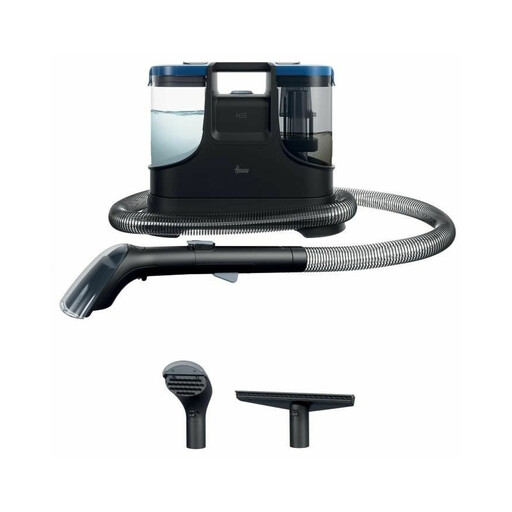
Why it suits this type of user: This portable model is designed for smaller cleaning jobs on sofas, carpets, rugs, pet beds and car interiors. It combines spraying, brushing and suction.
The product details list both a suction function and a removable water tank. This means you can remove the dirty water from the machine after use instead of leaving it inside.
1.5-litre water tank, stated vacuum pressure of 10 kPa, 5-metre cable and a stated noise level of 84 dB.
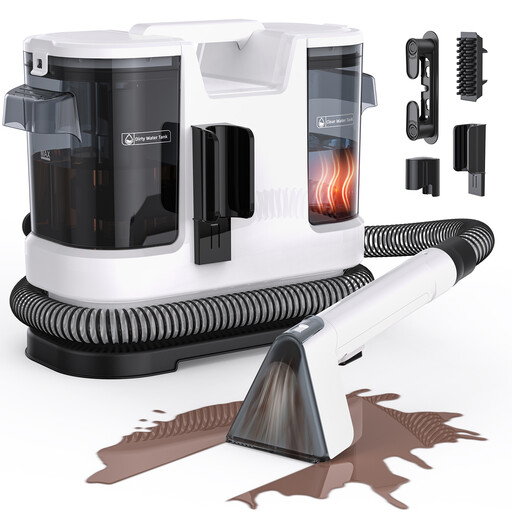
Why it suits this type of user: With 1400 W of power, a stated suction power of 15,000 Pa (according to the product name), a warm-water function and a large tank, this model is designed for households looking to clean several fabric surfaces.
The specifications list not only the power rating, but also warm-water cleaning and use on carpets, sofas and car interiors. Before buying, check the exact tank capacity and included accessories on the product page.
1400 W of power, stated suction power of 15,000 Pa and a mains cable for extended use without needing to charge a battery.
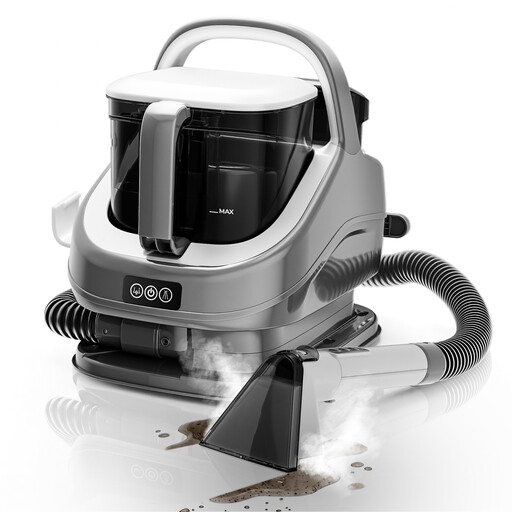
Why it suits this type of user: According to the product information, this model offers cold-water, warm-water and steam modes. That makes it an interesting option if you need to clean different surfaces and types of dirt.
The three modes make it clear that you don’t always need to use steam. The warning to clean only water-resistant fabrics also helps you choose the right setting for each material.
1300 W, stated suction power of 13 kPa, a 1400 ml clean-water tank, a 1200 ml dirty-water tank and a 3-metre mains cable.
We’ve put together a complete, up-to-date list of products that meet these strict selection criteria and the applicable European safety regulations.
Only use cleaning solutions that are suitable for the machine. Too much foam can affect how a wet and dry cleaner works. For stubborn smells, it’s usually better to clean repeatedly and carefully than to soak the area in one go.
That depends on the fabric and its care label. An upholstery cleaner may be suitable for water-resistant upholstery. Always test a hidden area first and avoid soaking the filling.
Empty the dirty-water tank after every cleaning session. Rinse the tank, nozzle and hose after use, and let removable parts dry before putting them away. Check the filters according to the instructions. Good maintenance helps reduce blockages and unpleasant smells.
The main running costs are electricity, water and, if needed, cleaning solution. A 400 W machine uses less power per hour than a 1300 or 1400 W model, but the actual cost depends on how long you use it. A larger tank can reduce interruptions, while regular maintenance remains important for reliable performance.
