
Vandaag of morgen in huis

Kwaliteit gegarandeerd

Welkomstaanbiedingen ontgrendelen: GRATIS bezorging | Tot 80% korting | Gratis 30 dagen JoyPlus-proefperiode
Download de app
A carpet cleaner can come in handy for spilled coffee, mud, pet stains and dirt on car upholstery. However, not every model is suited to every job. Some machines are designed mainly for small stains, while others have a larger tank and longer hose for sofas, stairs or several rooms.
When choosing, don’t focus solely on a big number on the packaging. Suction power, tank design, drying time, maintenance and surface type are just as important. Read on to find out which pitfalls to avoid and which models suit different needs.
A high Pa or kPa rating sounds appealing, but it doesn’t tell you the whole story. The result also depends on the suction head, airflow, how well it seals against the fabric and how you use the machine. For example, a carpet cleaner rated at 17 kPa may be suitable for a small stain, but that doesn’t automatically mean it has the widest cleaning head or the largest tank.
So compare several specifications together: suction power, motor power, hose length, tank capacity and brush type.
A compact spot cleaner is easy to store, but you’ll need to refill and empty the tank more often. That isn’t always practical when you want to clean a large sofa, stairs or several car seats. A system with separate clean- and dirty-water tanks also prevents dirty water from being used again.
A steam cleaner works differently from a wet-and-dry cleaner. Steam may be suitable for certain hard surfaces and some fabrics, but not every carpet, sofa fabric or car seat can withstand heat and moisture. Check the care label on the upholstery and test the cleaner on an inconspicuous area first.
Claims about removing bacteria, mites or odours should be understood as brand messaging. According to information provided by some brands, steam may loosen certain contaminants, but this isn’t guaranteed for every material or stain.
Suction power is often measured in Pa or kPa. A higher figure may indicate greater suction pressure, but it doesn’t automatically make a machine more suitable for every use. Wattage mainly indicates how much electrical power the machine uses, not how well it will clean.
Models rated at around 13 to 17 kPa are often practical for small stains. If you regularly clean sofas, carpets and car interiors, look for a wider suction head, a longer hose and a larger dirty-water tank.
A dual-tank system keeps clean water separate from dirty water. Check:
Empty and rinse the dirty-water tank after every use. Allow all parts to dry completely to help prevent lingering odours and moisture problems.
A standard upholstery cleaner sprays water, sometimes with a suitable cleaning solution, and then extracts it. A steam cleaner uses heat. A model with several settings, such as cold water, hot water and steam, gives you more options, but calls for extra care.
Never use boiling water unless the instructions allow it. For example, the OMESER C688A specifies a maximum water temperature of 40 °C. Also check whether a product is intended for water-resistant fabrics. Not every carpet, mattress, car seat or furnishing fabric is suitable for wet cleaning.
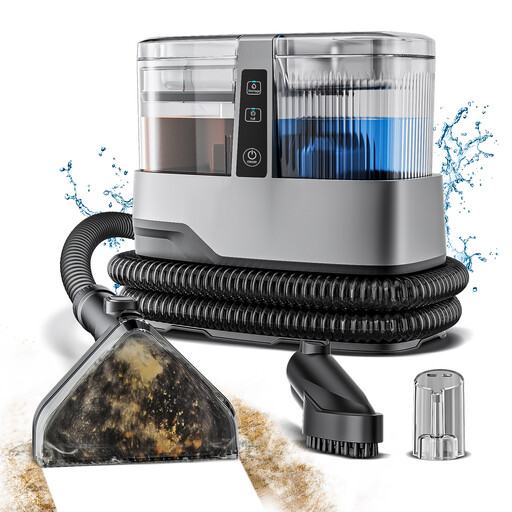
Why it suits this need: This compact model is designed for stains on carpets, sofas, chairs and car interiors. Its corded operation means there’s no need to wait for a battery to charge.
The specifications include both 17,000 Pa suction power and separate clean- and dirty-water tanks. This means the model isn’t judged on just one marketing figure.
600 W motor, 5-metre cord, dual tank and a handheld design for stairs, furniture and car seats.
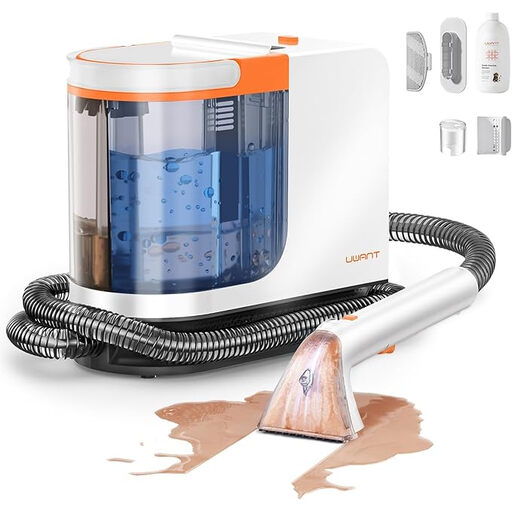
Why it suits this need: The combination of portability, a self-cleaning function and a wide brush makes this a good fit for households that regularly clean fabric surfaces.
As well as a stated 18,000 Pa, the product information lists a 14 cm-wide brush, a 600 W motor and a 2-in-1 water tank.
18,000 Pa, around 75 dB according to the product information, a wide brush and a system-cleaning function.
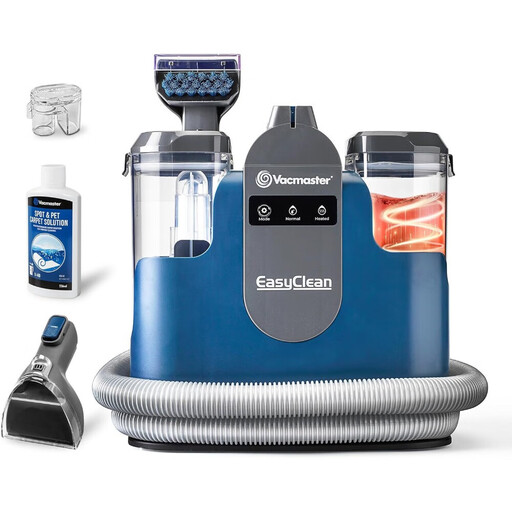
Why it suits this need: This model is designed for sofas, carpets, stairs and car seats that need regular, targeted cleaning.
The machine has two tanks with capacities of 1.6 and 0.95 litres, plus standard and heated cleaning modes. Make sure the surface can withstand heat before use.
500 W, 1.8-metre hose, separate tanks and a self-cleaning hose attachment.
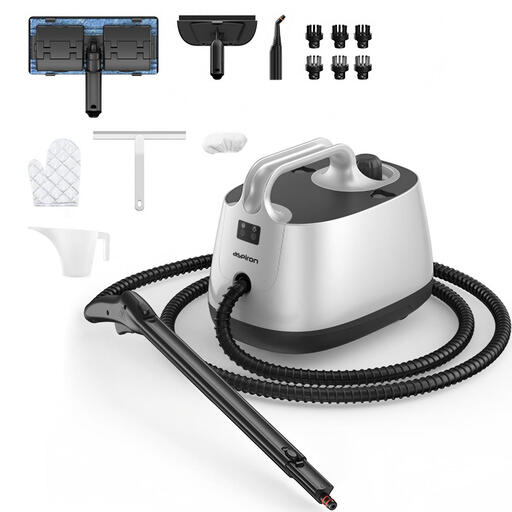
Why it suits this need: This is particularly useful if you want to clean floors, grout, windows and kitchen surfaces as well as fabrics.
The product information clearly lists a 1.5-litre tank and 21 accessories. This makes it easier to decide in advance whether its versatility suits your needs.
1500 W, up to 4 bar according to the product description, a 1.5-litre tank and accessories for different surfaces.
We’ve put together a complete, up-to-date list of products that meet these strict selection criteria and current European safety requirements.
When removing pet stains, it’s important to act quickly. Blot up as much moisture as possible first, then follow the cleaning solution’s instructions. A carpet cleaner can extract visible dirt and moisture, but it can’t guarantee the removal of every odour from every material.
It can be, as long as the fabric is water-resistant and the manufacturer allows wet cleaning. Use a small amount of liquid, test an inconspicuous area first and allow plenty of time for the fabric to dry.
Rinse the dirty-water tank, hose, brush and nozzle after every use. Allow removable parts to dry completely. If you use the machine regularly, it’s a good idea to check the filters and connections more thoroughly, following the instructions.
As well as the purchase price, you’ll pay for water, electricity and, if needed, cleaning solution. A model with larger tanks can be more practical for cleaning several surfaces, while a compact spot cleaner uses less water and takes up less storage space when used occasionally.
