
Vandaag of morgen in huis

Kwaliteit gegarandeerd

Welkomstaanbiedingen ontgrendelen: GRATIS bezorging | Tot 80% korting | Gratis 30 dagen JoyPlus-proefperiode
Download de app
A knocked-over glass, muddy children’s shoes or a pet stain on the rug: a standard vacuum cleaner will pick up loose dirt, but it won’t always remove moisture and grime trapped deeper in the fabric. A carpet cleaner sprays water, optionally mixed with cleaning solution, onto the surface and then sucks it back up. This also makes it useful as a spot cleaner, upholstery cleaner or furniture cleaner.
However, not every model is suitable for every job. A high wattage, for example, doesn’t tell you everything about suction performance. You should also consider the tanks, hose, drying time and the type of surface you want to clean.
A motor rated at 1,000 or 1,800 watts sounds impressive, but it doesn’t directly tell you how much moisture the cleaner will remove from a carpet. Suction figures in kPa or Pa aren’t always directly comparable either, as manufacturers may use different testing methods.
So look at the whole picture:
Compact machines often have limited tank capacity. That’s handy for a single stain, but less practical if you want to clean a large rug or several chairs. Separate clean- and dirty-water tanks also prevent you from using the same water throughout the job.
Always check the capacity of both tanks. Some product titles give just one capacity, even though the clean- and dirty-water tanks may be different sizes.
A steam cleaner for carpets can use high temperatures. That doesn’t make it suitable for every fabric. Delicate upholstery, materials that are dry-clean only, carpets with loose backing and non-water-resistant fabrics can be damaged by moisture or heat.
Test the cleaner on an inconspicuous area first and follow the care label, manual and manufacturer’s instructions. “Suitable for sofas” in a product description doesn’t mean that every type of sofa can be cleaned safely without preparation.
For removing stains from carpets, a spray-extraction cleaner is usually more practical than a standard wet vacuum. It applies water and then sucks up the dirty water. A wet vacuum can pick up liquid, but it doesn’t always have a spray function or a brush for fabrics.
A model with separate spray and suction functions is useful for:
When checking the stated suction power, pay particular attention to the context. According to the product specifications provided, the models below range from 13 kPa to 18 kPa. Use these figures as a guide, and also consider hose length, nozzles and controls.
Dual tanks keep clean and dirty water separate, making them easier to fill and empty. After use, rinse the dirty-water tank, hose, filters and nozzles, then let them dry completely. This helps prevent lingering moisture and unpleasant smells.
A self-cleaning hose or rinse function can save time, but check that you can still access the removable parts. In practice, a machine that’s difficult to clean may be less convenient than one with slightly smaller tanks.
A long hose and power cord are useful for cleaning cars or stairs. A corded model provides continuous power while you work, but you’ll need a socket nearby. Check that the cord is long enough to reach between the socket, sofa and floor.
A compact machine is easier to store. A larger model with tanks of around 1 to 2 litres may be a better choice if you want to clean several surfaces in one go. Remember to factor in the weight of a full tank.

Why it suits this type of user: This compact model is designed for stains on carpets, stairs, sofas and car seats. The product information lists a 500 W motor, a 1.8-metre hose and separate water tanks.
The dual-tank design keeps clean and dirty water separate. The machine is intended for spot cleaning, rather than unnecessarily large cleaning jobs.
500 W motor, 1.8-metre hose, separate tanks and a Spot & Pet cleaning solution included, according to the product description.
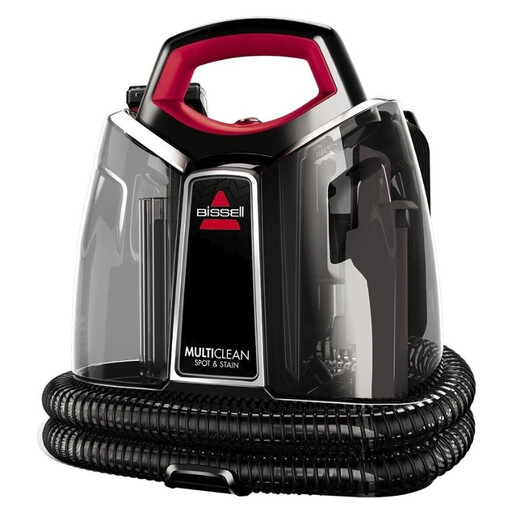
Why it suits this type of user: This model comes with several nozzles for small stains, larger areas, crevices and upholstery. It’s a good fit for households that want to clean carpets and car interiors with one appliance.
Separate clean- and dirty-water tanks make it easier to manage the water flow. The manual also advises testing an inconspicuous area first and using only a suitable cleaning solution.
330 W motor, around 74 dB according to the product information, 2.2-metre hose and four cleaning accessories.
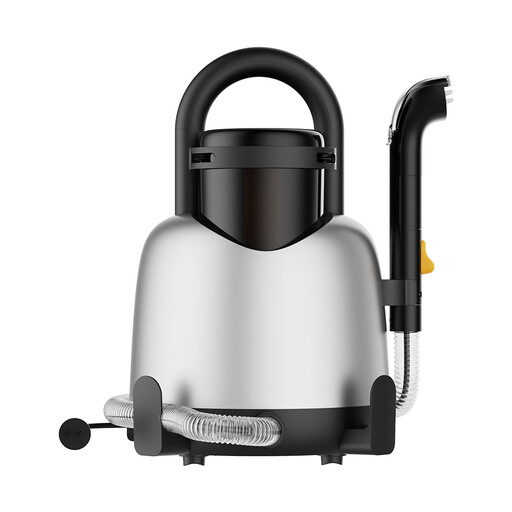
Why it suits this type of user: If you regularly clean different fabric surfaces, several cleaning modes and accessories may come in handy. The product information lists steam, hot water and room-temperature water.
The different modes let you choose a method to suit the surface. Make sure beforehand that the material can withstand heat and moisture.
1700 W rated power, stated suction power of 13 kPa, 1.7- and 1.4-litre tanks, and five brush attachments.
We’ve put together a full, up-to-date list of products that meet these strict selection criteria and current European safety regulations.
It’s best to act quickly on pet stains, but one treatment isn’t guaranteed to remove odours or discolouration. According to a brand’s own research, performance claims shouldn’t be taken as guaranteed results. Instead, focus on the stated features, ingredients, instructions for use and suitability for your surface.
Only if the upholstery is water-resistant and the care label allows it. Test a hidden area first. For delicate fabrics, avoid using a steam function unless the manufacturer clearly says it’s suitable.
It depends on how much water you use, ventilation, room temperature, fibre type and suction performance. Use a limited amount of liquid, make several extra passes to extract it and ensure good air circulation. Don’t walk on the carpet again extensively until it feels completely dry.
As well as the purchase price, you may need to pay for cleaning solution and electricity. A corded model uses power while you clean; the exact amount depends on its wattage and how long you use it. Also check whether the brand recommends a specific cleaning solution and whether accessories or filters need replacing over time.
