
Vandaag of morgen in huis

Kwaliteit gegarandeerd

Welkomstaanbiedingen ontgrendelen: GRATIS bezorging | Tot 80% korting | Gratis 30 dagen JoyPlus-proefperiode
Download de app
A spilt drink, mud from children’s shoes or a pet accident can soak deep into fabric. A regular vacuum cleaner usually only removes loose dirt. A carpet cleaner sprays water or cleaning solution into the fabric, then sucks up the dirty liquid. This also makes it useful as a spot cleaner, upholstery cleaner or carpet cleaner for your car.
However, not every model is right for every situation. A high suction-power figure on the packaging, for example, tells you little about the tank capacity, reach or drying time. So look out for these common pitfalls.
A motor rated at 1,800 watts sounds impressive, but that doesn’t automatically tell you how much water it will lift from a sofa or carpet. The stated suction power, for example 13 or 17 kPa, should also be considered alongside the cleaning head, hose and water drainage.
For everyday use, a well-fitting nozzle, separate clean- and dirty-water tanks and a practical hose are often more important than the highest figure alone.
Some machines use cold or heated water. Other models also have a steam function. These are different technologies. Check whether the appliance actually produces steam and whether the manufacturer says it is suitable for the surface you want to clean.
Always test on an inconspicuous area first. Not all upholstery, mattress fabrics or car seats can withstand heat or a lot of moisture.
A carpet cleaner that isn’t emptied and dried after use can develop unpleasant odours. Moisture left in a hose or dirty-water tank is a practical drawback that adverts often give little attention to.
Where possible, choose a model with removable tanks, accessible filters and clear maintenance instructions. Also make sure cleaned surfaces are well ventilated before using them again.
A carpet cleaner with strong suction is particularly useful when you want to lift moisture from thick fabrics, sofa cushions or rugs. As well as the kPa figure, look for:
A dual-tank system stops clean water from mixing with dirty water straight away. Compact models often have a capacity of around 0.8 to 1.6 litres. A larger tank means less frequent refilling, but also makes the machine heavier.
A deep-cleaning carpet cleaner may use cold water, hot water or steam. A heated function can be handy for stubborn dirt, but always follow the instructions. Don’t use boiling water in a machine that isn’t designed for it.
For example, the ROUNY U2 Heat lists three modes: cold water, hot water and steam. According to the product description, this model has a 1,400 ml clean-water tank, a 1,200 ml dirty-water tank and a 3-metre cable. The manufacturer also warns against using the appliance on fabrics that aren’t water-resistant.
For a carpet cleaner for your sofa or car, weight, hose length and cable reach are key considerations. A compact handheld model is quick to grab for a single stain, while a larger appliance is better suited to cleaning several rooms.
Also check which accessories are included. A narrow spray nozzle is handy for car seats and stairs; a wider brush gets the job done faster on rugs. A self-cleaning hose or brush can make maintenance easier, but it doesn’t replace rinsing and drying the parts.

Why it suits this type of user: This compact model is designed for carpets, rugs, sofas, stairs and car seats. Its integrated 1.8-metre hose is useful for small cleaning jobs without having to move a bulky appliance.
The two removable tanks keep clean and dirty water separate. That means you don’t have to rely on motor power alone when comparing models.
500-watt motor, dual-tank system and Spot & Pet cleaning solution included, according to the product description.
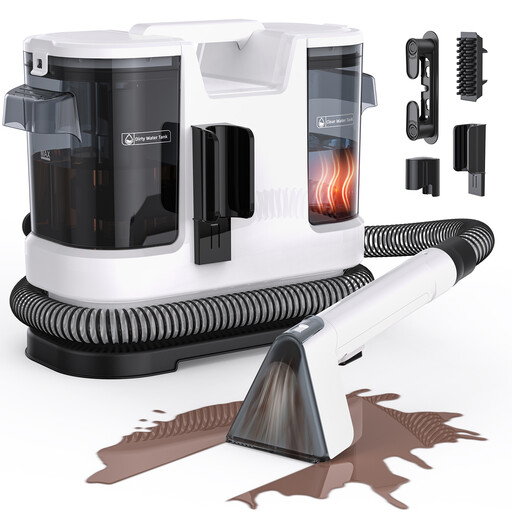
Why it suits this type of user: A good fit for households that regularly clean larger areas, sofas and car interiors, and prefer to use mains power.
The product listing states a suction power of 15,000 Pa, a large tank and a long mains cable. Before buying, be sure to check the exact tank capacity and which accessories are included.
1,400 watts and, according to the product specifications, suitable for carpets, sofas and car interiors.
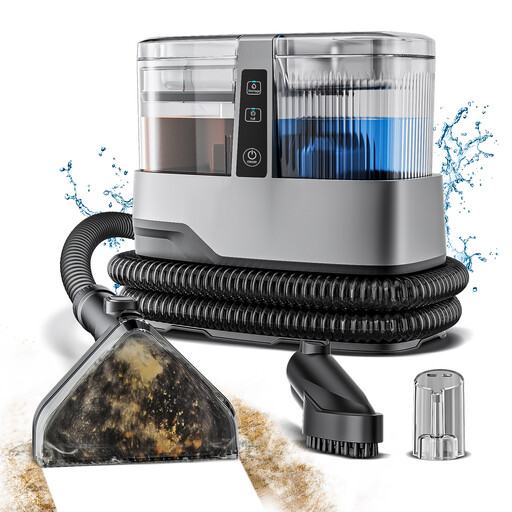
Why it suits this type of user: This handheld model is a good choice for pet owners and motorists who often tackle small, stubborn stains on fabric surfaces.
The dual tank and transparent cleaning head let you check the dirty water as you go. The machine is mains-powered, so you don’t have to rely on a battery.
600 watts, suction power of 17,000 Pa according to the product information, and a 5-metre cable.
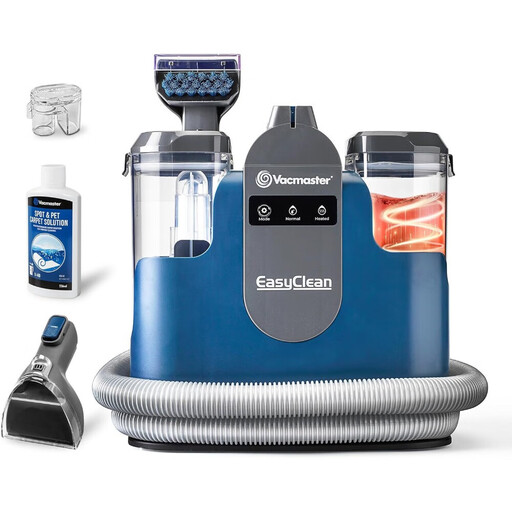
Why it suits this type of user: A practical choice for households that regularly want to tackle spills on sofas, stairs, carpets or car seats.
You can select the standard and heated cleaning modes separately. This means you don’t have to use heat on delicate upholstery every time.
500 watts, a 1.6-litre clean-water tank, a 0.95-litre dirty-water tank and a 1.8-metre hose, according to the product details.
Only use cleaning solutions that the instructions say are suitable. Don’t vacuum up flammable liquids, and unplug the appliance before carrying out maintenance.
We’ve put together a complete, up-to-date list of products that meet these strict selection criteria and the applicable European safety regulations.
It depends on how much water you’ve used, the material and the ventilation. Use as little liquid as possible, vacuum slowly afterwards, and open the windows or use ventilation. Thick carpets and upholstery usually take longer to dry than a thin rug.
You can, provided the fabric is water-resistant and the manufacturer says it’s suitable. Check the care label first and test on an inconspicuous area. A narrow upholstery nozzle is usually best for a sofa.
As well as the purchase price, you’ll pay for water, electricity and possibly cleaning solution. A corded model uses electricity while cleaning; a cordless one also needs charging. The overall running costs mainly depend on how often you use the appliance and how much solution you use each time.
