
Vandaag of morgen in huis

Kwaliteit gegarandeerd

Welkomstaanbiedingen ontgrendelen: GRATIS bezorging | Tot 80% korting | Gratis 30 dagen JoyPlus-proefperiode
Download de app
A carpet cleaner can remove stains, spilled drinks, mud and pet hair from fabric surfaces. Yet many people buy a machine that isn’t right for their home. A compact spot cleaner is handy for spills on the sofa, but less suitable for cleaning several rooms. A robot vacuum keeps floors clean day to day, but it won’t replace wet cleaning for carpets or upholstery.
The right choice depends not on the biggest number on the packaging, but on the type of dirt, the surface and how you plan to use the machine.
A high figure in Pa or kPa sounds impressive, but it doesn’t tell you everything about the results. Performance also depends on the nozzle, water distribution, airflow and how well the brush makes contact with the fabric. A machine with powerful suction may also be awkward to use if the hose is short or the dirty water tank fills quickly.
Treat suction power as just one point of comparison. Also consider the type of cleaning: dry, wet, with hot water or with steam.
A standard stick vacuum or wet and dry cleaner is often designed for dust, crumbs and liquids on hard floors. A carpet cleaner sprays water or cleaning solution into fabric, then extracts the dirty water. These are different uses.
Check whether the manufacturer specifically mentions carpets, sofas, upholstery or car seats. Don’t use a machine on a material that the manual says isn’t water-resistant.
After cleaning, dirty water, moisture and sometimes hair can remain inside the machine. If you don’t empty the tank or flush out the hose, unpleasant odours can develop and airflow may be restricted.
A practical model therefore has separate clean and dirty water tanks, easily accessible parts and clear maintenance instructions. Empty and rinse the dirty water tank after use, then leave detachable parts to dry completely.
Choose a carpet cleaner with spray and extraction if you want to tackle stains on carpets, sofas, mattresses or car seats. The machine applies water or a suitable cleaning solution, then extracts it.
A steam cleaner uses hot steam and is mainly designed for suitable hard surfaces and certain fabrics. Always check the fabric care label first. Steam and high temperatures aren’t suitable for every type of upholstery.
A robot vacuum is most useful for regular vacuuming and mopping of hard floors. It won’t automatically remove deep-set stains from a fabric sofa or rug.
Products in this category often list figures such as 12,000, 15,000 or 17,000 Pa. These are product specifications, not a guarantee that every stain will disappear. A wider nozzle may cover more ground quickly, while a narrow one is better for steps, seams and car seats.
Also look out for:
Test the cleaning solution and water on an inconspicuous area first. Don’t use boiling water unless the manual explicitly allows it. For example, the OMESER C688A manual states that the water temperature must not exceed 40 °C. The Uwant B200 SE specifies a maximum of 60 °C.
Don’t use electrical appliances near open water, and don’t vacuum up flammable liquids. If the machine has a steam function, take extra care with heat, pressure and the surface material. Always follow the instructions for use and product safety information.
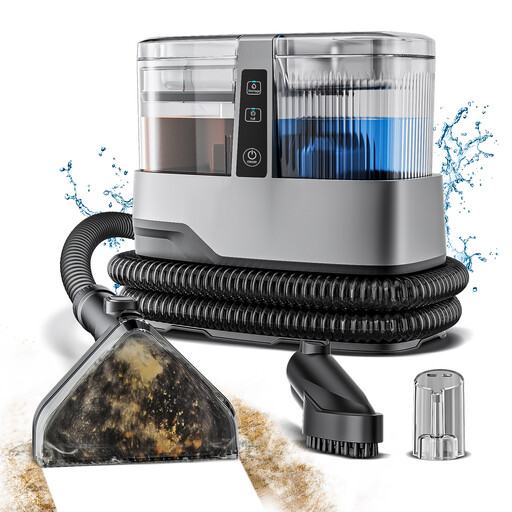
Why it suits this profile: According to the product specifications, this is a compact, corded upholstery cleaner for carpets, sofas, stairs and car seats. Its hose and handheld nozzle make it well suited to tackling specific stains rather than cleaning entire floors.
The separate tanks make it clear that this machine uses wet extraction cleaning, rather than just dry vacuuming. The manual recommends maintenance after every use.
600 W motor, 17,000 Pa suction power according to the product specifications, a 5-metre cable and dual tanks.

Why it suits this profile: According to the product specifications, this robot vacuum with mopping function is designed to automate daily cleaning of hard floors and carpets. Its mapping function and charging station make it a good fit for larger households with limited time.
Its features go beyond a high suction power figure: the specifications list navigation, carpet detection, mopping and automatic maintenance. You’ll still need a separate carpet cleaner for stains on upholstery.
20,000 Pa suction power according to the product specifications, LiDAR navigation, automatic dust emptying and hot-water mop washing.
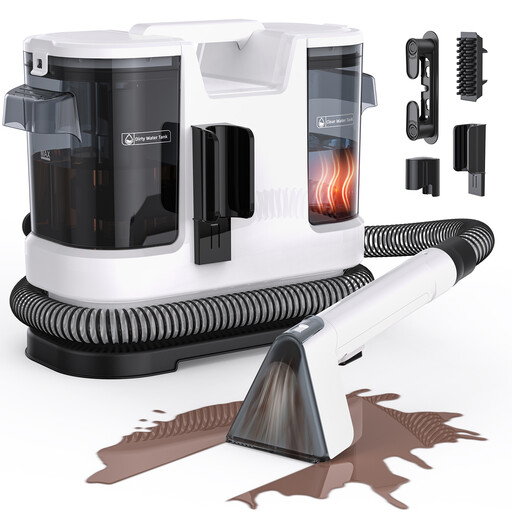
Why it suits this profile: According to the product information, this carpet cleaner is designed for carpets, sofas and car interiors. Its large tank and long mains cable are practical when you want to clean several fabric surfaces in one go.
The product specifications explicitly describe it as a wet cleaner for fabrics. That makes it clearer what you’re buying than with a standard floor cleaner or stick vacuum.
1,400 W motor, 15,000 Pa suction power according to the product information, a large tank and a long mains cable.
For an even result, work in small sections and try to treat stains as soon as possible. Don’t apply more water than the fabric can handle. Move the cleaner back slowly to extract enough moisture.
If you have children or pets, take extra care with hair, crumbs and spills. A carpet cleaner for pets can be useful for localised messes, but check that the cleaning solution is suitable for the fabric. Using more water or higher suction power won’t automatically get rid of odours.
A pressure washer is designed for outdoor surfaces such as paving, bicycles and garden furniture. Don’t use one on carpets, sofas or car seats. For indoor hard floors, a floor cleaner or steam cleaner may be a better fit, provided the surface is suitable.
We’ve put together a complete, up-to-date list of products that meet these strict selection criteria and the applicable European safety requirements.
It depends on how the room is used. If you have children or pets, you may need to clean individual areas more often. A full clean is usually only necessary when the carpet looks dirty or needs a thorough refresh. Cleaning with water too often can put unnecessary strain on the material.
Drying time varies depending on the fabric, the amount of water used, ventilation and room temperature. Extract as much moisture as possible and ventilate the room. Don’t walk heavily on the carpet again until it feels completely dry. Always follow the care instructions from the carpet or upholstery manufacturer.
As well as the purchase price, you’ll pay for water, any suitable cleaning solution and electricity. A corded machine uses electricity while cleaning; a cordless model also needs charging and battery maintenance. So compare more than just the price of the machine: consider tank capacity, maintenance, accessories and how often you expect to use it.
