
Vandaag of morgen in huis

Kwaliteit gegarandeerd

Welkomstaanbiedingen ontgrendelen: GRATIS bezorging | Tot 80% korting | Gratis 30 dagen JoyPlus-proefperiode
Download de app
A spilt drink, muddy paws on the rug or a mark on the sofa: ordinary vacuum cleaners mainly remove dry dirt. A carpet cleaner sprays water mixed with cleaning solution into the fabric, then vacuums up the dirty liquid. This also makes the appliance useful as a spot cleaner, upholstery cleaner, sofa cleaner or car interior cleaner.
However, not every machine suits every home. A compact model can be handy for stairs or car seats, while a larger carpet cleaner offers more capacity for several rooms. So do not focus only on terms such as “professional” or “powerful suction”. Look at verifiable features that match how you plan to use it.
A high wattage tells you something about the motor’s electrical power, but it does not automatically indicate how much moisture the machine removes from the carpet. The design of the suction nozzle, hose and air channels also makes a difference. Some product descriptions also state a figure in Pa or kPa. These figures are not always directly comparable between brands, as measurement methods can vary.
Use the power rating and stated suction pressure as a guide, but also consider:
A steam function sounds versatile, but not every carpet, mattress or upholstery fabric is suitable for heat or large amounts of moisture. Check the fabric’s care label and test a cleaning solution on an inconspicuous area first. Only use a steam setting when the appliance manufacturer and the surface allow it.
According to the product description, the ROUNY U2 Heat has cold-water, hot-water and steam settings. This does not mean that every fabric can be treated safely with it. The product information explicitly warns against using the appliance on non-water-resistant fabrics.
A carpet cleaner that is not emptied and dried after use can develop unpleasant odours. Residue in the hose, brush or dirty-water tank can also reduce hygiene and performance during the next cleaning session.
It is therefore worth looking for removable tanks, an accessible filter and, where available, a hose-rinsing or self-cleaning function. Allow plenty of ventilation after cleaning and do not use more water or cleaning solution than recommended.
A two-tank system keeps clean water and dirty water separate. This is practical for sofas, rugs and car seats. Check the individual capacities. A clean-water tank of, for example, 1.1 litres is compact, while larger tanks need refilling less often.
For stairs and car interiors, a long hose and cable are more important than simply having a powerful motor. A hose measuring 1.8 to 2.2 metres gives you more reach around a sofa or car seat. Also consider the weight: a portable carpet cleaner weighing around 3.5 kilograms is easier to carry upstairs than a model weighing almost 6 kilograms.
A narrow brush is suitable for localised stains. A wider suction nozzle works more quickly over a larger surface. Check whether the included accessories are intended for carpets, upholstery, stairs and car interiors. Avoid uses not listed in the manual or product description, such as vacuuming up flammable liquids.
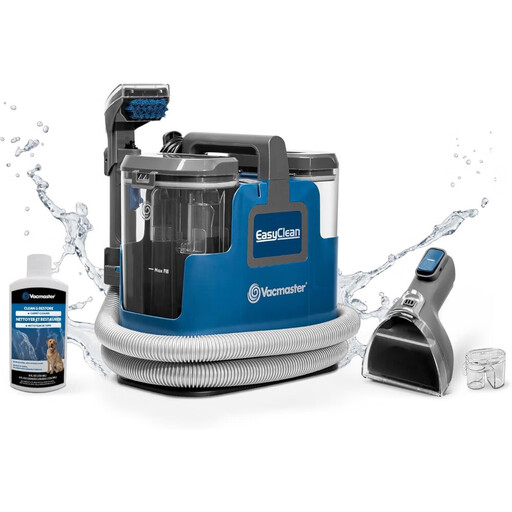
Why it suits this profile: This compact model is designed for localised stains on carpets, sofas, stairs and car seats. Weighing 3.4 kg, it is easy to store and move around.
The product information states that it has separate tanks for clean and dirty water, so you do not have to work with a single combined tank.
500 W motor, 1.8-metre hose, dual-tank technology and included Spot & Pet cleaning formula, according to the product listing.
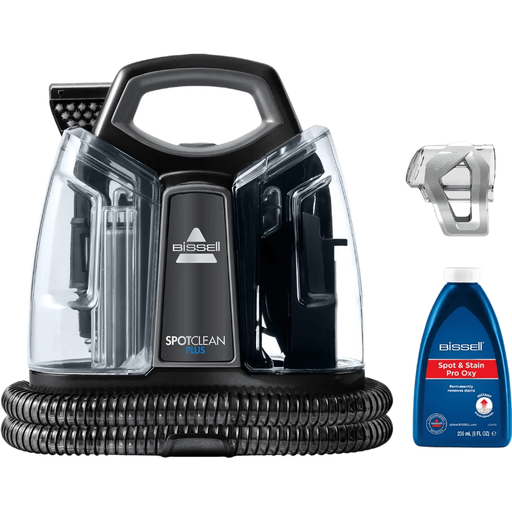
Why it suits this profile: An option for households that regularly clean sofas, stairs, rugs and car interiors, and place a high value on extra reach.
The 2.2-metre hose helps you clean hard-to-reach areas without having to move the appliance each time. The HydroRinse tool is designed to help maintain the hose.
330 W, 1.1-litre clean-water tank, 0.725-litre dirty-water tank, 5-metre cable and a stated noise level of 74 dB.
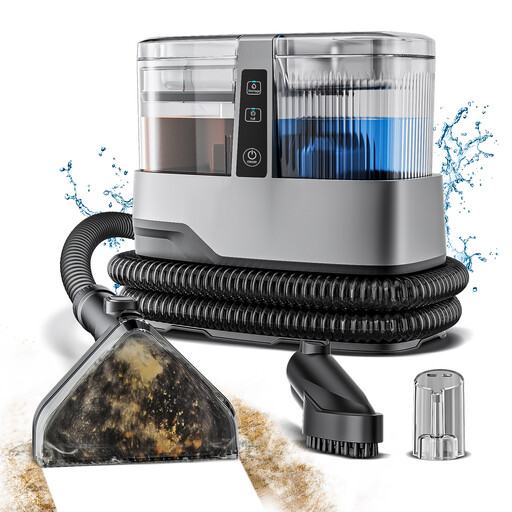
Why it suits this profile: The combination of a portable size, dual tanks and multiple areas of use makes it suitable for pet owners and motorists who regularly clean small surfaces.
The stated dual-tank design prevents clean and dirty water from ending up in the same tank. The manual recommends emptying and rinsing the dirty-water tank after every use.
600 W, stated suction power of 17,000 Pa, 5-metre cable and a maximum water temperature of 40 °C, according to the product information.
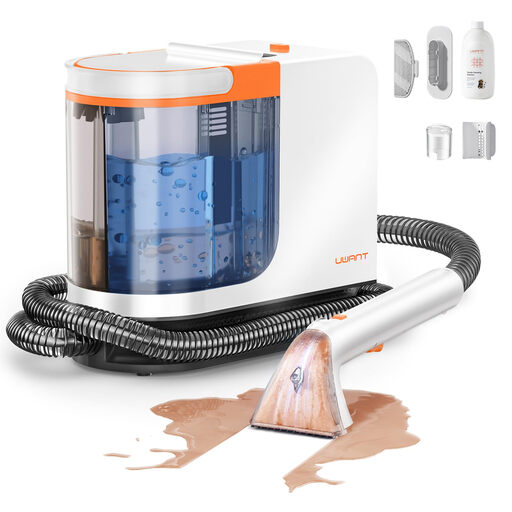
Why it suits this profile: With a stated weight of 3.5 kg and noise levels of up to 69 dB, this model is aimed at users who value portability and quieter operation.
The product listing mentions a 2-in-1 water tank and recommends emptying the dirty-water tank after use. This keeps maintenance part of your routine.
450 W, 12,000 Pa, 1.5-metre hose, 4.5-metre cable and use of water up to a maximum of 60 °C, according to the product specifications.
We have compiled a complete, up-to-date list of products that fully meet these strict selection criteria and the applicable European safety regulations.
Only if the upholstery is water-resistant and the care instructions permit it. Check the label, test an inconspicuous area first and use only a small amount of moisture. A spot cleaner for sofas is particularly suitable for small areas; a wide suction nozzle may be too harsh for delicate fabric.
Empty and rinse the dirty-water tank after every cleaning session. Also check the brush, hose and filters for fluff and hair. Allow removable components to dry before storing the machine. The exact intervals are listed in the manual for the model you choose.
Running costs mainly consist of electricity, water and cleaning solution. An appliance with a larger tank may be more convenient for several surfaces, but it may also use more liquid. For occasional stains, a compact spot cleaner is often more practical than a large wet vacuum cleaner. When buying, also check whether the recommended cleaning solution is readily available.
